

It’s 25 birds, it’s 25 planes… it’s 25 years since “Smallville” premiered on The WB, introducing a more human take on Superman that would more than likely not fly in today’s over-saturated superhero climate.
That’s according to series creators Alfred Gough and Miles Millar, who celebrated their show’s legacy with TheWrap in honor of Friday’s milestone anniversary — including its cast, the classic 22-episode-season formula and its impact on their current series, “Wednesday.”
“Its legacy is being kind of the first superhero television show that really explored the character over the costume. That’s something we were very proud of at the time,” Gough shared. “Some of that, interestingly, was by design, and some of it was just the nature of where superheroes sat at that time; pre-Marvel Universe. The last iteration of Superman had been ‘Lois and Clark,’ and actually, the network asked us to kind of shy away from the actual superhero elements of it.”
“There was sort of an allergic reaction from the network of anything that smacked of superheroes, or anything that was cartoony or comic-booky — that was always the term,” he added. “The word ‘comic-booky’ was definitely a grave concern.”
“There was moral complexity to the character, which there hadn’t been before. I think because we weren’t such avid comic book aficionados, we had our own creative freedom to change the mythology and to really expand it and do different things,” Millar continued. “That’s something that we would never, ever be allowed to do today. [Now], it’s much more about the canon and following what’s happened before almost like religious texts. What we did was blasphemous, in terms of adding the meteor shower, making Clark and Lex friends, the Lana element, all of it. We created Lionel Luthor, then Lex had a father. All this stuff is completely from our invention and not part of the canon. We would never be allowed to do that [today].”

“Smallville” premiered on Oct. 16, 2001, with Tom Welling taking on Clark Kent in a pilot that took some creative liberties when it came to the DC Comics mythos.
“We were never really big comic book fans, we didn’t read the comics. We were big fans of the Richard Donner film, and I think that kind of lack of fealty to comic books is what made us a good choice to do it because we could honor the spirit without being slavish to the stories,” Gough explained. “Somebody told us very early on — and to be honest, at the time we didn’t even get it — They said, ‘Oh, you’ve done the Marvel Comics version of Superman.’ Because we gave him guilt, there was angst, there was all of the those aspects.”
“We just had the luck and fortune of having a moment where we had the creative freedom where no one at the studio was interested in Superman,” Miller agreed. “They didn’t see the importance or the relevance of that character. They just kind of threw it to us, it was not even something they were concerned about, so we had that moment in history where we could do what we wanted, which is incredible.”
Of course, in the years that followed, The CW (the successor to The WB) eventually became known for its superhero fare — including “Arrow,” “The Flash,” “Supergirl,” “Legends of Tomorrow,” “Black Lightning” and “Batwoman.”
“There’s no Arrowverse without ‘Smallville.’ We had the misfortune of having a regime change just as we were beginning to start our own spin-offs and everything like that,” Millar noted. “The CW basically became the amalgam of UPN and The WB. The WB folks were all sort of shown the door, and UPN came in and they had a very different point of view about what the network should be — and it was definitely not ‘Smallville.’ They tried to kill ‘Smallville’ for the remainder of the time we were there. They didn’t see it fit into their version of that network, it was only after that regime sort of had also been shown the door that it changed.”
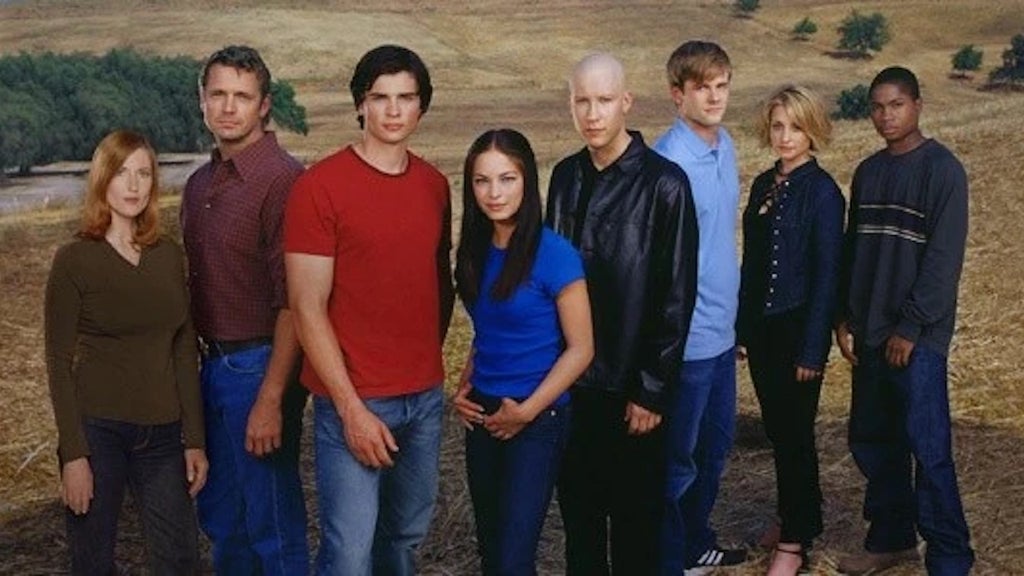
Across its 10 seasons, the series also starred Kristin Kreuk, Michael Rosenbaum, Sam Jones III, Allison Mack, John Glover, Erica Durance, Aaron Ashmore, Cassidy Freeman, Annette O’Toole, John Schneider and Justin Hartley, many of whom remain working to this day.
“What’s interesting, too, about ‘Smallville’ is they were all very young. A lot of them were 18, and then I think Tom was 23 or 24,” Gough recalled. “When you do these shows, you don’t know what the trajectory of somebody’s career is going to be. So the fact that they’re all still, frankly, great friends, that they all get along and that they’ve all gone on to have rewarding careers has been great to watch. In those days, we were like their uncles, but now it’s been great to watch them and see how their careers have evolved.”
“When you’re in the middle of it and it’s a success, you don’t really appreciate what it is. I think the fact that the show is still relevant — people are still talking about it 25 years later, it’s still on, people watch it and enjoy it — it oddly sort of has a timeless element to it,” Millar added. “The music’s very contemporary, but there’s a timeless quality to the show and the way the world that was created within the show that has allowed it to continue to be enjoyed, which is really rewarding. And seeing the cast’s success post-show is also rewarding, so we’re definitely proud of them and proud of the legacy of that.”
However, it would be impossible to talk about the “Smallville” cast without acknowledging Allison Mack’s role in the sex-trafficking cult NXIVM, for which she served 22 months in prison after pleading guilty to racketeering and racketeering conspiracy charges.
“That was very hard to watch and to experience because it didn’t reflect the Allison we knew at all. It’s a very complicated story in terms of how people get sucked into these things and there are obviously real victims — to see someone’s life get derailed like that and to pay the price that she has … for us, very sad,” Millar shared. “It didn’t reflect the person we knew. She was always the most amazing professional and always delivered, always knew her lines, all these small things. It was very surprising and upsetting.”

But Gough and Millar’s partnership goes well beyond “Smallville.” The pair also wrote and/or produced films such as “Shanghai Noon,” “Spider-Man 2,” “Hannah Montana: The Movie” and “Beetlejuice Beetlejuice,” in addition to co-creating genre TV favorites “Into the Badlands,” “The Shannara Chronicles” and their biggest hit, “Wednesday.”
“We just spent nine months in Ireland making Season 3, and we used to spend nine months making 22 [episodes]. But the production value is just so much higher — everything about it: the stunts, the visual effects, the shooting days; everything about it is much more like you’re making a feature,” Millar explained. “With ‘Smallville,’ we were very much in the writers’ room in L.A. sending scripts every eight days to Vancouver where we shot the show. It was kind of like a script factory, almost — obviously, it was much more creative than that, but that really was your job. Much more like a conveyor belt or, really, like a precision machine. Whereas the eight-episode Netflix model is much more bespoke. It’s very, very, very, very, very different.”
“When you were making 22 episodes, you had short stories in the world; every episode had a beginning, a middle and an end. Then you had a couple episodes a season that were kind of mythology and would tie the bigger arcs of the season together. But networks didn’t really want that, because an avid network viewer was only watching one in four episodes,” Gough added. “It’s just a different beast. Now we’re doing eight-hour movies. It’s like chapters of a book and every season’s a novel, and then you have Volume One, Volume Two. What’s incredible is we now spend as much time making eight episodes as we used to spend making 22.”
But what about the similarities between the two?
“Exploring the unknown chapters of the life of an iconic character — they definitely have that in common,” Gough said. “You’ve only seen Wednesday as a 10-year-old girl before the show, and now she’s a teenager and she’s on her own and she’s the focus of the story versus just being one of the family members. With Superman, we always knew he went to Smallville and then suddenly he showed up at The Daily Planet … for ‘Smallville,’ you have a lot of mythology with Superman; ‘The Addams Family,’ there’s not really that much, so we really do have a blank canvas to explore.”
“I think both shows get into the complexity and the emotions of these teen characters we haven’t really seen before,” Millar echoed. “How do we make them not flawed but really understand them as humans — Wednesday is basically a quip machine in the original but you know nothing about her, and then Clark has always been this cipher of just a guy who does good. So how do we get under the hood of both these characters and sort of understand what makes them tick? That was something that’s true of both and something that really drives us as creators and writers.”
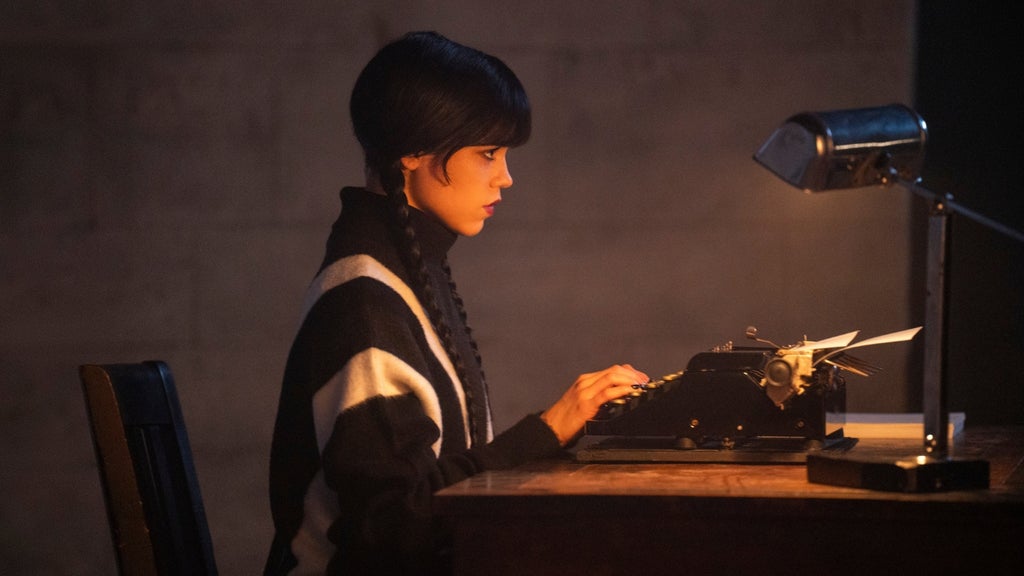
Plus, both shows employed state-of-the-art visual effects, even if they came out decades apart in different centuries entirely — and on network vs. streaming.
“It was always our goal on ‘Smallville’ that we wanted to have groundbreaking effects. We learned a lot doing that and, again, one of the reasons the show has survived is that even 25 years later the effects are pretty good,” Millar said. “Time has passed and things have evolved, but there’s a handmade quality to the show that I think people really appreciate. ‘Smallville’ was next level in terms of doing cutting-edge visual effects. Then last year [on ‘Wednesday’] we had Christopher Lloyd’s character, basically a head in a jar, using the most cutting-edge visual effects technology to achieve that. It’s really fun for us to see how we can push the the level of effects on the TV budget and schedule.”
And despite airing 217 episodes through its May 2011 series finale, there are still plot points Millar and Gough wished they could have covered.
“We’d always wanted to do Batman, young Bruce Wayne. We’d always wanted to bring him into the end, young Wonder Woman as well. Those are the two that were always thwarted,” Millar revealed. “Even Lois Lane, we begged and begged and begged and they finally said we could only have her for four episodes or something like that — and then we didn’t. We kept her in the show. We didn’t ask permission, we just kept her there. We just did our own thing and I think they forgot, which is great.”

Ultimately, Gough and Millar said that having Christopher Reeve pass the torch to Tom Welling was one of their favorite “Smallville” moments — in addition to just being a family-friendly offering for multiple generations to share.
“It was this multi-generational experience of watching the show together; not just about a single episode, but the experience of what it meant to people growing up with the show,” Millar said. “I think that’s something that’s really special, and it’s weirdly what we hear about ‘Wednesday’ too. People watch as a family, and that’s something that, in this day and age, when people are watching so individually on their own screens, the fact that people can come together and watch TV, enjoy something together is very special to us.”
“When you have that many hours — over 200 hours to watch — people are craving something consistent. ‘Wednesday’ is eight episodes every couple of years, where ‘Smallville’ is a binge; 200-plus episodes is a really rewarding experience for people,” he added. “The cast are very active at comic-cons and things like that. The nostalgia factor is very high with the show and parents who grew up with the show are showing it to their kids, so the multi-generational element is really satisfying and fun to see and to experience through Instagram and different reels.”
In conclusion, should fans expect to ever see a return to Smallville?
“We never say never. I mean, that’s something we certainly are open to exploring,” Gough said. “Again, with all of the various regime changes and things at DC, it’s a little tricky. There’s obviously been other iterations of Superman on screen, on the feature side and on the TV side, but it’s absolutely something we’d be open to exploring again.”
“There’s lots to explore, and I’d love to see where they are 25 years later,” Millar agreed. “I think it would do very, very well and I think people would really enjoy it, and we’d love to write something like that. [But] when we talk about it, it’s the usual story with the show … we get told no.”
