
Ron Howard will always be best known for narrative films like “Apollo 13,” “A Beautiful Mind,” “Cocoon” and “Frost/Nixon,” but in the past decade he’s turned more and more to a string of valuable documentaries, from the music docs “The Beatles: Eight Days a Week” and “Pavarotti” to “Rebuilding Paradise,” We Feed People” and “Jim Henson Idea Man.” In fact, the seven nonfiction films he’s made since 2016 outnumber his six narrative features, which include the yet-to-be-released “Alone at Dawn.”
Howard’s docs always give you the sense that he made them because he’s passionate about the subject (the Beatles, Pavarotti, Jose Andres, Jim Henson) or fascinated by the subject matter (“Rebuilding Paradise”). And they make up an exemplary body of work; Howard may not be looking to break new ground in nonfiction filmmaking, but he tells you what you want to know, supplies insights and knows how to deliver a good story.
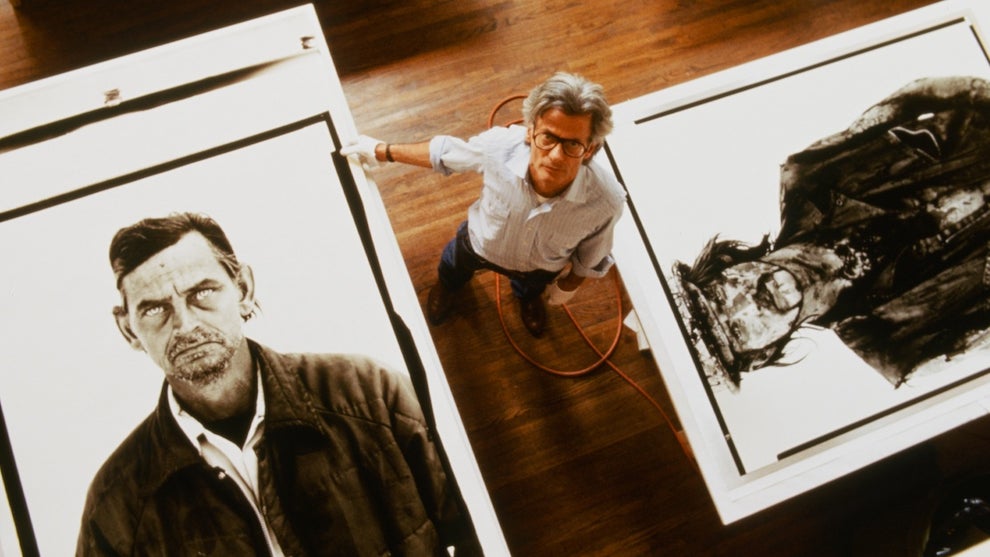
You can say all of that about “Avedon,” Howard’s film about photographer Richard Avedon that premiered on Sunday at the Cannes Film Festival. In fact, Avedon seems to be a subject who appealed to Howard because the filmmaker is passionate about his work and because he’s fascinated by how he did it.

In fact, the how and why takes up much of the opening stretch of the film, when a doc would normally be delivering a capsule summary of what its subject accomplished. Howard focuses this part of the film on Avedon’s approach, his themes and his obsessions, and only incidentally his life. In some ways, this feels like a straightforward doc – talking heads, behind-the-scenes footage, interviews with the subject – but it’s a biographical film that’s organized around artistry rather than biography.
The artistry, though, is plenty wide-ranging enough to make that work. “I follow no rules,” Avedon says early in the film, later adding, “I’m instinctual…. But I can see like a son of a bitch.”
And so he could. In an estimated 16,000 photo shoots from his beginnings as a fashion photographer post-World War II to his death while on a shoot in New Mexico in 2004, Avedon made a plain white background, harsh light and close-up framing iconic, whether he was shooting fashion models, stars, politicians or construction workers. “It’s almost like I’m writing my own autobiography with the people I photograph,” he says in the film.
Of course, Howard couldn’t do his own interviews with Avedon, who died more than two decades ago, but he makes liberal use of past interviews to create a first-person audio narration. (For the most part, the sources of those interviews are not identified in the body of “Avedon.”) The story is filled out by recent interviews with Isabella Rossellini, Lauren Hutton, writer Adam Gopnik, New Yorker editor Tina Brown, who made him that magazine’s first-ever staff photographer, and others.

In a way, Avedon’s story runs from the deliberate illusion of fashion photography to the uncomfortable reality of his portraits of Vietnam generals, iconic political figures like Ronald and Nancy Reagan (who was livid that he didn’t retouch her hands in a famous portrait) and the regular people he found in a landmark chronicle of the American West.
The fashion work was stylized and dazzling, but in many ways Avedon found his voice (or his gaze) in the starker photos in which he eschewed beautiful lighting and wanted “the existential white…where the only thing you see is the architecture of the face.”
The film slowly eases into more traditional biographical approach once it gets past the opening half hour, but it remains one of two Cannes docs that are powered largely by their subjects’ thoughts about artistry, fame and creativity, the other being Steven Soderbergh’s “John Lennon: The Last Interview.”
At times Avedon was deeply troubled, haunted by the mental illness and early death of his sister, whom he felt was overburdened by the expectations that came from her great beauty. And when a New York Times review said one of his first major non-fashion shows was a case of photographing poor people for the perusal of an affluent audience, he was so shaken that it took him a year to go back to work. The film also gets into his conflicted relationship with his father, with whom he didn’t really reconcile until the last years of his father’s life. (Curiously, it sidesteps much of Avedon’s personal life, mentioning his two marriages but never addressing the constantly rumors of his bisexuality.)

Above all, “Avedon” is about the images its subject created, which are spectacular, at times revealing and at other times damning. And that means that the movie is wall-to-wall photography, though Howard is skilled at filling in the stories around the photos and putting what we see in the context of a life and in the context of the second half of the 20th century. It’s enlightening and it’s a hell of a lot of fun to look at, which is essentially what you’d want from an Avedon doc.
“What makes him a good photographer is not his technique, it’s the mind behind the camera,” is the last line you hear in the movie, but there are lots of pictures after that. And while Ron Howard probably wouldn’t argue with the old adage that a picture is worth 1,000 words, his movie is aware that sometimes you need the words to explain the pictures and the man who takes them.