

It probably seemed like a good idea at the time.
A starry, high-concept action movie, made by a buzzy filmmaker and based on a beloved toy property, streaming on a platform known for high-octane breakouts like “Wolfs,” “F1” and, more recently, “Mayday.” The name alone – “Matchbox: The Movie” – was enough to conjure fuzzy memories of playing with the diecast cars as a child. Seeing the logo makes you go vroom vroom in your head.
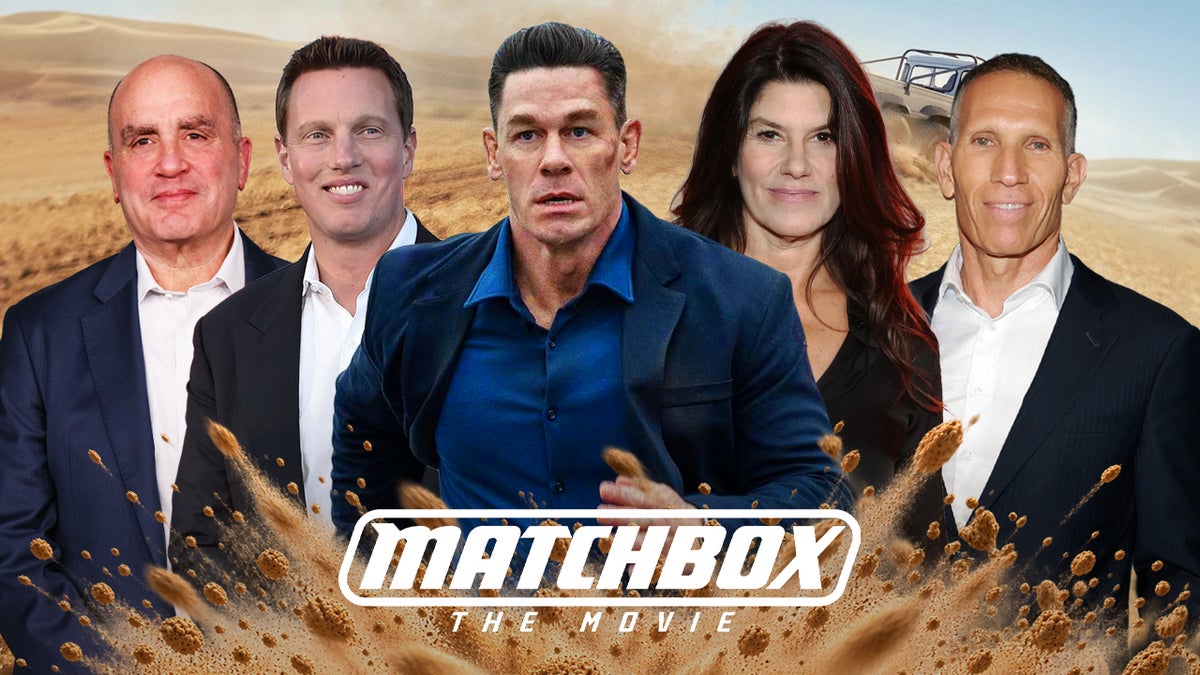
At the very least it could have been something fairly innocuous that you half-watched while folding the laundry or making yourself an egg salad sandwich. But instead, thanks to the uncanny timing of its release this past weekend, the executives behind it — including both Skydance CEOs David Ellison and Ynon Kreiz — and the fact that it is, objectively, one of the crummiest movies of the year, “Matchbox: The Movie” has become something of a bad omen.
The streaming feature is not just a low-point for Mattel, which just three years ago had the $1 billion-grossing, Best Picture-nominated “Barbie” (and who had most recently weathered the commercial disappointment of Amazon’s “Masters of the Universe”), but a grim reminder of where the industry could be headed. As Indiewire’s David Ehrlich said in his bleakly entertaining C- review, “If Skydance’s theatrical releases are as blandly algorithmic as its streaming ones, Hollywood is already dead.” Gulp.
Paramount declined to comment.
The critical shellacking of “Matchbox” — it has a 24% critics score on Rotten Tomatoes and a 52% audience score — is all the more eyebrow-raising given the production team behind it: Ellison, Skydance Motion Picture Group co-chair Dana Goldberg and Skydance EVP of Feature Productions Don Granger, alongside Mattel Studios President Robbie Brenner. Ellison has faced questions about how Skydance will put out 30 films a year through its Warner Bros. and Paramount studios, and his answer has been to take a “more is more” approach. But beyond the quantity, is “Matchbox” an anomaly or a sign of the quality of films Skydance will be putting out?

The performance of “Matchbox” also raises questions about Mattel, the company that Kreiz jumped ship from to take the co-CEO reins at Skydance. The toymaker’s first film of 2026, “Masters of the Universe,” grossed $114 million against a $200 million budget, despite a robust marketing campaign and global theatrical rollout.
“Matchbox,” however, was unceremoniously plopped onto Apple TV on Friday. There was a press junket and a few late night TV and social media appearances with star John Cena, but it lacked the kind of full-court-press marketing push that accompanied “Barbie” and “Masters.”
When asked about the performance of “Matchbox,” Mattel Studios President and Chief Content Officer Brenner responded by stressing that the films uplift other aspects of the company.
“We’re incredibly proud of what Mattel Studios has built and the momentum we have across our slate. Working alongside world-class filmmakers and studio partners, our focus is on creating great entertainment that stands on its own while inviting fans deeper into the worlds of our iconic brands,” she said. “These stories extend well beyond the screen, strengthening other business categories while introducing Mattel brands to entirely new audiences.”
When it comes to how “Matchbox” turned out in comparison to “Barbie” or even “Masters of the Universe,” which received mostly positive reviews, numerous insiders pointed to Granger, who runs film production for Skydance but has been behind a string of misses lately, including Guy Ritchie’s “Fountain of Youth” and the Chris Evans/Ana de Armas comedy “Ghosted” for Apple and the Gal Gadot Netflix thriller “Heart of Stone.” It’s a run of titles that one film producer called a pattern rather than bad luck, although Granger also produced 2025’s “The Gorge” and this year’s “Mayday,” which both had big streaming viewership for Apple.
The film producer who spoke on the condition of anonymity was more blunt about Skydance’s track record overall: “The only good Skydance movies are Tom Cruise,” the producer said, pointing to the “Top Gun” and “Mission: Impossible” franchises. According to an insider, “Mr. Irrelevant” is generating early positive word.
“Matchbox” could have a strong run on Apple TV, where it sits at the No. 3 title on the streaming service four days into its release. But is this an example of the films that will come out of the Skydance era of Warner Bros. and Paramount?
A ridiculous premise
“Matchbox: The Movie” follows the beats of many streaming movies, which are weirdly invested in people (including at least one spy) pulling off some kind of caper. (See also: Apple TV’s “Ghosted” and “Fountain of Youth,” both of which are deeply awful and – you guessed it – were produced by Skydance.)
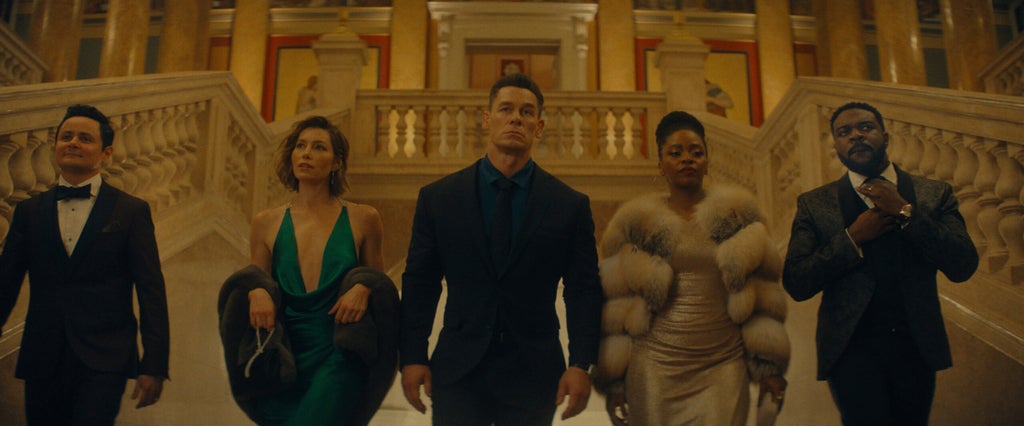
In this case, Cena plays a weary secret agent who is sent home by his superiors after a particularly stressful mission involving a small nuclear device. He heads back to his sleepy hometown and connects with some old pals (Jessica Biel, Sam Richardson, Arturo Castro and Teyonah Parris). In middle school they were known as the Matchbox Gang for their love of the tiny toy replicas. At a funeral for a beloved old friend, each one of them placed a Matchbox car on the casket. (This is a real thing that actually happens in “Matchbox: The Movie.”)
Through some clumsy plot machinations too banal to recount here, Cena is blamed for the nuclear device going missing and he has to recruit his old pals to help him retrieve it. This leads to all sorts of elaborately staged action set pieces, smartly choreographed by director Sam Hargrave, an uncanny stunt coordinator and second unit director-turned-filmmaker who made the two “Extraction” movies for Netflix (he’s currently shooting the third). During the climactic chase, each character ends up driving the vehicle they were so obsessed with when they were young and a part of the Matchbox Gang.
It is, by any metric, incredibly stupid.
There are plenty of these types of anonymous action movies released onto streaming all the time. A week after “Matchbox” debuted on Apple TV, a similar heist movie starring Stanley Tucci and Simona Tabasco (from “The White Lotus”) called “Masterplan” arrives on Amazon’s Prime Video. But what makes “Matchbox: The Movie” so unsettling is the pedigree behind it.
A reversal of fortunes
Two years ago, Mattel was riding high thanks to the boffo box office success of “Barbie.” It seemed to cement the toy maker’s evolution into an IP-driven entertainment company, part of a broader turnaround effort that Kreiz was brought in to trigger.
Indeed, after joining in 2018, Kreiz slashed $1.5 billion in operating costs and brought Mattel back from the brink of financial collapse.
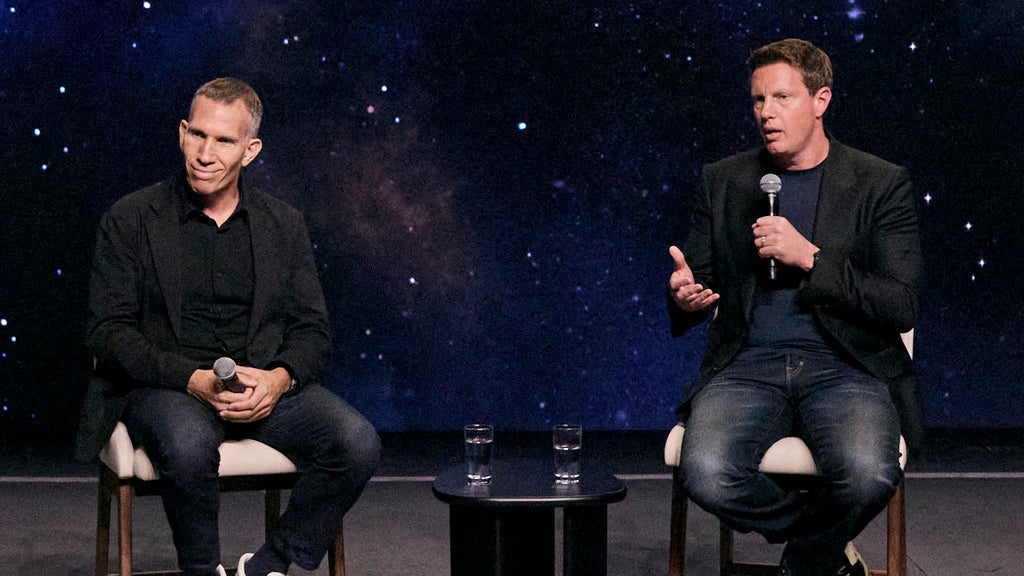
“I saw an opportunity to transform the company from being a toy manufacturer to an IP company that manages franchises,” Kreiz told TheWrap at the Grill conference in 2023, fresh off the “Barbie” success. “This is where we realized that the people who buy our product aren’t just consumers, they’re fans. Once you know you have fans, it’s an audience; it changes the conversation.”

But Kreiz didn’t leave Mattel in a great place. A key shareholder, Ariel Investments, has urged the toymaker to explore strategic alternatives, or business code for exploring a sale. Kreiz’s departure was a catalyst for Ariel to make noise.
“We had lots of conversations with Ynon, and I have a lot of respect for Ynon,” Ariel Chairman and Co-CEO John Rogers told TheWrap’s Jon Lafayette. “We’re patient investors at Ariel, but with the CEO leaving, it was a window of opportunity.”
Mattel Studios does not have greenlight power over its films — it pairs its IP with filmmakers and develops adaptations at various studios across town. While there are other movies in the works, like an animated “Barbie” at Illumination, “Hot Wheels” with Jon M. Chu at Warner Bros. and “Barney” at A24, there are no additional greenlit Mattel movies on the release calendar at the moment.
A sign of things to come?
Mattel’s fall from an emerging player in Hollywood to a company nursing its wounds with at least one flop is a cautionary tale for both Skydance and the broader Hollywood: movies need more than just recognizable IP to hit.
You saw it this year with Amazon and Mattel’s “Masters of the Universe” (which did perform well on streaming with 1.17 billion minutes viewed in its first week, according to Nielsen) but also with Walt Disney’s “Star Wars: The Mandalorian and Grogu” and even the live-action “Moana.”
Asked what the rest of Skydance’s future slate might look like given how “Matchbox” turned out, the film producer pointed to getting more clarity from its upcoming theatrical releases. Eight of the last 10 Skydance releases have been straight-to-streaming, and with 30 films a year to put out under Paramount and Warner Bros., the box office performance will be laid bare for all to see.
“If they make poor quality films that get released theatrically, the bombs become really expensive when you add marketing costs,” the film producer said. “So many of their misses have been streaming so they mostly go under the radar. But now the spotlight will be on and there is nowhere to hide.”
It’s something to consider as Skydance looks to mine the IP it acquired over the last two deals, from the Paramount stable that includes “Star Trek,” “G.I. Joe” and “Transformers” to Warner Bros.’ DC films, particularly “The Batman Part 2” and “Man of Tomorrow,” as well as “Harry Potter” and “The Lord of the Rings.”
With Skydance facing significant financial pressure due to its $80 billion in debt, the natural instinct is to capitalize on that IP, go with what’s recognizable and nostalgic and squeeze out the most revenue it can.
But as “Matchbox” showed, sometimes those fuzzy memories should stay memories.
