
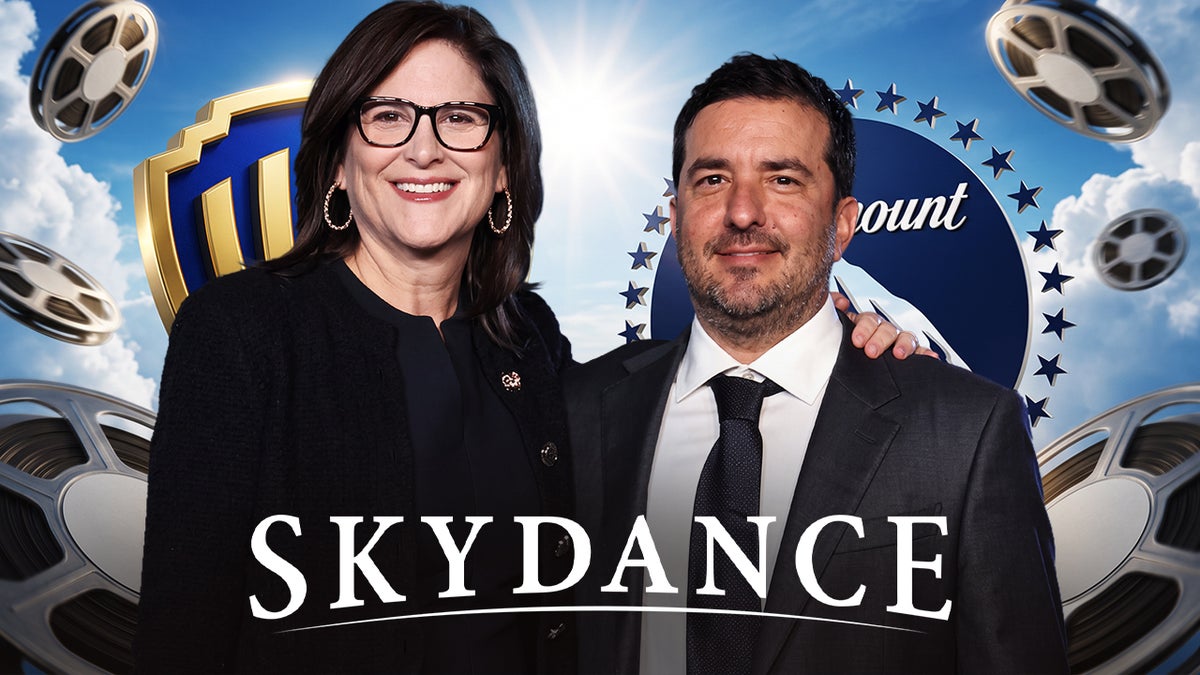
This week, Paramount will release the video game film “Street Fighter,” which marks the beginning of the trickiest high-wire act in Hollywood history as Skydance’s new film empire gets underway.
Paramount, Warner Bros., New Line Cinema, DC Studios, Paramount Primal, Republic Pictures, Clockwork and three separate animation houses are now under one roof, all with a mission to fulfill co-CEO David Ellison’s promise of releasing 30 films per year (and 32 films starting in Year 3).
It will fall to motion picture group heads Dana Goldberg and Josh Greenstein, alongside marketing and distribution chief Josh Goldstine, to integrate all of Warner’s operations and 39 slated films into Paramount’s existing pipeline and keep it all running with bigger box office success than either studio had in 2026, while also avoiding having films from either studio cannibalize each other on a crowded release calendar.
Just how the Skydance leadership will juggle all of these competing priorities — co-CEOs Ellison and Ynon Kreiz have insisted Warner Bros. and Paramount will run independently despite Goldberg and Greenstein overseeing them both — while ensuring this level of success and output over the next five years is one of the biggest questions facing the newly formed company. The stakes couldn’t be higher, and with an obligation to service roughly $80 billion in debt and cut $6 billion in costs, there’s not much room for error.

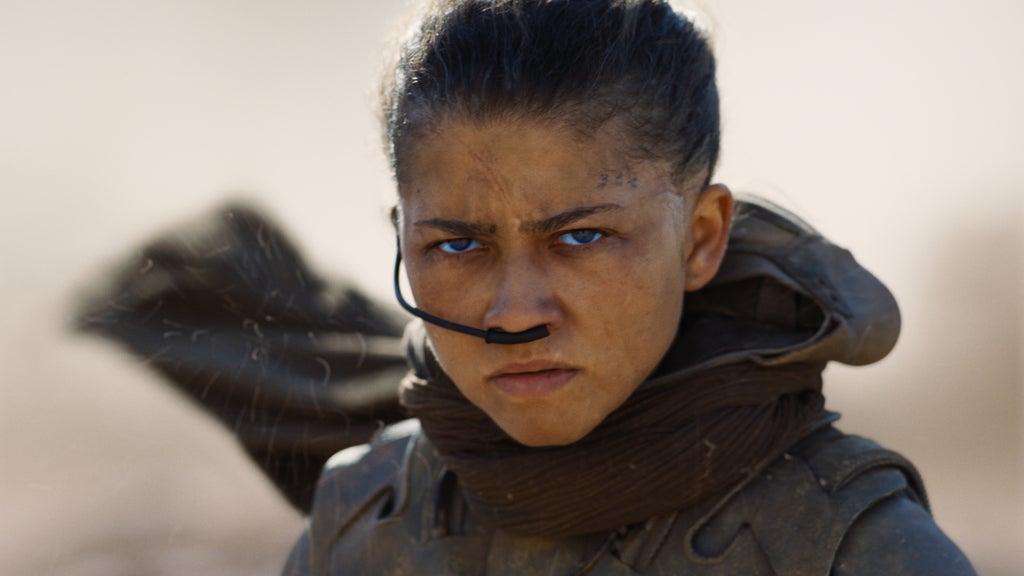
Skydance will have a guaranteed hit soon enough courtesy of Warner Bros. and Legendary Pictures’ “Dune: Part Three,” which is likely to exceed its predecessor’s $714 million global total.
But it is in 2027 when the work will really begin as Goldstine and his team begin to effectively release more films than any Hollywood studio has attempted in modern history, while Goldberg and Greenstein — who have been two of Ellison’s closest partners in the film industry for more than 15 years — continue to build out their slates for 2028 and beyond.
Speaking with TheWrap, two Hollywood veterans with deep familiarity with Ellison’s film tastes and management style expressed sharply contrasting opinions on Skydance’s future.
“I’ve worked for many years with studio execs who say ‘no’ way more than they say ‘yes,’ and right now everything at Skydance is ‘yes, yes, yes,’” the first insider said. “Dana and Josh and David aren’t just saying they’re open for business. They’re showing it. And I think other people will see that soon as they show everyone what films they are going to make.”
But the other veteran doesn’t see Skydance’s promises as sustainable. They scoffed at the plan to bring Michael Bay back to “Transformers” and felt that while Paramount and Warner’s pre-existing films might provide short-term stability, the cracks may appear in the long run despite Ellison’s assertions that most of the company’s efficiencies will be found in tech advances, not layoffs.
“David’s whole mentality with movies has always been ‘bigger, bigger, bigger, more, more, more.’ The 30 films a year promise lines up with that, and they’re going to fight over the next couple of years to make sure everyone sees they’re sticking to that,” the second insider said. “But with all that debt they have, if they have one bad year or one bad stretch and things don’t pencil out, how long before they have to make those cuts to the Warner side that they’re not making now? It doesn’t add up.”
“I’m cautiously optimistic,” a film producer told The Wrap. “Skydance has made ambitious promises, and Hollywood is ready to see them translate into green lights and real opportunities. If they back creative talent and take smart chances, they can make a meaningful difference. The execution will tell us.”
Here’s what we know about Skydance’s film road ahead.

How will Warner Bros. be operated?
Less than a week into the new Skydance era, a lot of the details of the film division’s structure are still being worked out. Sources familiar with the company’s thinking say that several meetings with label heads are still to come, but one early priority is to make sure that Warner’s marketing and distribution work can continue without any major disruptions.
To that end, Warner Bros. distribution chief Jeff Goldstein, marketing chiefs Dana Nussbaum and Christian Davin and creative strategy chief John Stanford will all remain at Skydance under Goldstine. That team is in the midst of the campaigns for “The Cat in the Hat” – a film that marks Warner’s return to feature animation – and “Dune 3,” which will need a full marketing campaign to compete against Disney/Marvel’s “Avengers: Doomsday.”
At the biggest labels under Warner Bros. and Paramount, the aim is to keep as much of the existing C-suite team together as possible – sans, of course, the high-profile ousting of Mike De Luca and Pam Abdy – while getting their input in the weeks to come on their visions for their respective labels and how they can fit into Skydance’s bigger picture. That means Richard Brener continues spearheading New Line, Bill Damaschke keeps running Warner Bros. Animation, etc.
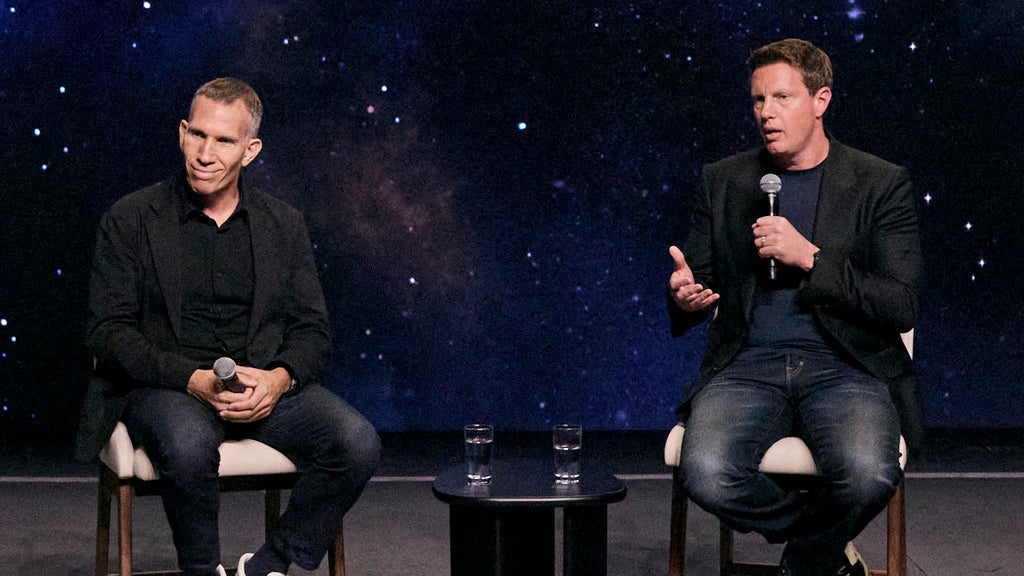
“The plan is to keep the studios independent creatively, so that each studio will have its own slate, its own relationship, its own opportunities,” Skydance’s new co-CEO Ynon Kreiz told reporters last week. “Then we will choreograph the release schedule to optimize by genre, by audience demographic to achieve the best for the company as a whole, and it’s that coordination that will make the difference.”
Skydance’s 2027 film slate
The struggles of Warner’s final year as its own studio have been well documented, with Emerald Fennell’s “Wuthering Heights” currently standing as the studio’s highest grossing film this year with just $241.8 million worldwide while nine-digit misfires like “Supergirl” and “Digger” have dragged down the company’s last few quarterly earnings.
And none of Paramount’s films this year have grossed more than “Wuthering Heights.” The film that got closest was the Wayans Bros.’ revival of “Scary Movie” with $231 million grossed worldwide.
The difference was in the spending. The most expensive movie that Paramount co-produced this year is the $82 million Brad Pitt survival thriller “Heart of the Beast,” on which the studio shared the production costs with Temple Hill Entertainment and Damien Chazelle’s Wild Chickens Productions.
The 2027 slate will have franchise tentpoles from both Paramount and Warner that should do better at the box office, all coming from previous CEOs at the studio. Paramount’s “Sonic the Hedgehog” and “A Quiet Place” series, which began under Jim Gianopulos and were grown into dependable IP under Brian Robbins, will get their fourth installments next year. A sequel to the 2025 Gen Z hit “A Minecraft Movie,” a film that was pulled out of development hell by De Luca, Abdy, and Legendary’s Mary Parent, is also on the way with “Man of Tomorrow,” a sequel to “Superman” — and a potentially critical one for DC Studios.
As for the originals, Paramount will try to get in on the global K-Pop craze that “KPop Demon Hunters” played off of to great success with “K-Pop: The Debut” this February. (Fittingly, one of that animated film’s stars, Ji-young Yoo, leads the project.) Warner Bros. will try to get over the industry-wide hurdles original animation has faced with the musical “Bad Fairies” starring Cynthia Erivo, and Skydance will release one more De Luca/Abdy big swing with J.J. Abrams’ original sci-fi film “The Great Beyond,” a movie that Warner Bros. had set for release in 2026 but moved to next year to allow for a bigger theatrical release with Imax 70mm support.
While the box office has rebounded to an expected $10.5-billion plus domestic year in 2026 without significant contributions from Warner or Paramount, the general consensus among exhibitors and box office analysts is that 2027 could very well be a step back unless films like “Minecraft 2,” Disney/Lucasfilm’s “Star Wars: Starfighter” and Sony’s “Legend of Zelda,” among others, overperform.
In other words, the film industry will need Skydance to deliver quickly.
“Rebuilding trust”
But turning inherited films into hits is only the first step. In 2028 and beyond, Ellison, Goldberg and Greenstein will have to keep all of Skydance’s labels running hot, and that will mean winning the confidence of a Hollywood creative community that is filled with skepticism over Skydance’s promises and bitterness over the layoffs to come.
Amidst Skydance’s grueling merger battle over the past year, which included threats to pull Paramount out of California, more than 5,700 creatives signed an open letter by the grassroots coalition Block the Merger opposing Ellison’s campaign. J.J. Abrams and Denis Villeneuve, who will now have their next films released by Skydance, signed that letter, as did Ben Stiller, Jane Fonda, Dan Kwan, Dan Scheinert, Edward Norton, Emma Thompson, Glenn Close, Marisa Tomei and Kristen Stewart, just to name a few.
When asked by reporters about that distrust, Ellison acknowledged that getting the merger done was an “ugly process.”
“There were really significant emotions, and I really respect all the people that were apprehensive about this. What I want to be able to do now is turn the page, and actually make sure that we are in the business of rebuilding trust,” he said. “For the people who were supportive over the course of the deal, the artists, the filmmakers that we worked with, I’m incredibly grateful for that. And for the people who were not, we want to actually earn their trust and hopefully prove them wrong through action.”
Among the filmmakers who have production deals with Skydance through the Paramount side are Jon M. Chu, Issa Rae, Matt and Ross Duffer and James Mangold, the latter of whom will direct one of Goldberg and Greenstein’s first big original swings with the motorcycle heist thriller “High Side.” Such a high-octane film isn’t exactly a “One Battle After Another”-esque risk from a studio that brought the world films like “Top Gun: Maverick,” but it is a non-IP tentpole that will be counting on Timothée Chalamet’s star power combined with chase scenes on souped-up Ducatis to bring in a big box office haul against a budget that will likely be north of $100 million.
On the IP side, Skydance will try to turn back the clock with some of Paramount’s most recognizable franchises from decades past, namely “Star Trek,” “G.I. Joe,” and the former billion-dollar behemoth “Transformers,” which will see its next film directed by the movie series’ founder, Michael Bay, and creatively overseen by Steven Spielberg.
Paramount has had success getting Gen Z into franchises that are older than them with Spyglass’ “Scream” revival. But at a time when even bigger franchises like “Star Wars” have struggled at the box office and older IP like “Masters of the Universe” was skipped by the 18-35 demographic in favor of fresher titles like “Backrooms” and better sustained IP like “Super Mario Bros.,” resurrecting these tentpoles will be a risk in and of itself.
The biggest question marks
But what about the areas of Skydance’s portfolio that haven’t had a chance yet to establish their identity?
De Luca and Abdy’s specialty label brainchild, Clockwork, will launch this weekend with a one-week limited release of Ken Russell’s nightmarish NC-17 historical drama “The Devils,” presented without the cuts mandated by censors back in 1971 for the first time ever and with a 4K restoration. A trio of ex-Neon execs led by CMO Christian Parkes is leading Clockwork, which is effectively a competitor to uber-cool (and younger-skewing) studios like Neon and A24 and is set to release “Anora” director Sean Baker’s “Ti Amo!” next year and also nabbed Noah Baumbach’s next film.
Clockwork will not be smothered in the crib, but it still has not been determined how it will be integrated into Skydance’s specialty and acquisitions division led by Tango Entertainment co-founder and veteran producer Lia Buman, whose credits include Paul Mescal’s career-launching film “Aftersun.”
Then there’s the matter of the three animation houses that Skydance now owns: the one bearing its own name run by John Lasseter, the Paramount/Nickelodeon division run by Jennifer Dodge and Warner Bros. Pictures Animation run by Bill Damaschke.
History shows that mergers lead to animation studios being shut down, as was the case in 2021 when Disney closed down “Ice Age” studio Blue Sky Animation and folded its IP into 20th Century Animation, which is producing “Ice Age: Boiling Point” for release next year. Coincidentally, many of the animators who used to work at Blue Sky now work at a Skydance Animation outpost in Stamford, Connecticut.

Can Skydance Break the Media M&A Curse?
Promises made …
And arching over all of this will be the need for balance. Ellison and his lieutenants have promised over and over that contrary to past mergers like Disney-Fox, which led to fewer theatrical releases from 20th Century Studios, this merger will lead to more output, enough to rival the likes of Disney and Netflix.
Sources say Skydance is looking at ways to deliver its promised efficiencies through ways other than personnel, with more efficient workflows and production processes, meaning that AI – the sort that Ellison’s father and one of Skydance’s primary financial backers, Larry Ellison, stakes his fortune on – will play a major role in making all of this work while allowing Skydance to fulfill its promise of not sacrificing Paramount and Warner’s creative engines.
“What we’ve talked about publicly is, you know, there’ll be $6 billion in synergies. Primarily, those do not come from labor. The primary sources of that come from technology, procurement, basically real estate optimization and several other things,” Ellison said.
There is a dizzying number of promises that hinge upon the countless decisions Ellison, Greenstein and Goldberg will make over the next several years. They’ve promised the unions that this merger, contrary to what the Writers Guild of America and economic studies assert, will mean more jobs for their members. They’ve promised the theaters that they won’t trigger the slate droughts that left them struggling for years after the COVID pandemic.
They’ve promised creatives and cinephiles that they are still open to fresh ideas, even though the two executives hailed by film lovers for spending big on such ideas regardless of the risks won’t be a part of this company. They’ve promised the harried staff at Warner Bros. who survive the layoffs to come that the decade of turbulence they have endured is finally over. They’ve promised Wall Street that all of this is going to pay off to shareholders.
And they’ve promised all of Hollywood that this isn’t the next step to it becoming the next Detroit. No pressure.
Umberto Gonzalez and Drew Taylor contributed reporting to this story.

The Media Front: The Skydance Era Begins