
The passing of Anthony Head sent ripples throughout the internet, and for good reason. The British actor, who died from complications related to pneumonia at the age of 72, was such a frequent face across film, TV and the stage (not to forget his radio and podcast work), that the idea we would ever be without him seemed unfathomable.
For the past 40-plus years, Head was one of the most familiar and welcomed faces on television in both America and the UK, a man who seemed to have appeared in every show you could name.
We could be here all day listing his many small-screen achievements, from his scene-stealing straight man turn in the controversial “Little Britain” to hefty period dramas like “Dancing On the Edge” and “Vanity Fair” to pure unfettered schlock like “Highlander: The Series.” He did everything and anything, and committed 100% to the assignment at hand. How many other actors could be so convincingly sensual in a UK TV ad for instant coffee that it would become front page news and inspire a nationwide phenomenon? But Head did just that, and more. To reduce his career to one or two roles could seem unfair, but it’s also true that, for legions of fans, it only took one part to make Head a legend. He could have done nothing else for several decades aside from play Rupert Giles and he would still have become a TV icon.
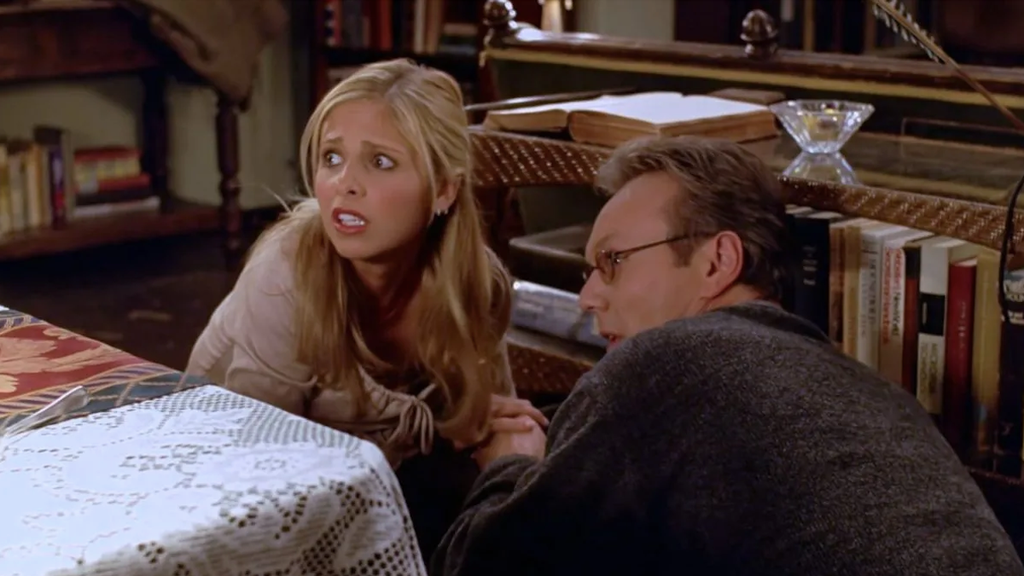
Giles, the librarian and member of the Waters’ Council in “Buffy the Vampire Slayer,” was the adult in the room, literally and figuratively. As Buffy Summers and her adolescent friends (and later supernatural lovers and acquaintances) tried to save the world while dealing with their own drama, it was Giles who became the glue that bound them all together. A genius-level intellect and true badass who looked and dressed like, well, a librarian, Giles had to be a leader, mentor, surrogate parent and bureaucrat.
It’s the sort of role that would have been very easy for a lesser actor to screw up. Make him too serious and you turn your audience against his desires to maintain structure. Have him ham it up and the show loses its emotional core. Head nailed the balance. His Giles is often stuffy but with a dark streak that motivated him to put the Scooby gang above all else, even if that frequently meant having his heart broken. Being the mentor of a bunch of teens is hard, even when they’re not staking vampires, and Giles had to be a guiding light. You never doubted his respect for these kids, born from shared experience and the knowledge that he too was once a bratty rebel trying to prove himself in the big bad world.
In one of the show’s most gut-wrenching moments, Buffy asks her mentor to lie to her, to tell her that being a slayer will get easier. And he does, with obvious hesitation but real weight and just enough of a sardonic edge to let Buffy get in the last word. It might be the moment that truly exemplified the show, and Giles’s importance to it.

Long after Head left Sunnydale behind, he remained a familiar figure across film, TV, stage and radio, doing everything from “The Rocky Horror Show” to “Doctor Who” to “Bridgerton.” The prototypical Head role was one of grounded emotional force even if his surroundings included CGI dragons and the TARDIS. His last great role, however, let him be one hell of a villain. Playing another Rupert, this time Rupert Mannion in Apple TV’s “Ted Lasso,” Head got to be a dastardly figure of pantomime villain levels of boo-worthy derision. He went into a room and all of the joy was sucked out of it.
Jason Sudeikis’s soccer comedy was defined by its positivity, its true belief that optimism is worth fostering and everyone is welcome under the vast umbrella of A.F.C Richmond. Mannion was the sole exception. His ex-wife Rebecca (Hannah Waddingham) hoped to sink the club to get back at him for his cruelty and infidelity, but slowly realized that living well was the best revenge. Head clearly had a ball playing someone so unlikeable, allowing all of his charm and saucy appeal to be curdled into something villainous. He was the anti-Giles, a man so diametrically opposed to everything that character stood for that you’d be forgiven for thinking he was his evil doppelganger. Rupert Mannion was a petty man, someone whose money allowed him to get further in life than his personality alone would have.
But even he got to be more than just the lone bad guy in a show so full of heart for everyone else. There’s a petulance to Mannion that made him evolve from cartoonish ex-husband to a cautionary tale for the rest of the ensemble. His playboy ways suddenly felt pathetic, especially once he married a younger woman and became a dad at an older age. The series started with Rebecca informing Ted that she wanted to destroy Richmond because it was the only thing Rupert cared about, but as the show goes on and he tries to beat Rebecca by buying West Ham, you’re overcome by the sense that nothing makes this man happy.
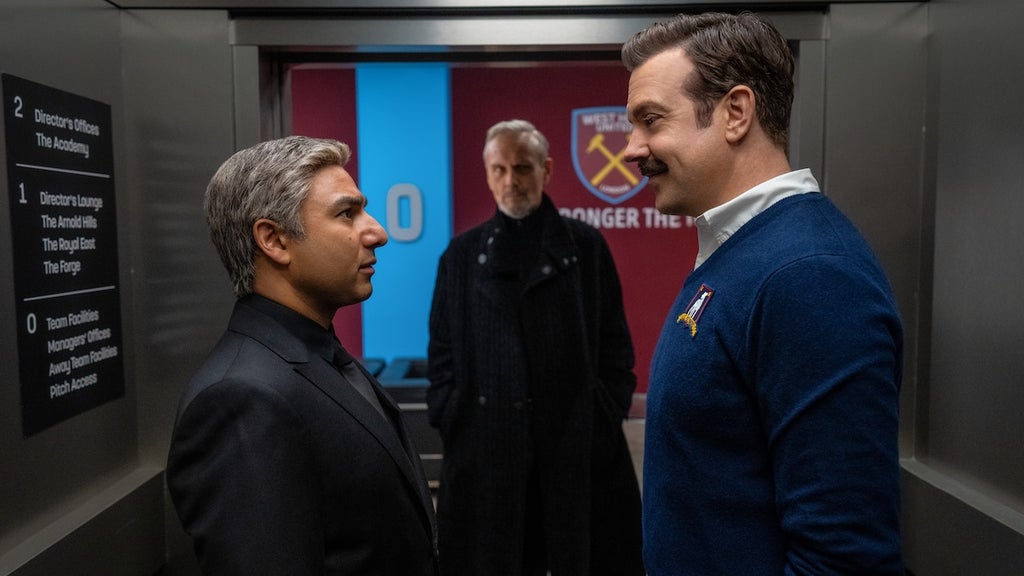
Head dug deep into the borderline sociopathy of this overgrown toddler who could be so much more in life but can’t escape his own shadow. By the end of the third season, every other character gets a moment to change for the better, but Rupert Mannion falls to his lowest ebb. It’s deserved, sure, but it’s also just sad. Head gave us glimmers of the man beneath the monster, but ensured that this would not be a man redeemed.
Head’s legacy is mighty, defined by a mighty back-catalog of work full of hidden gems, unexpected treasures and Time Warp sing-alongs. A world of TV without him is a dim one. The work stands tall, of course, elevated by his ceaseless commitment and oft-underestimated range. There were heroes and villains and everything in-between. What more could you ask for?
