
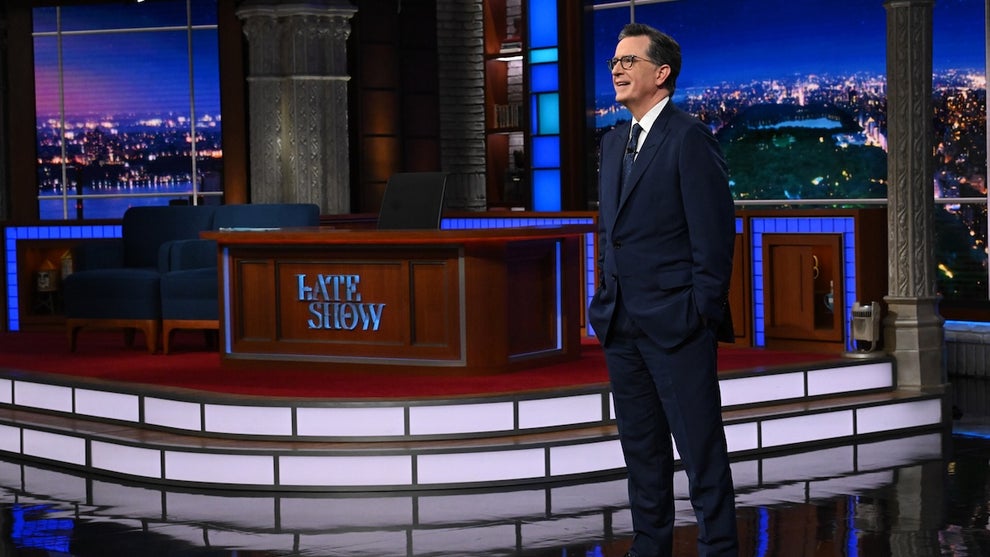
Hello and goodbye to “The Late Show With Stephen Colbert.” The late night host set out to deliver a mostly by-the-books episode of “The Late Show,” leaving the show on his own terms.
Colbert was joined by A-list stars, family, lifelong friends, and a wormhole that threatened to end late night as we know it. Despite the green portal’s best efforts, the host ended his show with a joyful swan song, closing the books on his 11-year tenure at CBS.
“We like to think every episode of ‘The Late Show’ is kind of special, and we thought the best way to celebrate what we’ve done over the last 11 years is just do a regular episode where I come out here and talk about the national conversation,” the late night host explained.

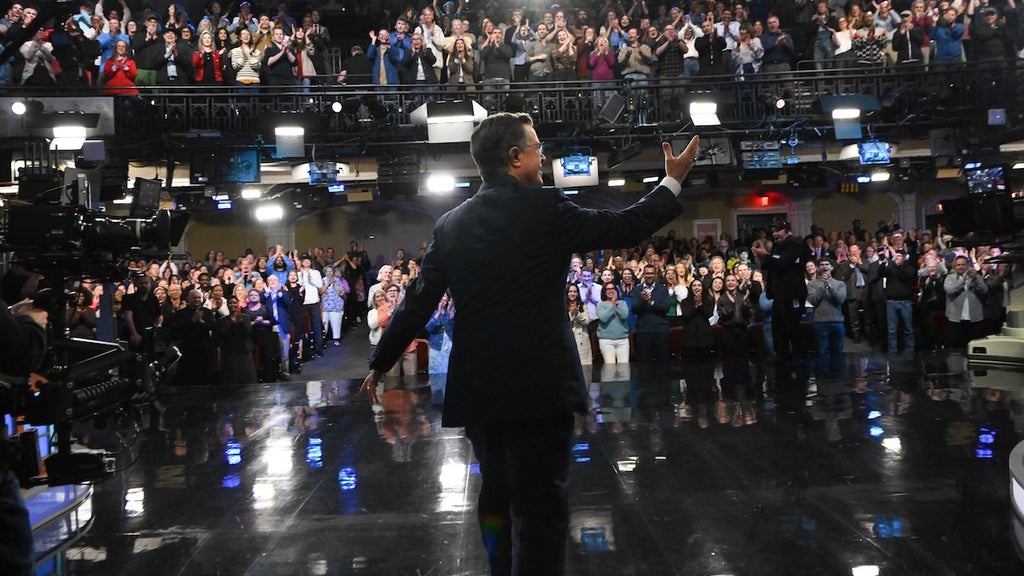
“This show, I want you to know, has been a joy for us to do for you,” he said.
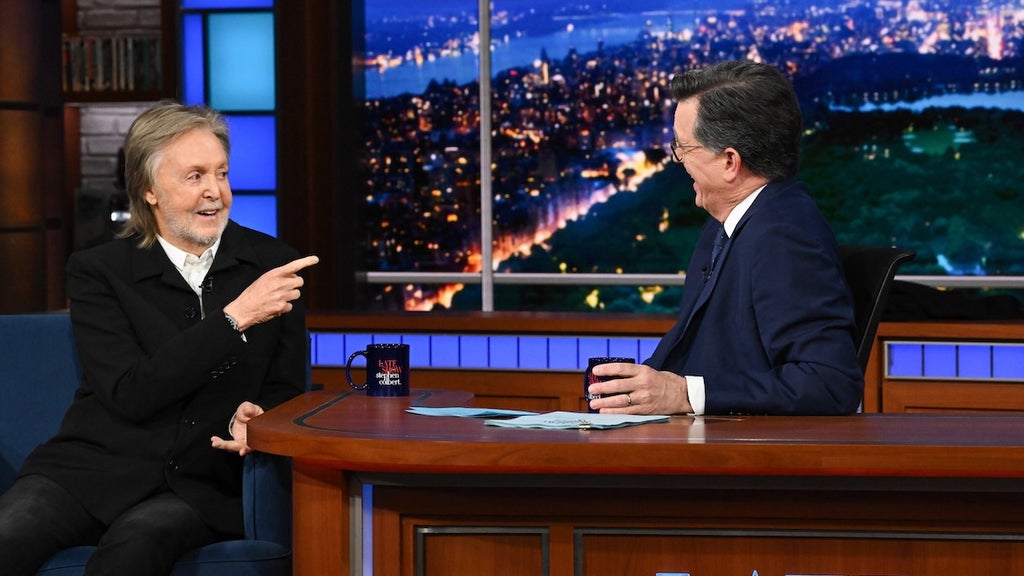
While that was mostly true, Colbert’s final monologue was interrupted by several of his famous friends, pushing to be his final guest on the program. The host and devout Catholic teased that his final guest Pope Leo XIV canceled at the last minute, leaving an opening for Paul McCartney, who happened to be in the city.
The appearance was also significant because The Beatles made their American debut at the Ed Sullivan Theater back in 1964.
Towards the end of the episode, Colbert addressed an ominous green glitch that persisted throughout the series finale. He went backstage to address it in a pre-taped package.
Neil deGrasse Tyson revealed that the interdimensional wormhole was formed because two contradictory realities cannot coexist without rupturing the space-time continuum.
“For instance, if a show is number one on late night and it also gets canceled,” he explained. “Your cancellation has created a riff in the comedy variety talk continuum, and if it grows, all of late night television could be destroyed.”
The portal swallowed Tyson and a rogue Andy Cohen before the Strike Force Five, made of late night hosts Jimmy Fallon, Jimmy Kimmel, Seth Meyers and John Oliver, convened to discuss the fate of late night as it stands today.
As Colbert returned to the stage, the portal emerged over his head sucking up his crew, his audience and eventually himself.
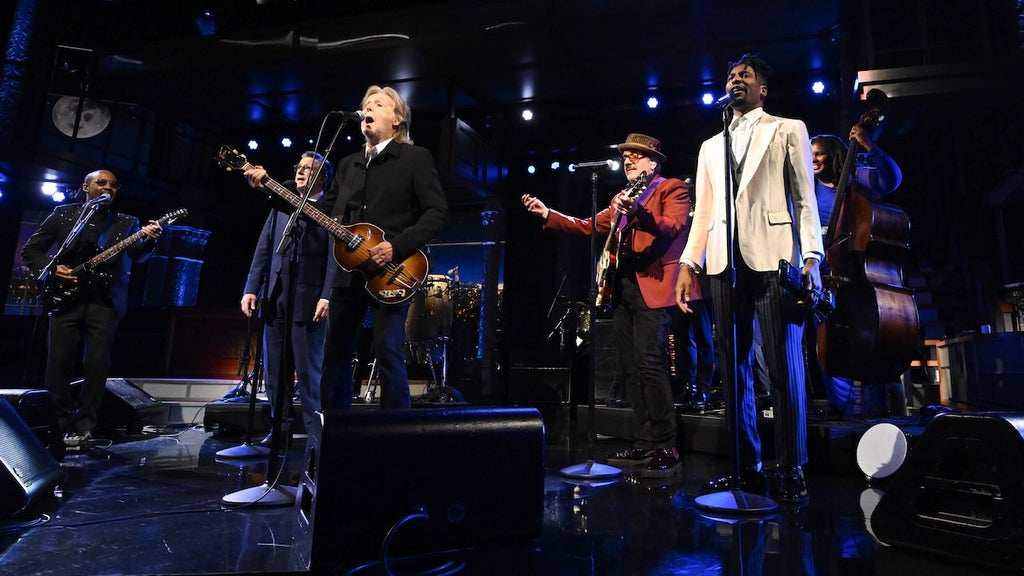
To conclude his late night run, Colbert was joined by Elvis Costello, Jon Batiste and Paul McCartney to sing a quartet of Costello’s 1977 hit “Jump Up” and finally The Beatles’ “Hello, Goodbye.”
The final show included cameos from Paul Rudd, Ryan Reynolds, Bryan Cranston, Tig Notaro, Tim Meadows and Elijah Wood. “The Daily Show” host Jon Stewart also appeared to give Colbert a final message from Paramount.
“Paramount strongly believes in covering both sides of any black hole that is swallowing everything we know and love, and coverage must also include the positive aspects of the insatiable emptiness,” Stewart read.
That was not the only swipe at the parent company who took Colbert off the air. When speaking with McCartney, the late night host asked The Beatles alum what his first impressions of America were.

“America’s where all the music we loved came from, all the rock and roll, the blues, and the whole thing … America was just the land of the free, the greatest democracy. That was what it was,” he said. “Still is, hopefully.”
Earlier in the show in his “Meanwhile” segment, Colbert’s band The Joy Machine had one more jab at the network. The host read that the owner of the Peanuts music catalog filed lawsuits against those who illegally used the music. Louis Cato, the leader of Colbert’s house band, began to play one of the iconic themes from the Charlie Brown catalog.
“Louis is the band right now playing the same Peanuts music that I just said people are being sued for for using without permission?” Colbert said as his audience cheered. “Oh no, I hope this doesn’t cost CBS any money.”
In January, CBS announced the final air date for “The Late Show.” The decision followed CBS’ announcement last summer, in which they shared that the late night program would be coming to an end shortly after Colbert mocked Paramount’s $16 million settlement with President Donald Trump, blasting the move as a “big fat bribe.”
CBS executives noted at the time that the cancellation decision was purely a financial one.
Since the cancellation, Colbert’s colleagues and supporters beyond the ones that showed up in the audience Thursday night have been outspoken in support of the late night host. David Letterman, who created “The Late Show” in 1993, even told Colbert he had “every right to be pissed off” when he appeared on the show last week.

Did Politics Kill Stephen Colbert?