
Note: This story contains spoilers from “Furious” Episode 8.
“Furious” creator Liz Meriwether never expected her Hulu drama about an FBI agent (Emmy Rossum) pursuing a female serial killer (Lola Petticrew) to take off the way it has. While the “New Girl” creator has dabbled in dramatic material in recent years with shows like “The Dropout” and “Dying for Sex,” she had never felt more “exposed” working on a show than she did with “Furious.”
“It sounds fake to be like, ‘I’ve been so surprised!’ But I genuinely have been really surprised and moved and a little confused by all the attention and excitement about it,” Meriwether told TheWrap. “I did not know how this was going to go. I felt really exposed and nervous about it, honestly, because I’ve never been good at earnest emotion. There were moments when I was writing and shooting and editing where there’s just characters crying and screaming, literally bleeding, and I was just like, ‘Oh my God. There’s no way to sugarcoat that. This is what it is.’ Especially the last episode.”
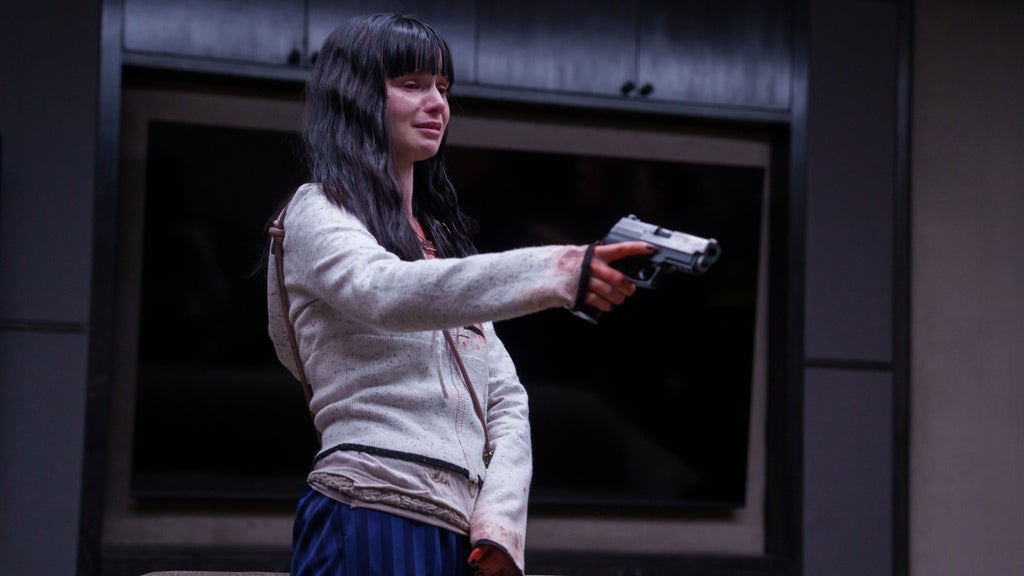
Meriwether is right to single out the drama’s climactic eighth installment. An unflinching hour of television, the episode follows Rossum’s Alice and Petticrew’s Catherine as their paths converge again at the estate of billionaire sex trafficker Jay Easton (Peter McRobbie). There, Catherine engages in a tense standoff in Easton’s private den with Alice and Easton’s collaborator daughter, Emma (Hope Davis).

After Catherine and Alice find Emma standing over the destroyed remains of her father’s hard drives, which she destroyed with the help of FBI special agent Ed George (Danny McCarthy), Catherine starts to remember how her best friend, Isabel (Larissa Campos), died the night they were brought to the Easton estate as teenagers. In one of the most heart-shattering sequences on television this year, Catherine finds herself face-to-face with the memory of Isabel’s final moments and the revelation that she killed her best friend with a lethal injection of drugs in an attempt to ease her pain.
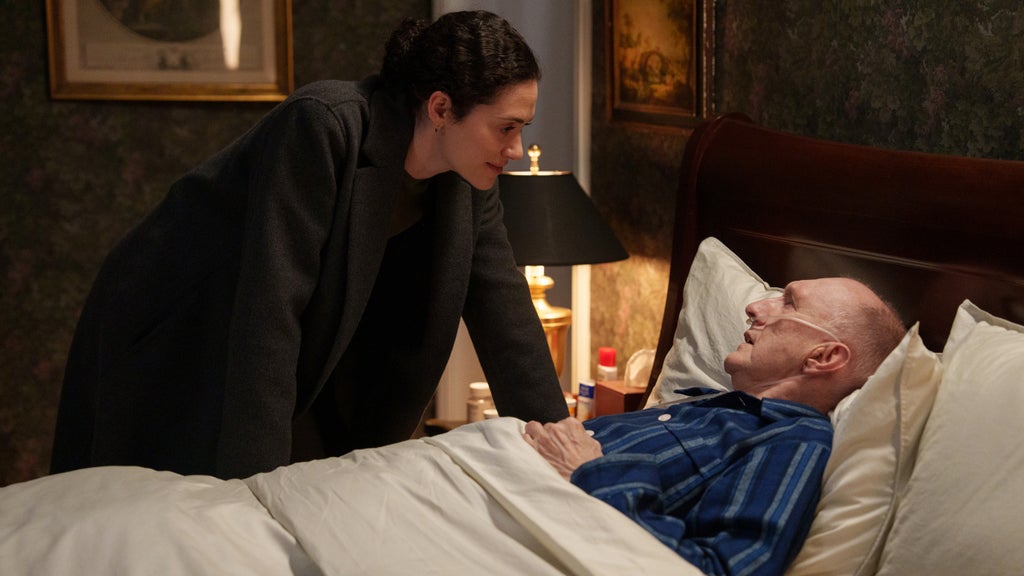
In the wake of this revelation, Alice arrests Catherine and pays a private visit to a sleeping Jay Easton. When the billionaire awakes, he calls her “the movie star” and tells Rossum’s FBI agent how many times he has watched her underage sex tape that was filmed without her consent. In the finale’s climactic twist, Alice puts her foot on the line connecting Easton to his oxygen supply and watches him expire. The “Furious” finale then ends on two dueling close-ups of Rossum’s face: one as she discovers via the FBI’s database just how many people have downloaded and watched her video and another as she smiles when an imprisoned Catherine asks her what it felt like to kill Easton.
The “Furious” finale positions Alice to not only continue hunting down criminals like Easton, but it also suggests she may have a vigilante side of her own. Where does that leave Petticrew’s Catherine? According to Meriwether, viewers should not expect to see much more of her moving forward.
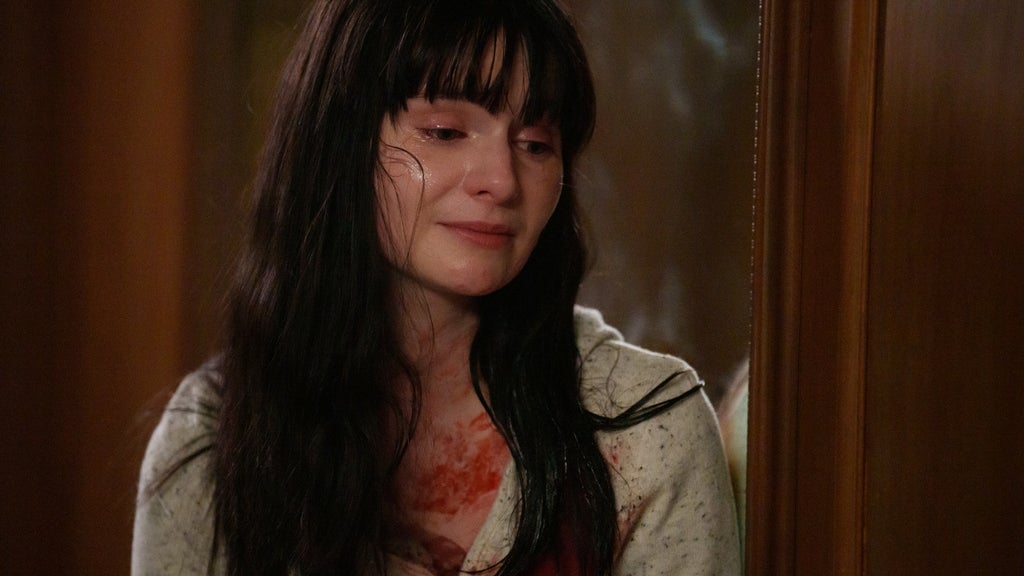
“The idea for the show’s future would be that we’re in the FBI with this squad and they’re taking on new cases,” Meriwether explained. “Lola’s contract was for a year, and I don’t think there would be a lot more story to tell for Catherine beyond her being a sounding board for Alice.”
“Lola’s also [been cast in] ‘Assassin’s Creed,’” Meriwether noted with a laugh, referencing the star’s casting in Netflix’s live-action video game series. “They’ve gone on to be a different assassin now.”
When we spoke, “Furious” had not yet garnered the Season 2 renewal it landed last week, which meant Meriwether was limited in what she could say about the show’s coming episodes. The showrunner nonetheless sounded hopeful and anxious about the future, joking with a laugh, “I guess I write drama now.”
Below, Meriwether dives further into the biggest moments of the “Furious” finale, teases some of her ideas for Season 2 and explains why the show is ultimately about its characters facing their own memories. This interview has been edited for length and clarity.
TheWrap: When did you decide Catherine was Isabel’s killer?
Elizabeth Meriwether: I wrote the first two episodes and then we got picked up to series. By that point, I’d managed to fake my way through a lot of earlier meetings where I was pretending I knew what was going to happen. But I knew I wanted Catherine and Alice to cross over. I wanted Catherine to become more like Alice and Alice to become more like Catherine. Catherine comes alive over the course of the season. She gets feeling in her fingers again. She re-enters her body and starts to feel again and starts to want to feel and want to love other people. All while we’re going 80 miles an hour down this road of finding out who killed Isabel. In the end, it was like, “What’s she going to do to that person?”
As the show keeps going, she wants to kill people less and less. Her desire for killing people lessens, and I think it just sort of clicked. I don’t remember the moment, but I remember the click of, “Oh, if it’s her, that’s very sad and also explains why she’s killing people the way she’s killing.” You can think you’re a vigilante and you’re on this road of vengeance but still not ever understand the full story. I didn’t want the show to be making a completely uncomplicated case for vengeance. I think about that moment where Hope Davis says, “You killed the wrong people.” I thought that was a good ending place for Catherine’s mission, because she didn’t get it totally right.
It’s not reflected in the way our justice system works, but I do think memory is so important when it comes to these cases. The fact that you can completely forget things that happened. I want to tell that story over and over again.
Why have it be Alice instead of Catherine who kills Jay Easton?
By the time Catherine gets to the Easton house, she doesn’t necessarily want to kill people anymore. On the flip side of that, I think Alice’s journey has brought her to a place where she is able to kill somebody. I was scared of it. I remember it came up in the writers’ room and it was something that I had thought about and kind of put away. Then I just felt like, “Why are we pulling our punches on this? Why are we holding back?” If we’re telling the story of these two women becoming each other, it just felt right.
We went through different versions of her killing him, some more direct and violent, and then I landed on [her cutting off his air supply], and it felt like the kind of thing I could understand and see clearly how she got there.
What exactly does Nora (Quincy Tyler Bernstine) have on Ed with the flash drive? It feels a little unclear in the finale, but if it’s a spoiler, you can just not tell me.
It’s not a spoiler! [Laughs] There are definitely some things that I’m relying a little bit on smoke and mirrors with, like [asking the audience], “Look the other way!” Ultimately, I think it’s the possibility of communication between him and Easton. I feel like that is the main thing he’s afraid of. We don’t really know what’s on that flash drive, but I think it’s that idea, that Nora would be able to connect them. That seems to be the thing that is in his mind.
Do you know who shot Alice’s video?
Yes. God willing, I think that’s something we will learn next season.
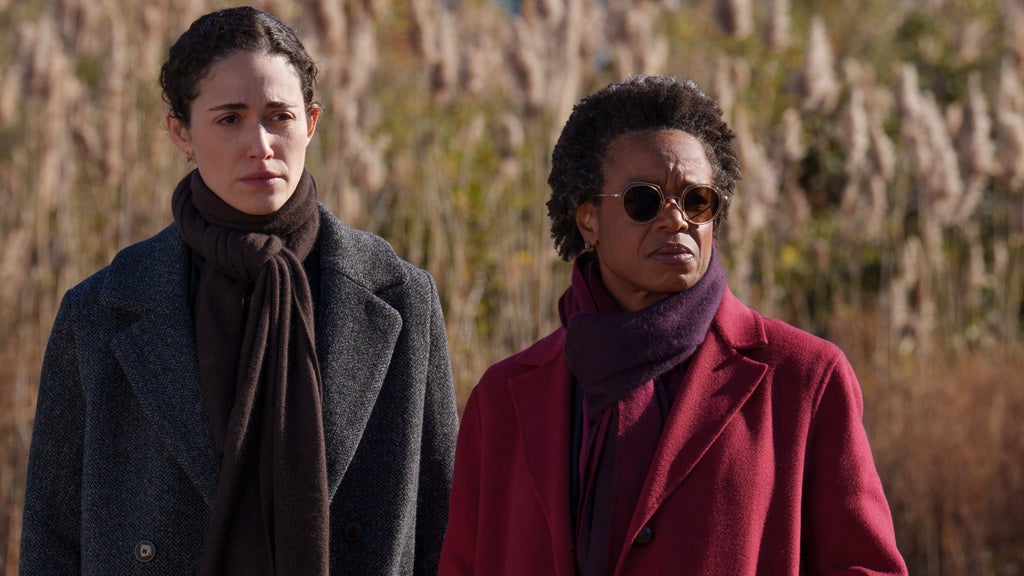
Catherine’s recollection of Isabel’s death and her reunion with Isabel feels like the emotional climax of the season. What was it like writing and executing that moment, which is just so wrenching?
That was one of those moments I was talking about earlier where I was like, “There’s nowhere to hide here.” This is two people crying and sitting and being together and feeling things. We shot that whole sequence with Hope and Emmy and Lola in that room in one day. The Isabel scene was, I think, towards the end of the day. Lola had just been through the ringer and Lola’s not an actor who’s phoning it in ever, and yet they did such an amazing job of taking care of [Larissa Campos] as well. It was incredible to watch.
As somebody who’s not an actor, it’s days like that where I just sit there and I’m in total awe of the ability, the craft and the generosity of being able to unzip yourself and lay your heart out like that. In the editing room, I went through 7 million versions of that scene, just thinking, “How do we do this without it feeling heavy-handed?” My main fear was that it was going to feel maudlin or exploitative or like we were just trying [make viewers cry].
That’s a hard line to find with this kind of material.
I’m interested in how people react to it because I actually tried a version without it just to see what it looked like. But giving them that moment felt right and seeing actually how it went down. What I like is that Catherine isn’t in the past in that scene. It’s Catherine in the present and Isabel in the past. I thought that was important, and then the really important thing for me after that was that the actual handcuffing [between Catherine and Alice] felt really tender. We go from holding hands to handcuffing and it feels like it’s in the same universe, in a weird way, of taking care of someone.

You spend the whole season putting faces to these awful, predatory men from her past. It feels fitting that we get to see the face of her grief, too.
Yes. And, if it really is a story about memory and why your brain chooses not to remember something like that, when she does remember it, we should show how hard it is. That was another argument for putting it onscreen. She is actually like facing her own memories in that moment.
Do you have some kind of four or five-season plan for the show? Do you have a big, complete arc in mind?
Meriwether: I’ve never been that kind of writer. I don’t understand those kinds of writers. I love them and respect them and envy them from the bottom of my soul. But I have never been able to look ahead that much. I’ve been thinking about what Season 2 would be, and I think there’s a lot still to explore with Alice’s story. What was important to me in this season was that you are learning in every episode something new about the characters that you didn’t know before. The mystery of who Alice is continues, and I also feel like there’s just so much about Nora that is unexplored still. I would love to get into that.
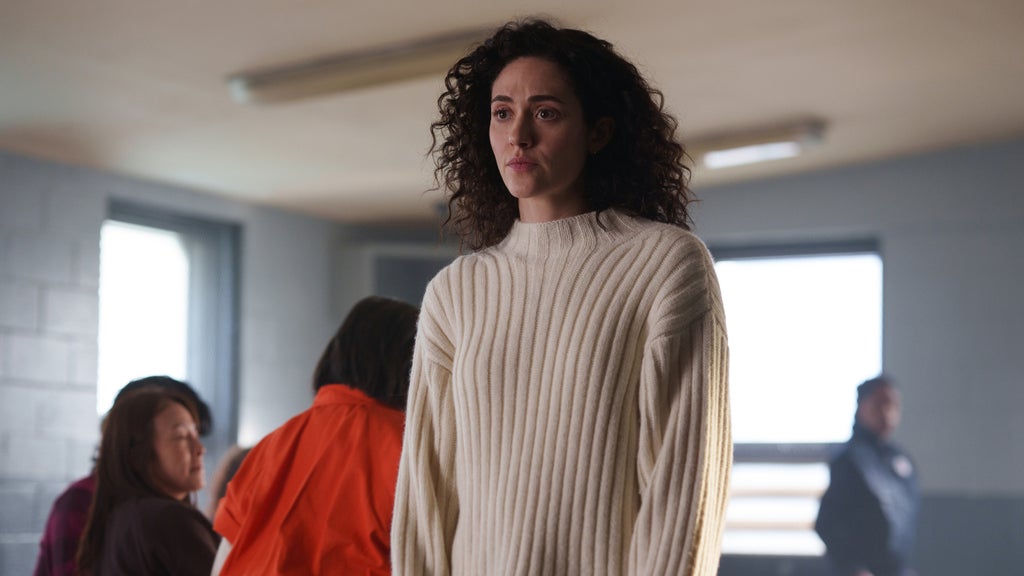
You get such incredible performances out of Emmy, Lola and Quincy in this season. So many of the show’s biggest moments play out as close-ups on their faces. Are there are any specific moments in their performances you’d like to highlight?
Meriwether: Oh my God, that’s a great question. You’re right to point to the faces. I could and I did talk til I was blue in the face about wanting complexity, wanting the characters to never fall on one side or the other and wanting you to always feel conflicted about them. I think about Quincy when Nora remembers the Isabel Luna case and just the way [director] Karena [Evans] shot it so it’s this low angle on Quincy’s face. Everything going on in her face is incredible in that moment. I loved also those small moments of victory with Quincy. These little moments with Ed, where she gives a little smile or a little smirk, or those small moments where she’s happy with Alice. I think you just feel so much because she’s holding so much back.
With Emmy, I’ll shout out the final scene of the show with Catherine. That last smile, the last shot. I never looked at another take. I didn’t actually look at dailies from that scene, which is so rare. Any editor that works with me knows I exhaustively look through every daily. But I just never looked at them for that scene because I was like, “That’s it. We got it. That’s perfect.”

The 7 Best New Movies on Hulu Right Now
For Lola, I think about that final confrontation between the three women, which I was terrified of. I felt like there was no way it was going to work. I was handing them four pages of dialogue where there’s a gun standoff and it’s in a tight, confined space and Catherine’s bleeding out. I actually felt bad writing it. I was like, “I’m sorry!” But the way they just attacked that scene. That’s the incredible thing about Lola. They can break your heart and just scare the s—t out of you at the same time. I feel like that’s so rare for an actor so young. I genuinely feel for Catherine in that moment and am so scared at the same time of what she’s going to do and I just find that so hard to do. It’s so complicated. It’s beautiful.
There’s also one moment in Episode 3 with Elena [Chloe Carrillo] where she and Catherine are in the motel room and Elena’s like, “You got so sad and weird.” She basically says, “You tried to take care of me and you couldn’t.” And you just see the heartbreak of that on Catherine’s face. Lola doesn’t play it up, but you just see this heartbreak and then Catherine tries to switch tactics and asks Elena to at least take her backpack. I just find that so sad and moving.
“Furious” Season 1 is streaming now on Hulu.
