

Just a few years ago, landing a role in a microdrama could be as simple as submitting a self-tape on Actor’s Access or even getting discovered on Instagram.
Now as the business’s domestic reach has exploded, apps like ReelShort, GoodShort and MyDrama have become reliant on verticals stars with a solid track record and talent representation to meet the increasing demand of the format’s voracious fans. The casting model has evolved past casually sliding into actors’ DMs into something more familiar: a Hollywood-like system driven by agents, managers and repeat relationships.
This formalized ecosystem managing talent relations and casting underscores the tremendous growth and maturation of the verticals business, a market worth an estimated $11 billion. While many in Hollywood still write off the medium, casting directors who transitioned from traditional entertainment as well as managers and agents are setting up shop and building their own “verticals” departments.
The result has been vertical companies now preferring to work with reps for cleaner agreements, better terms around pay, AI use and other rights as well as more consistent guidelines for sets, even if many of them remain non-unionized, according to top insiders.

It’s also resulted in vertical stars like Noah Fearnley. The 26-year-old actor broke through in microdramas in 2024 and has since built a following of nearly 300,000 across social platforms while becoming a consistent lead in the medium. That momentum has already begun to translate to traditional Hollywood — he recently booked a role as an aspiring model in Ryan Murphy’s “American Love Story.”
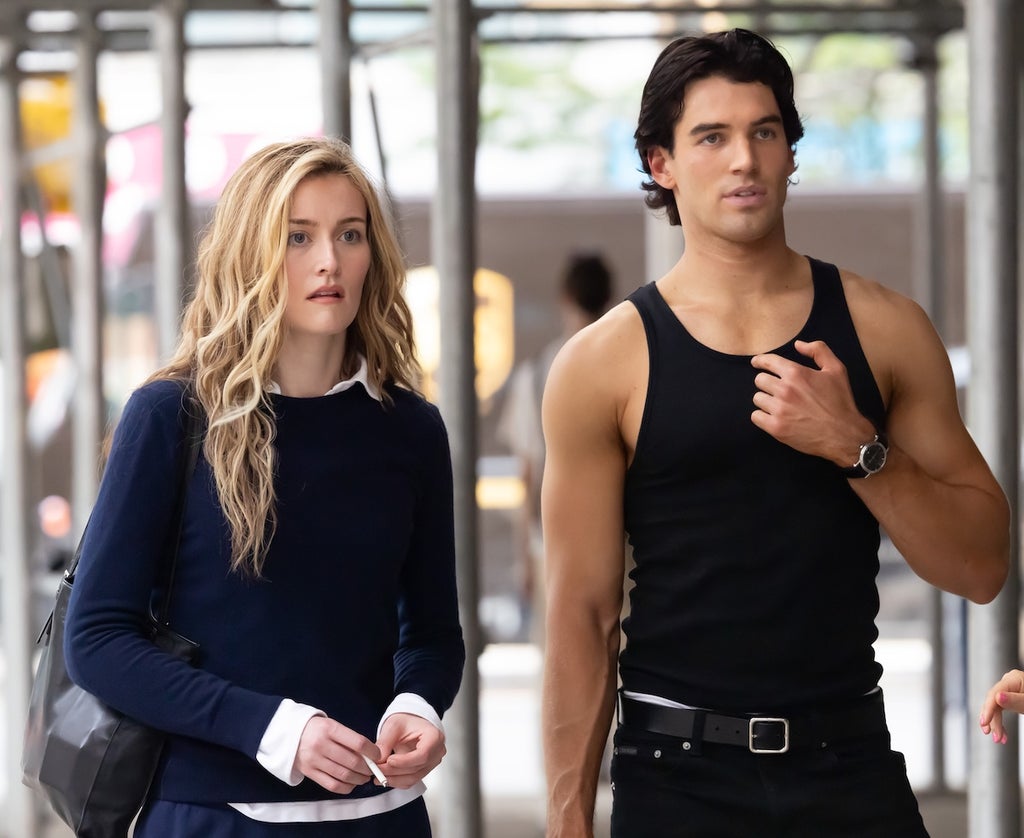
His rising profile underscores how verticals are creating their own kind of star power. During a recent red carpet interview for the series, social media comments were flooded with fans recognizing Fearnley from his microdrama work — outshining the more traditional TV names — highlighting the deeply engaged audience that vertical actors are bringing with them.
“Vertical actors come with fandom, and that’s something that has piqued the interest of the studios,” Karla Rodriguez at GoodShort told TheWrap.

Rise of the verticals star
As the space has matured, some agencies have begun building what insiders describe as a “vertical roster,” a curated pool of actors who book consistently and are repeatedly tapped for new projects.
At Eris Talent Agency, that roster now includes roughly 75 actors in lead or major supporting roles, a number that has rapidly expanded alongside demand. The agent noted however that her agency was not an immediate adopter of the format but has since changed its tune.
“Our agency did not want to do this, [create a verticals roster], so it became a full dividing thing,” Tina Randolph Contogenis told TheWrap. “We had some pretty heated conversations, because it was like, ‘You’re going to water down our agency.’ And the vertical team was like, ‘We’re going to do this. We see value in this. We understand what this is.’”
“Fast forward six months later, they’re going, ‘Can we start a second vertical department?” she said.
Casting directors and platforms are increasingly relying on known actors, who they know convert subscriptions or drive traffic to their platforms. In many cases, actors are offered roles directly based on prior work, sometimes before a breakdown is even released publicly.
That repeat casting has helped fuel the rise of a new class of “vertical stars” — actors who may not yet be household names, but who drive engagement and viewership within the ecosystem.
Jordan Holtzer, who entered the verticals space as a manager early, said that the platforms did not initially promote the actors as individual entities in the same way that Hollywood does, but as some actors became stars in their own right, the companies learned that their draw power could benefit their business.
“Platforms are realizing as the actor gets bigger, the platform gets bigger,” the manager explained.
Marin Hope, casting director for vertical drama service CandyJar, added that her casting process increasingly resembles traditional Hollywood.
“It’s not unlike casting a theatrical project when you’re going out with straight offers to actors who have established themselves in the space,” she told TheWrap.
A more discerning process
What started as an easy gig for a nonunion actor to book — self-submissions used to be king for breaking in — has increasingly become more competitive. Platforms are leaning into proven talent that resonate with their viewers and drive subscriptions, views and engagement instead of consistently booking new faces.
“It’s now become harder and harder to break in than ever,” Alex Amsellem, head of casting at GoodShort, told TheWrap. “I think a lot of the platforms now, if you don’t have lead credits, they’re not always willing to take a chance on a new face.”
Contogenis from Eris Talent Agency, which formed its own verticals roster, echoed this sentiment. Her agency pitches new talent, but many of the platforms send offers directly to previous actors they’ve worked with or rising stars that have already booked with other platforms.
The platforms still upload breakdowns to casting websites like Actor’s Access, but the majority of the actors that the leading verticals companies choose to work with are repped by an agent or manager.
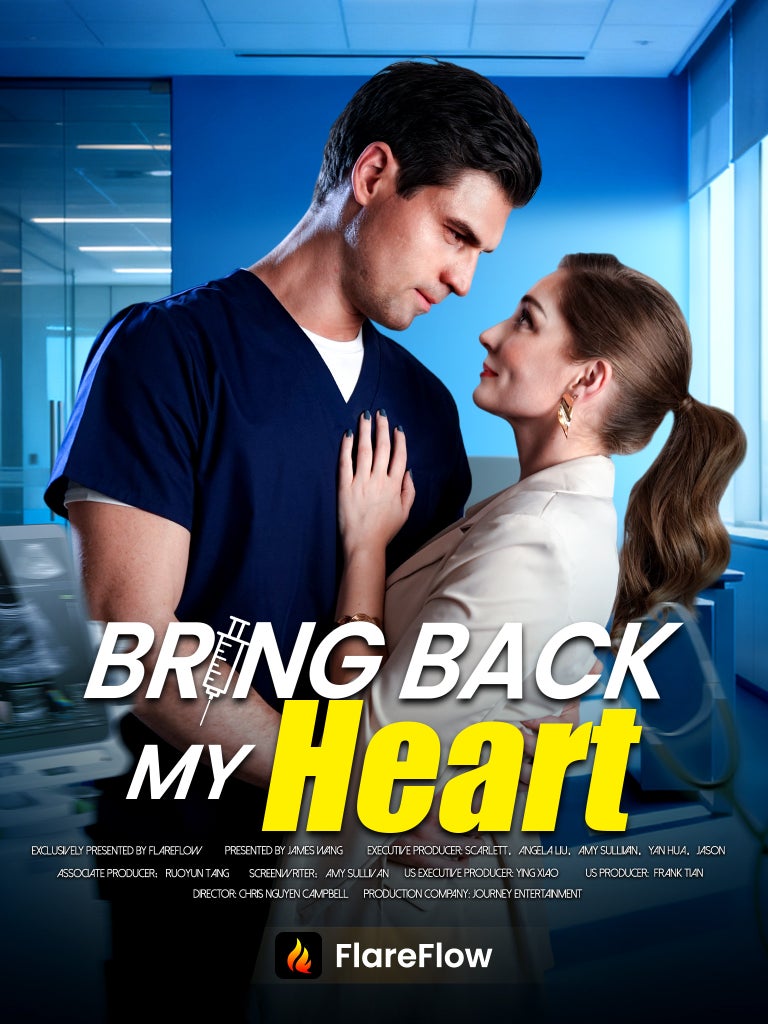
Paul Ruddy, one casting director who moved from casting Hallmark films to the verticals space, told TheWrap that the space has evolved significantly since he started about two and a half years ago. Initially, talent executives from those platforms took to DMs, messaging attractive young people, often models with no acting experience, to join an upcoming microdrama project.
He encouraged agents and managers to not be afraid to submit talent for these projects because they have certain preconceived notions about the quality of them.
“At a time when we’re desperately in need of work, these things are shooting here [in Los Angeles] largely, and they are providing hundreds and hundreds of jobs for people that didn’t have work,” Ruddy explained. “So when I hear agents stick their nose in the air about them, that’s foolish.”
More protections
The business model has changed in the past three years, where platforms prefer to work with actors with representation to streamline the business process. Holtzer represented many burgeoning young actors and discovered that many of the verticals contracts were “kind of a mess.”
“It’s not a union production, so you don’t have those same protections built into the contract as a union contract would,” he said. “So for me, anyway, it was really valuable to be able to draft these contracts for these platforms or really mark these up and provide that value that way for my clients.”
He found himself completely red-inking the contracts to insert protections for his talent, many of which became implemented by the platforms themselves moving forward. One specific contract addendum he formalized in recent months was surrounding AI.

“Whereas I used to put in just a couple AI provisions, now it’s become a whole addendum,” Holtzer said. “There’s been cases throughout the industry where the advertising, the marketing, the trailer of the vertical will include scenes that the actor never shot on set, usually highly sexualized scenes, and that’s a huge issue where they’ve completely AI-ed somebody’s performance, to engage in certain behavior, to make it like that’s part of the project, to get a click that was never included.”
While Holtzer noted that many of the platforms worked with representation to take these materials down and comply with the talent, the discussions were hard fought and would be difficult to manage on your own.
“The rep will know how to negotiate realistically and correctly with the casting department, the casting director, which is not something actors are equipped to do, because it’s not their job,” Amsellem said. “We’ve seen a few verticals like stars get in the way of their own career because they didn’t have the proper representation.”
Diversity in casting
Even as microdramas have created a steady pipeline of work, insiders say the space is becoming harder to break into — particularly for newcomers without representation or prior credits.
Just like Hollywood, the medium has faced criticism for lacking diversity, with some insiders describing it as “whitewashed” in its early iterations. As casting becomes more centralized and relationship-driven, there is concern that those dynamics could reinforce existing biases.
Some platforms and casting teams say they are working to address that.

Hope said her team at CandyJar prioritizes open-ethnicity breakdowns and has seen increasing diversity among recurring leads. The app specifically has a category that highlights its “Diverse Leads” titles.
“Most of our breakdowns are open to any ethnicity — and they really are,” she said, noting that many of their leads are Black, Hispanic, Asian or mixed race. “The goal is to continue to expand.”
Others are building more formal pipelines. Executives at GoodShort said they are partnering with organizations like Latinas Acting Up and Women in Film to broaden their talent pool, while also implementing internal training to avoid stereotyping in casting.

Traditional Hollywood moves in
As the vertical space grows, it is increasingly attracting attention from traditional Hollywood players.
One of the clearest signals came earlier this year when Taye Diggs signed on to star in a vertical project produced by CandyJar, a deal that underscored how established talent and traditional industry packaging are beginning to intersect with the fast-growing microdrama space.
Issa Rae also announced at TheWrap’s Creator Summit that her production company Hoorae produced a microdrama with TikTok’s PineDrama. Her first series “Screen Time” features SAG actors, including Eric C. Lynch (“Queen Sugar”), Jenna Nolen (“Á La Carte”) and Xavier Avila (“Shrinking”).
“Six months ago, no one wanted to hear about this,” Holtzer said. “Now we’re seeing A-list actors, big producers getting into the space, pouring money in.”
At the same time, the microdramas industry can not yet work at the pace it has been to make a profit while complying with union rates and guidances. At least not the major players. While SAG-AFTRA introduced a vertical agreement earlier this year, casting directors say adoption has been slower than expected.
“We’re not quite there yet,” Hope said, noting that most SAG actors are still not submitting for vertical projects at the same rate as traditional film and television roles.
Executives at GoodShort told TheWrap that the current SAG agreement does not yet work for major platforms that produce content at scale. Some casting directors noted that independent production companies may benefit from the agreement more as they are working on two or three productions monthly rather than upwards of 30.
“The current one is usable by smaller production companies at the moment, as far as high volume platform, which is what we are, it just needs to be fast,” Amsellem said. “We are very open to having union shows and having union content, but in order for us to do that, we would need an agreement that works for major platforms.”
Part of the hesitation comes down to economics. The current model — largely nonunion, high-volume and fast-moving — allows actors to work consistently and, in some cases, earn more than they would on SAG contracts. Holtzer noted that some of his clients left the union because they were making a better living on nonunion gigs than on the few guest stars roles they would audition for annually. Without the support of a union though, logistics fall on talent’s agents or managers to ensure they receive basic protections while on set.
Even as interest from higher-profile talent grows, some executives caution that the economics that make microdramas successful may not translate to major-star-driven productions.
“If we’re students of history, we know that Quibi didn’t work because they were pouring a lot into their productions,” Karla Rodriguez, head of talent relations at GoodShort, told TheWrap.
Instead, insiders say the space may continue doing what it has done best: building its own stars and feeding them into the broader industry.
“My role as an agent is to bridge that gap,” Randolph Contogenis said. “You take someone who’s done 20 or 30 of these, who has a fan base, and you bring them into the traditional space. You think they’re going to say no?”
Ruddy pushed back on lingering skepticism from agents and managers still wary of the format.
“Fox and all these executives from ABC and CW that are getting into this space, they wouldn’t be doing this if they didn’t think there’s a future in it,” Ruddy said. “This is not some passing trend.”
