
Note: This story contains spoilers from “Monster: The Lizzie Borden” Story.
Ian Brennan has done it again. After premiering on Netflix last Thursday, “Monster: The Lizzie Borden Story” has spent the weekend as the most-watched Netflix original series in the U.S. and 49 other countries.
The “Monster” anthology series stands as Netflix’s most popular collaboration with executive producer Ryan Murphy. The first season of the anthology series, which focused on serial killer Jeffrey Dahmer, is the seventh most-watched English-language Netflix series of all time, and scored 115.6 million views in its first 90 days on the platform. Though the subsequent seasons, which focused on the Menendez brothers and Ed Gein, weren’t as popular, both fueled cultural conversation. The Menendez brothers season led to a mass reevaluation of the case as well as 11 Emmy nominations, and the Ed Gein season led to an Emmy nom for star Charlie Hunnam.
By now, fans kind of know what to expect from a new season of “Monster.” An infamous killer from American history appears on the screen, while Brennan and a cast of some of the most skilled and underutilized actors in Hollywood dissect whether this person was born the titular monster or made into one. While the Lizzie Borden season certainly asks this question of the infamous Massachusetts double murders for which the real Borden was acquitted, it does so with a guttural feminist screech.
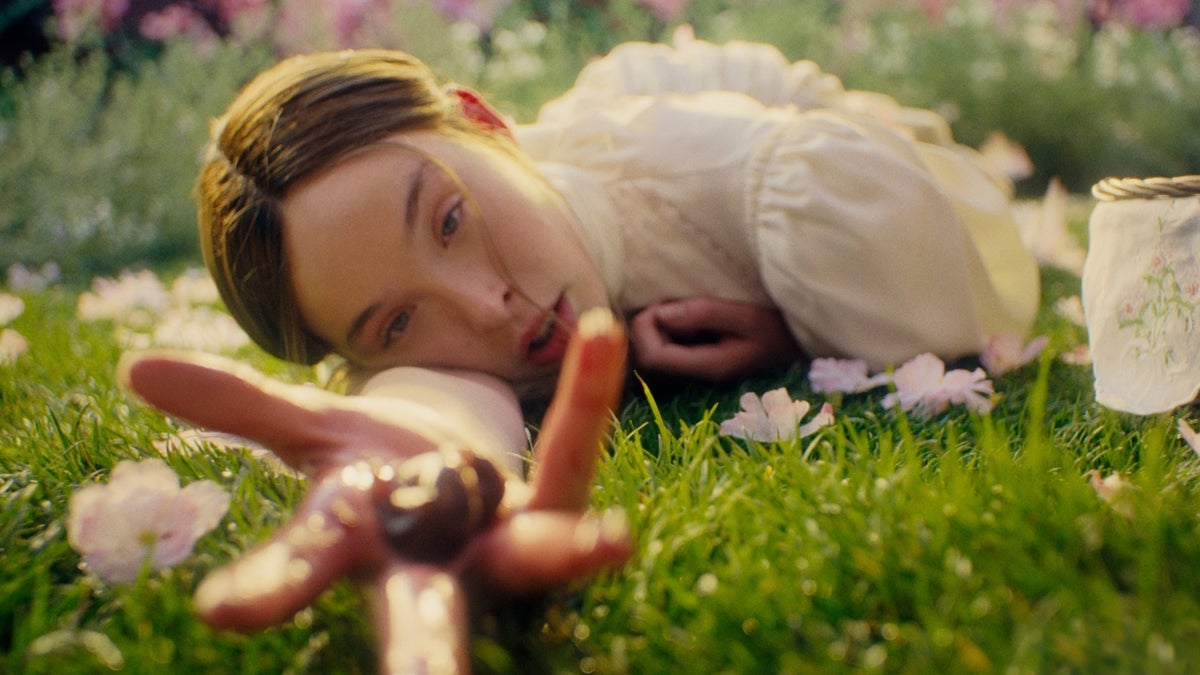
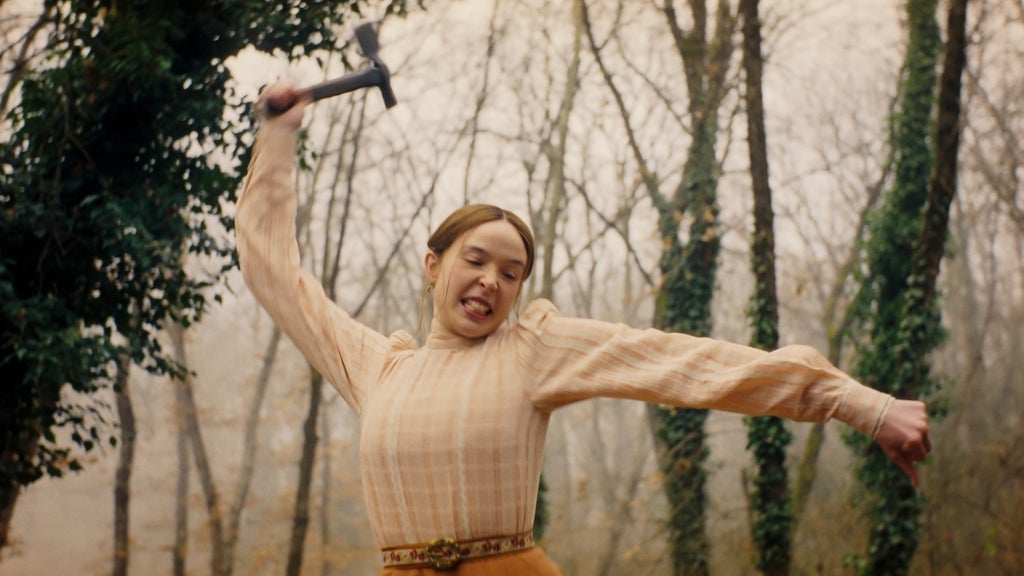
“The Lizzie Borden Story” isn’t a whodunit; in the first 10 minutes, the series shows Lizzie (Ella Beatty) brutally hacking her father (Charlie Hunnam) and stepmother (Rebecca Hall) to death. The series more so asks why wouldn’t she have done it? Armed with an emotional soundtrack that features Bikini Kill, Lambrini Girls and Kate Bush, the season systematically explores female rage, putting a sympathetic face to some of history’s best-known female killers.
The installment is a sharp change from other seasons of “Monster,” which have historically been more somber than the sardonic and sometimes silly Borden season. It’s also a tease for how Brennan, the season’s showrunner, creator, executive producer and writer, may be evolving “Monster” as he and Murphy plan for 10 seasons of their Netflix thriller. The conversation below has been edited for length and clarity.
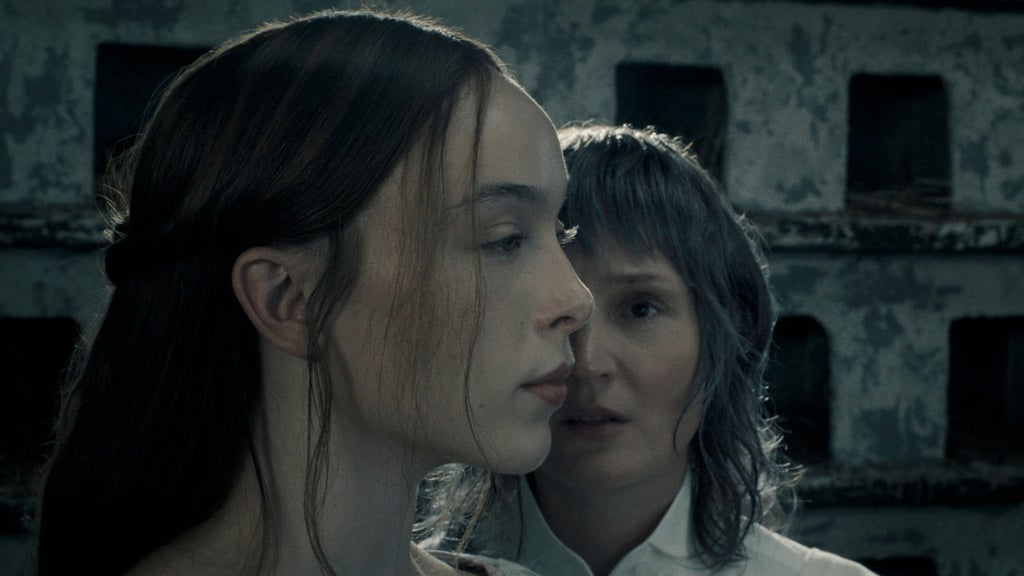
TheWrap: The series starts with a red curtain pulling back, so you know that the show is telling the story of Lizzie Borden. That motif continues throughout the season. What made you decide to go in that direction where you’re diving into these meta narratives?
To start with, I didn’t know very much about [Lizzie Borden] at all. I’d never seen any of the movies or TV shows. I didn’t really know anything beyond the nursery rhyme. Honestly, I didn’t know she wasn’t convicted, so it was really a tabula rasa for me.
In each one of these seasons, we go further back into the past, and it’s trickier to know what’s even knowable. But if you just tell the facts of what is known to be true, that in and of itself isn’t really a full story because it’s full of gaps. So in order to tell the story responsibly and in an interesting way, you have to take what is knowable — which is full of a lot of mistruths or half truths, a lot of lies — and you have to holistically look at them all. Then you go in the writers’ room, look at one another squarely and be like, “OK, what do we think really happened here?” This is less of a flight of fancy than a hunch about what went down in the [Borden] house and also what it would have felt like to be that woman in that house. It was really leading with the gut, and I think that’s where the [anachronistic] music came from.
It’s easy for period things to feel stuffy, and everything’s on a harpsichord, which is totally great. But I think that’s just like not quite the story here, particularly once you have this throughline that [Borden] was aware of Elizabeth Báthory and that Aileen Wuornos knew about [Lizzie Borden] and was obsessed with her. All of a sudden, there’s what feels like a thin thread of female rage in one story. Then you’re like, “This actually runs through, not only these three stories, but through human history. This is a thing we all need to look at squarely, answer to and be responsible for.” That’s the way these three stories came together. So the music cues, they immediately put you in that space. It’s one layer of cheesecloth that’s in between the stories, and all of a sudden, you’re like, “Oh, I f–king know exactly what that would have felt like.”

I’ve always enjoyed your comedic work, which has appeared in shows like “Glee,” “The Politician” and “Scream Queens,” and it appears here. It’s always a mix of of very highbrow, very lowbrow, and it intelligently ping pongs between those two extremes. What are some of your comedic inspirations?
I’ve actually not thought about this much. I remember growing up — it was hard for me to stay up for it — but the Church Lady years [of “Saturday Night Live”], I remember that lighting up my brain for the longest time. I was like, “I just want to be on ‘Saturday Night Live.’”
I grew up in a very loving, actually very liberal, but quite Catholic family. I grew up within the confines of the Catholic Church. My mom was a Catholic school teacher, but my mom, dad and sister, we all have really biting senses of humor. It’s the sniggering in the back of church.
[My humor] needs constraints. It needs a real world to to live in. I would probably be hopeless at writing a sitcom, for instance. I think it’s why I’ve only ever written for hourlong dramas. This season is definitely the most — well, it’s not even that it’s comedic. It’s funny. It has the clearest, most arch constraints. That’s kind of what that period was.
I know that you have a 10-season plan for “Monster,” and you were working on a Luigi Mangione season that was scrapped because it wasn’t quite working. What bigger themes are you hoping to explore in other seasons of “Monster” that you haven’t yet touched on?
The masthead for this show is “Are killers made or are they born?” That’s the maximalist question we’re asking and what we have to dive into each time. The trick then is, if you’re doing these character analyses, there has to be something to analyze and something that’s knowable. That’s what was tricky about Luigi. He was such a phantom in his own story, and the story’s not finished. What was fascinating about that [case] was the reaction; it was like a true Robin Hood moment. That was a father of two, a Minnesota man who was gunned down in Manhattan, and zero voices were upset about it. That was striking to me and scary. Something has shifted in the culture, but there was no there there. It was like trying to write to a phantom, and it was just not possible.
The other problem with finding subjects for this anthology is you have to want to spend 10 hours in their head. Most murderers are just awful. There’s nothing redemptive or interesting about them … The throughline with all of these subjects, from Jeffrey Dahmer to the Menendez brothers to Ed Gein to Lizzie, is that at the end of the season — even if I become more convinced rather than less about their guilt — I end up liking them, feeling for them, understanding them and being like, “If I was in their situation, I might do something similar or worse.” You and I could both murder people. We have that in us, but we don’t. What is that about? What would it take for me to be driven to take another human being’s life? Why is someone else able to do it, but I’m not? That’s the mass appeal.
Would you ever consider a more esoteric monster? For example, the third season of “American Crime Story” was the Monica Lewinsky and Bill Clinton scandal, which was a blurrier crime where society criminalized her.
Yeah, we would. We really cast a fairly wide net, and the list is a lot of things we’ve jotted down. Every season — we’re still doing it now — we’re like “What’s the list again?” It didn’t start this way, but there’s now an expectation of the show that it has to be a marquee name. Of the four, Ed Gein is the most obscure … But that said, I’m not opposed to [the idea], and I actually think it might expand the brand of the show to do something that’s a little bit more obscure or not yet known or overlooked.

I want to talk about the finale of this season, which shows Aileen Wuornos being welcomed into the afterlife by Lizzie Borden and Bridget Sullivan. What are you hoping audiences take away from that final moment?
You always run the risk of, with this show, lionizing a monster, but in this case, it never felt that way. I feel like all three of those women got a raw deal. We wanted to tip our hat and hope that someplace these women — particularly Lizzie and Aileen Wuornos who were real tortured souls — hope at some point they found some peace.
There’s a lot of Aileen Wuornos footage that’s viewable, which Sarah [Paulson] did such a brilliant job of drinking in, completely metabolizing and then making it her own. A lot of that stuff — all the courtroom stuff — is verbatim … I just feel for her. I think she’s hilarious. She did horrible things, but she had horrible things done to her. If a 10th of what was done to her was done to me, who knows what I would turn into? So that was was the motivation: to send them off, in a way.
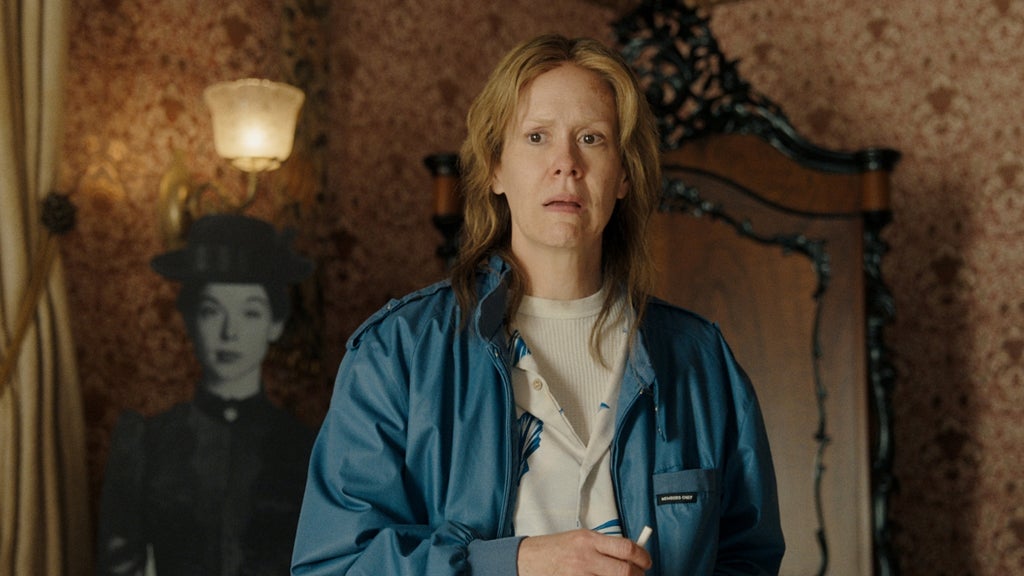
And there is something structurally about the season starting with Lizzie and Maggie, who have these horrible things happen to them and are under the thumb of a patriarchal society but they can’t really say anything. And then you have Aileen Wuornos, who is literally saying everything that has been done to her out loud, graphically. The honesty is jarring.
I had not thought about that juxtaposition … The switching back and forth, really I owe that entirely to Ryan [Murphy]. He’s a genius at about six or seven different things, but one of them is knowing how to just stay a little bit ahead of the audience. When you’ve had enough of drawing rooms, corsets and tea sets, he will completely know when to rip the record off the phonograph and put something else on. It’s like a sense of smell he has about that, and it is rarely wrong. Also, it follows structurally as a sequel to last season, which also jumped through time and subject matter. It keeps you from getting ahead of the story or bored by it.
Both the Ed Gein and Lizzie Borden murders happened so long ago. What was it like dealing with these older murders where you haven’t faced as much pushback as more contemporary seasons of the show?
The pushback comes with the territory. I’m mortified by the idea of traumatizing anybody who had to live this in real life. That’s something that is hard, and you just hope to not do it as much as possible. It’s tricky with this genre — true crime — which, I’m new to this. I’m not a true crime buff. So I am very cognizant of whether that translates or whether that diminishes the effect.
That said, it’s a relief to be able to tell a story that where everyone involved is at peace and gone. But it also makes it trickier because the primary materials are much more sparse.
It was harder with the Menendez brothers because that story is shot through with lies. They would admit as much. It’s really hard to understand what really happened there. With Jeffrey Dahmer, at least he was so mortified by what he had done that, while one had to take what he said with a grain of salt, he right away wanted to tell the story. He was also really bored in prison and liked cigarettes and sodas [which he was given for talking to authorities]. So he was like, “If I just keep talking and keep telling them what happened, it’s better.” It was a way for him to stay out of general population, which would ultimately kill him.
But with Lizzie [Borden] and [Ed] Gein, there’s less known. With Lizzie, there’s just mostly the court testimony, which wasn’t even a trial. It was a hearing. With Gein, there was at least some FBI interviews and a few recordings, which was great for Charlie [Hunnam] to hear the voice. You’re faced with some holes in the story that you can’t leave empty.

I always really appreciate “Monster” because it always makes me sit and reexamine humanity and American culture.
I feel like I get to have this sneaky master’s degree in criminal psychology. It’s this really great mid-career opportunity to do something I was completely unfamiliar with.
Easily the best writing experience of my career has been on this show. I’m really glad it both resonates with people like yourself — who are like looking at it squarely and in a way that’s like you’re taking a college course. You will write things about it, and you’re coming from a very analytical and soulful way — but it also resonates to a wider popular audience. That’s really affirming.
That’s so interesting you said that. I was just talking to my editor about how I appreciate Ryan Murphy’s world because there are character examinations with so much empathy, but at the same time these shows are created for a mass audience. It’s sort of like sneaking broccoli in the brownies.
He deserves so much credit for knowing how to do that, to package [a story] in a way that doesn’t feel like you’re eating your vegetables. He has such a knack for doing stuff that is entertaining and button-pushing enough that you want to get it. He doesn’t mind being a lightning rod because he’s like that … He’s a showman in the best possible sense.
He’s just very good at knowing there’s an audience for this. I’ve suspected that he has a time machine that only goes like one year ahead, and he just hops in, walks around and sees what people are talking about nine to 12 months ahead of time. They really broke the mold when they made that man. I’m lucky to get to be creative alongside him and within that those parameters. He’s really a joy to work with, and you feel like whatever you’re writing is just born on third base when you’re working with him.
Even this show. The Lizzie Borden season is premiering right as everyone’s talking about like trad wife culture. It’s perfect timing for a big feminist story.
We were starting to do press for it — it was just as like promotional materials — and I was like, “Jeez, he did it again.” He like smelled a moment. There’s this song of general female fed-uped-ness, so this season slots right in in such a great way.
“Monster: The Lizzie Borden Story” is now streaming on Netflix.
