
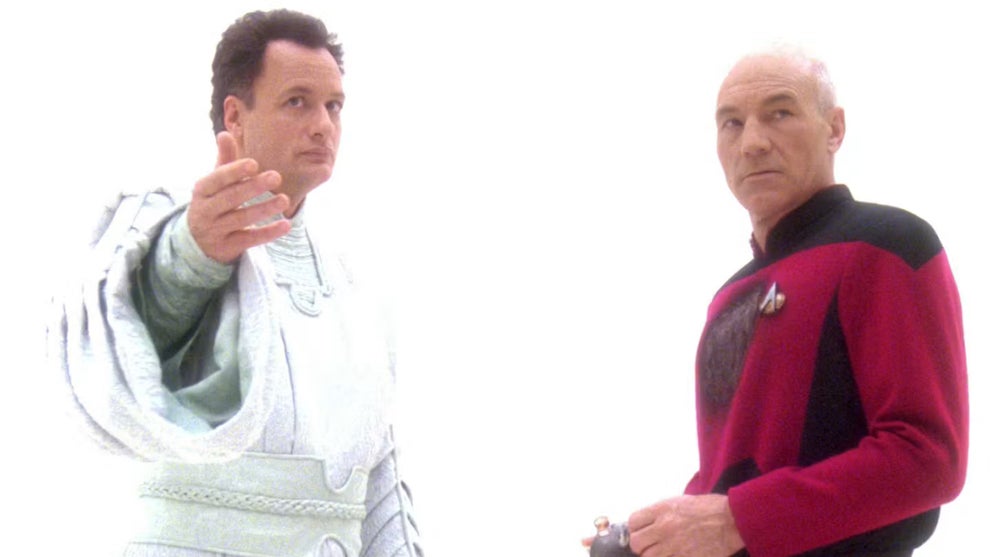
When it debuted in 1987, “Star Trek: The Next Generation” had big shoes to fill. The original “Star Trek” was a classic series that, despite underwhelming early ratings, had become a major success in syndication and spawned multiple hit movies. To people all over the world there was only one captain of the Enterprise, and his name was James T. Kirk.
So Patrick Stewart, a Shakespearean actor whose bald head made producers briefly panic and consider putting him in a wig, could have had serious trouble winning “Star Trek” fans over. But it didn’t take long for Captain Jean-Luc Picard, the galaxy’s most British Frenchman, to make his own mark on the series. Stewart’s character was a thoughtful diplomat, not a dashing man of action, and throughout the show’s 176 episodes, four movies, and spin-off series “Picard” he gave the character many layers.
He may have looked and sounded like everyone’s favorite archaeology professor, but Picard was also a skilled comedian, a swashbuckling hero, a lovelorn romantic, an uncomfortable father figure, a heartless cyborg, and everything else “Star Trek” required. A lesser actor would have had trouble making all of Captain Picard’s qualities feel like they belong to the same person, but Stewart combined them all to make one of popular culture’s most celebrated, beloved characters. And now, arguably, the greatest captain in the history of “Star Trek.”
Patrick Stewart has passed away at the age of 86 and he left behind many iconic performances, but for those of us who grew up with “Star Trek: The Next Generation,” Jean-Luc Picard was a character who guided us through hard times, gave some of the greatest advice in the history of fiction, and proved you can have dignity and still have oodles fun.
We’ve looked back at every episode of “Star Trek: The Next Generation” and highlighted the 25 episodes (well, 24 episodes and a two-parter) that prove Patrick Stewart had more range than practically any other actor, and that “Star Trek” was incredibly lucky to have him as the franchise’s figurehead for almost 40 years.
(Why no episodes of “Picard?” The solo show was very much its own thing, and not episodic in nature, so it makes little sense to judge them on the same terms.)

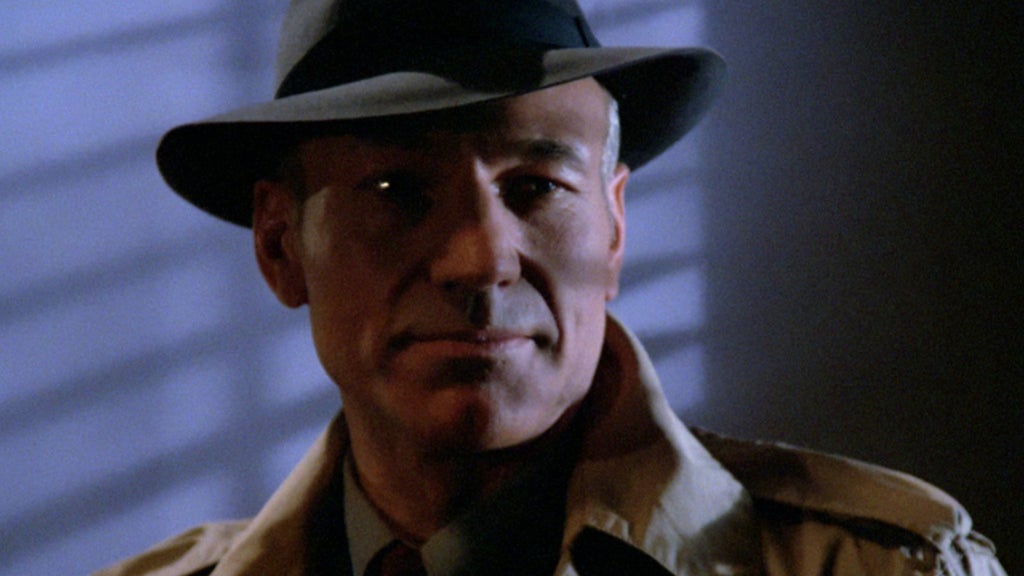
“The Big Goodbye” (Episode 1×11)
“I lost a bet.”
“Star Trek: The Next Generation” struggled to find its own identity in the first season, especially, and it took a while for Captain Jean-Luc Picard to get a decent episode of his own. “The Big Goodbye” finds the Enterprise en route to a diplomatic meeting, where Picard has to speak in an alien language so complex that a single mistake could ruin the entire mission. Counselor Troi orders him to stop studying and relax so he invites Data and Dr. Crusher to the holodeck, where they live out his favorite pulp detective novel and — in true holodeck episode fashion — get stuck in the program. The episode was Patrick Stewart’s first opportunity to cut loose and have fun with his performance, giving Picard a playful theatricality that kept the ship’s new captain from acting like stuffed shirt.
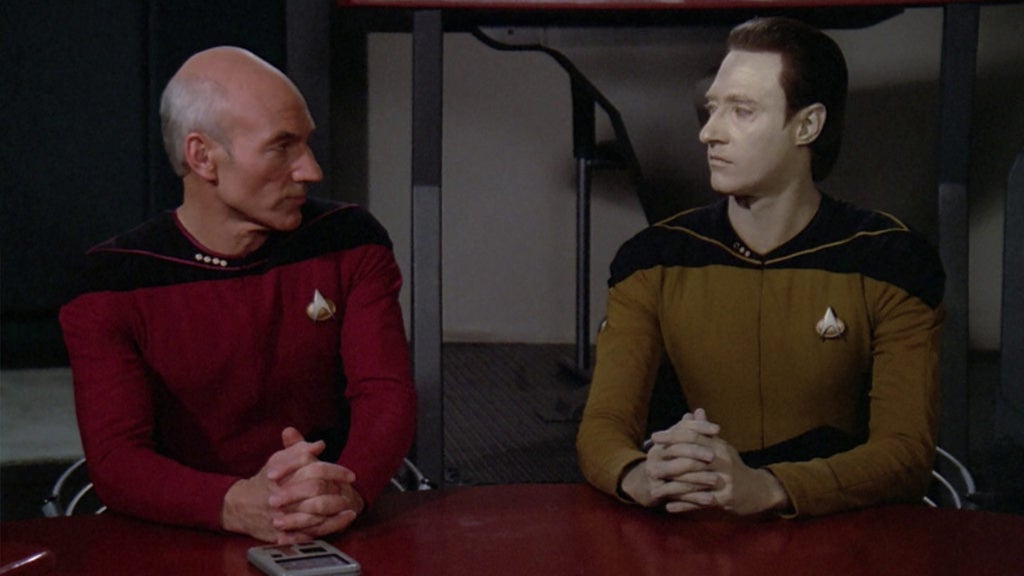
“The Measure of a Man” (Episode 2×09)
“You wanted a chance to make law. Well, here it is. Make it a good one.”
The first truly great episode of “The Next Generation” finds Data, the ship’s android officer, defending his existence as a sentient being to Starfleet. It’s an impromptu trial, which forces Captain Picard to act as his attorney, and Commander Riker to reluctantly serve as Data’s prosecutor. Patrick Stewart was born to orate, and gives every excellent, dramatic speech the gravitas it deserves. But the best scene in “The Measure of a Man” is between Stewart and Whoopi Goldberg, playing the ship’s bartender Guinan, who sets him straight about what’s really at stake when you start treating people like property.
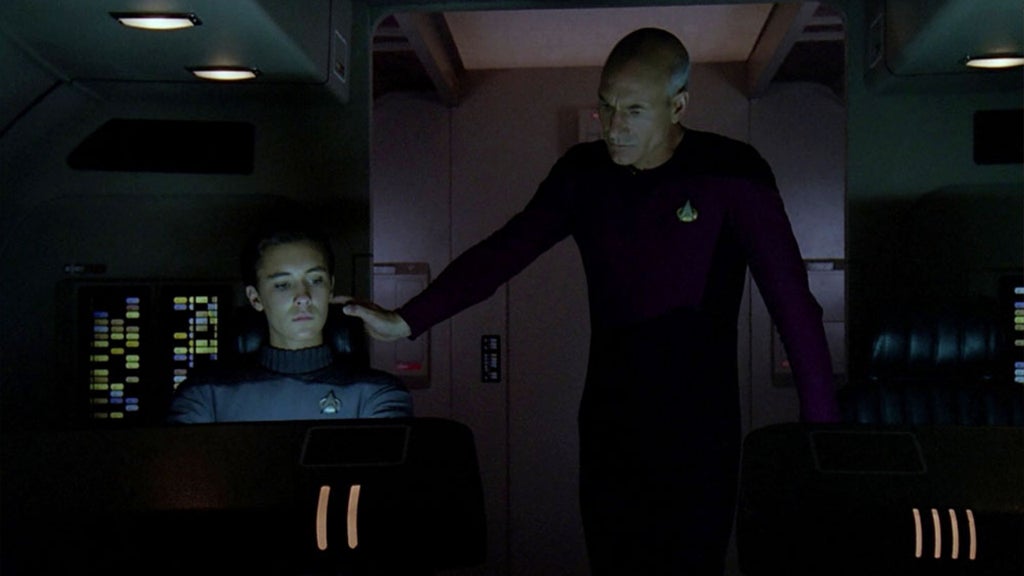
“Samaritan Snare” (Episode 2×17)
“Wishing for a thing does not make it so.”
Captain Picard needs an emergency replacement for his artificial heart, which forces him to take a long shuttle ride with Wesley Crusher, who sees Picard as a father figure. The title, “Samaritan Snare,” refers to the episode’s A-plot, in which the Enterprise falls prey to space pirates in the Captain’s absence, but the highlight is watching Picard — who has never felt comfortable with the idea of being Wesley’s mentor — finally revealing his weaknesses and insecurities to someone who considers him invulnerable.
“Manhunt” (Episode 2×19)
“Under the circumstances, I think it would be prudent if I were to make myself… less available for the duration of the journey.”
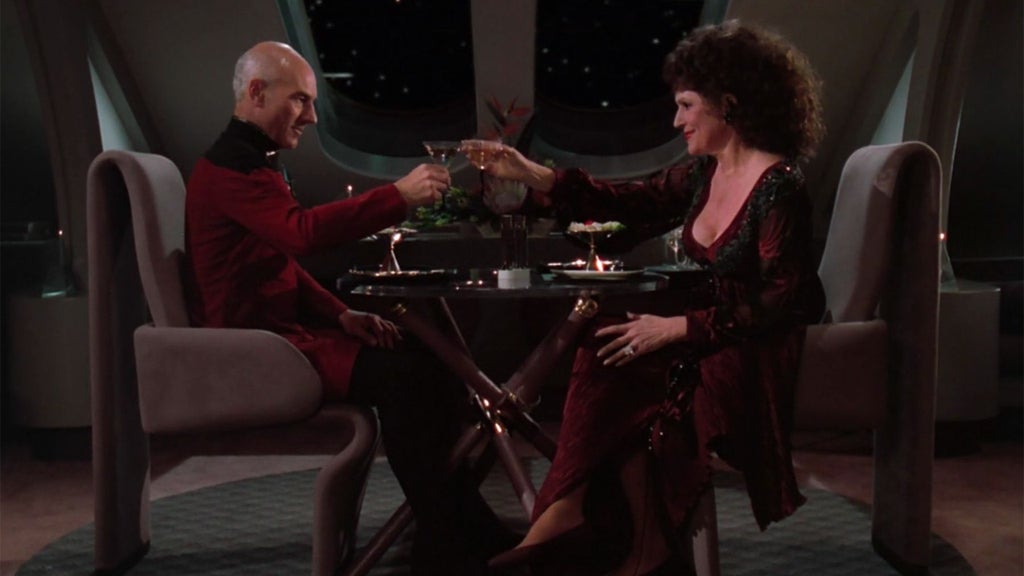
One of the great joys of “Star Trek” is that you can tell any kind of story, from deadly serious war stories, to philosophical explorations of the human soul, to absolute camp. “Manhunt” finds Picard fending off unwanted sexual advances from Counselor Troi’s bohemian mother, Lwaxana (Majel Barrett), and watching the same man who stares down armies without flinching cower at the thought of an awkward social interaction is classic, theatrical, parlor room comedy. Patrick Stewart proves, as he often does, that he can do everything, and so can Captain Picard.
“Peak Performance” (Episode 2×21)
“It is possible to commit no mistakes and still lose. That is not a weakness, that is life.”
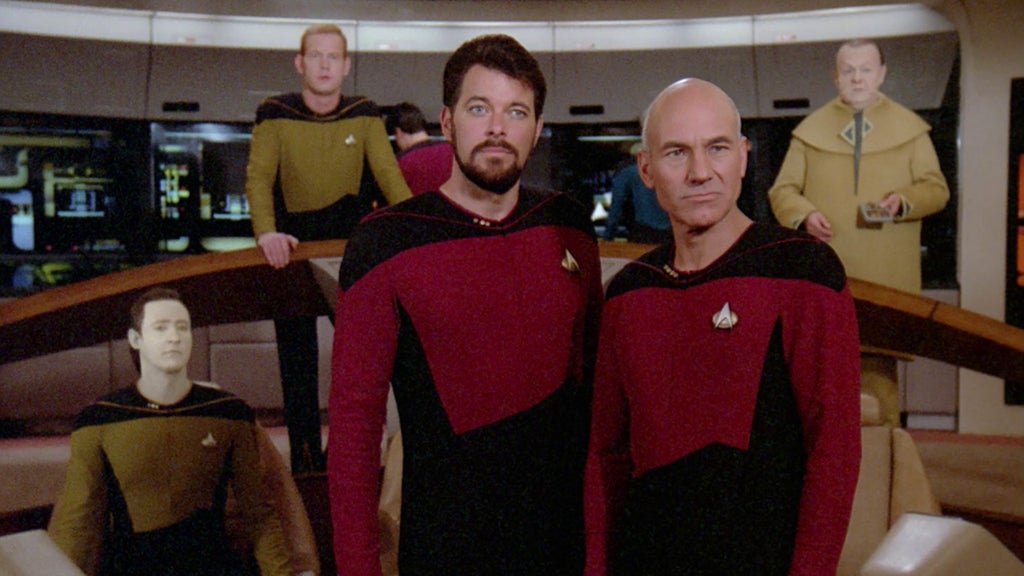
The final episode of “The Next Generation’s” second season is an agonizing, barely coherent clip show, but the penultimate episode is one of the most satisfying episodes in the whole series. Captain Picard and Commander Riker are forced to play war-games, using every trick at their disposal to outwit each other. Meanwhile, Data finds himself in the midst of a personal crisis after losing a contest with a blowhard opponent, even though he made all the right moves. This leads to one of Picard’s most unforgettable speeches, with a harsh but important life lesson about why life doesn’t seem fair — which, ironically, is what makes it fair.
“Yesterday’s Enterprise” (Episode 3×15)
“Who is to say that this history is any less proper than the other?”
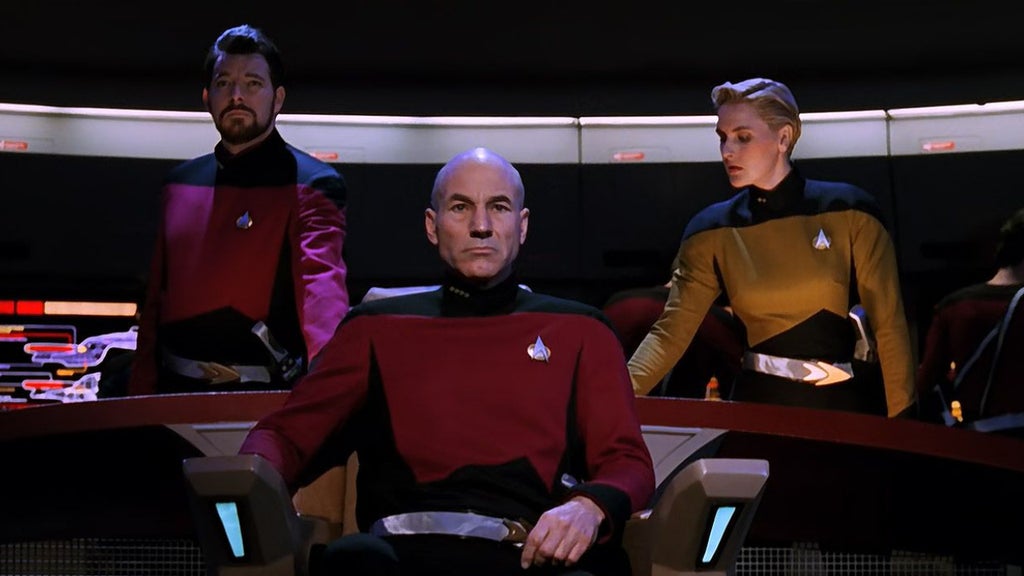
A starship captain has to make impossible decisions every week, but few were as existentially terrifying as the one Captain Picard faces in “Yesterday’s Enterprise.” When a previous version of the Enterprise, whose crew died tragically, appears in the present, it alters the fabric of reality. Now, Picard is the captain of a warship, in the middle of a war with the Klingons, and the Federation is losing. Only Guinan knows something is wrong, and she begs Picard to send the ship back in time, but can she convince Picard that this reality isn’t worth saving? And is saving it worth the lives of the previous Enterprise crew? Most alternate reality episodes amount to very little but “Yesterday’s Enterprise” is a powerful tale with real consequences, led by Patrick Stewart, who has to make a decision that’s hard to fathom, let alone execute.
“Captain’s Holiday” (Episode 3×19)
“I prefer to be acquainted with the women that I kiss.”
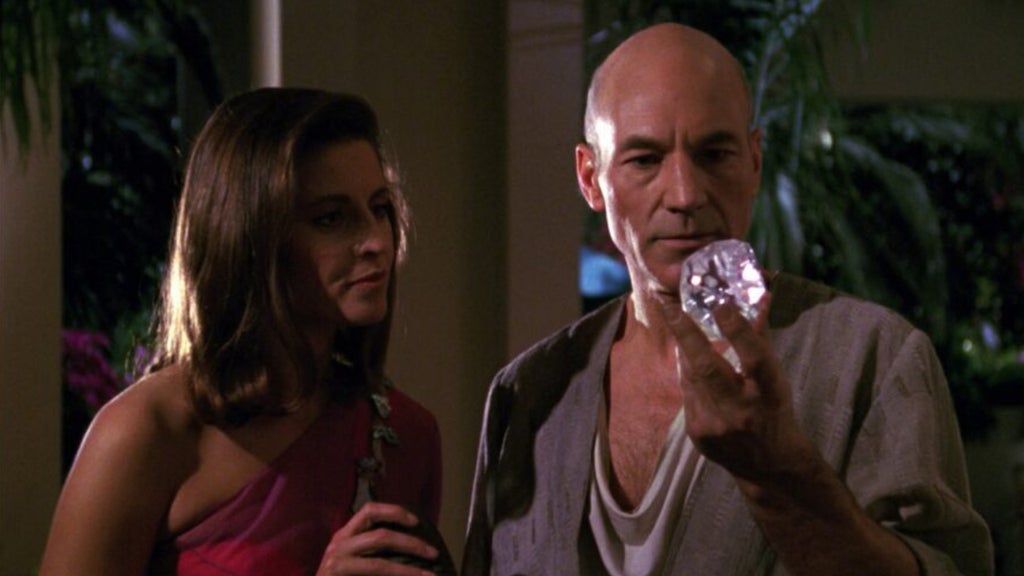
Once again, Captain Picard is forced to take time off of work, and fights it every step of the way. This time he winds up on Risa, a vacation planet full of horny singles, and somehow stumbles into an “Indiana Jones”-esque story, full of stolen artifacts and double-crosses. He also meets his romantic match in Vash (Jennifer Hetrick), an ingenious femme fatale who pushes him outside of his comfort zone. It’s a fantastically fun episode where Stewart indulges in Picard’s contradictions: He’s a workaholic nerd who also loves kicking ass and kissing the ladies.
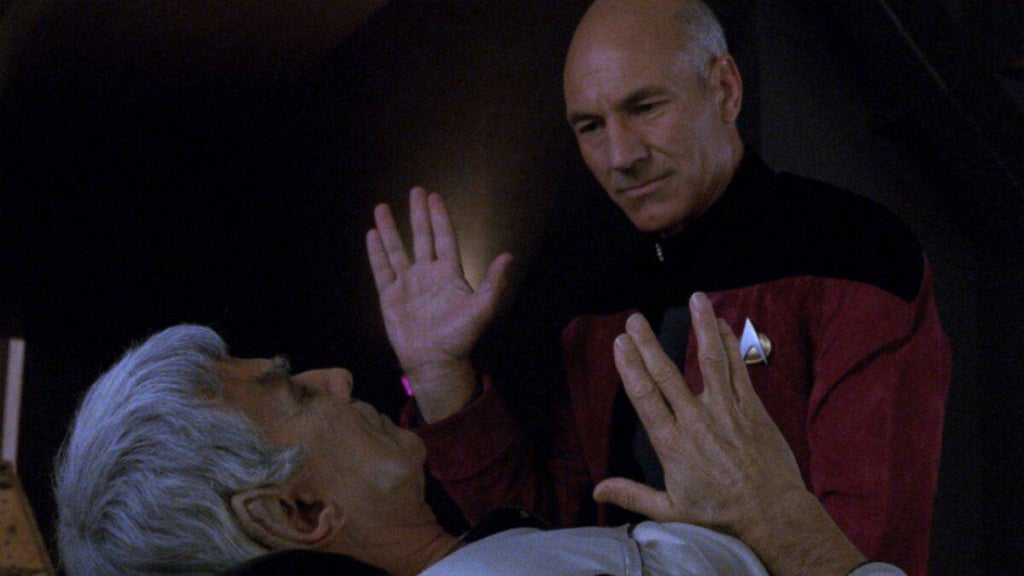
“Sarek” (Episode 3×23)
“You still haven’t answered my question, Sarek. Is it logical for a Vulcan to cry?”
“Star Trek: The Next Generation” usually avoided referencing the original series, but this emotionally devastating episode is an exception. Mark Lenard returns as Sarek, Spock’s father, who is nearing the end of his career as an intergalactic diplomat. Tragically, Sarek is extremely ill, which forces him to mind meld with Picard to complete the mission. It’s a powerful episode about coming to terms with aging, in which Stewart has to deliver harsh truths and then, in one of the best scenes in the actor’s whole career, reveal the emotions Sarek had been holding back his whole life.
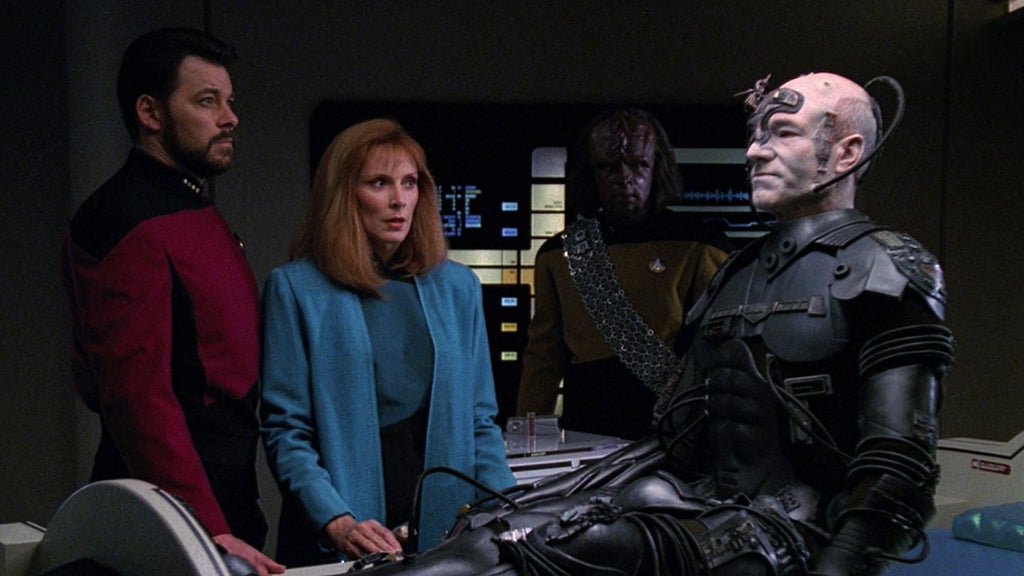
“The Best of Both Worlds: Part I and II” (Episodes 3×26, 4×01)
“Why do you resist? We only wish to raise the quality of life for all species.”
The legendary third season finale of “The Next Generation” finds Picard abducted by the Borg, a conquering cybernetic species, and forced to merge with their hive mind. Devoid of personality and sharing the Federation’s secrets — leading to over 11,000 deaths — Stewart has to remove every trace of nuance from his character and find a way to come back, permanently changed but once again whole. Incredible storytelling, and a standout two-part episode for many members of the cast, but it’s Stewart’s performance that still gives us chills decades later.
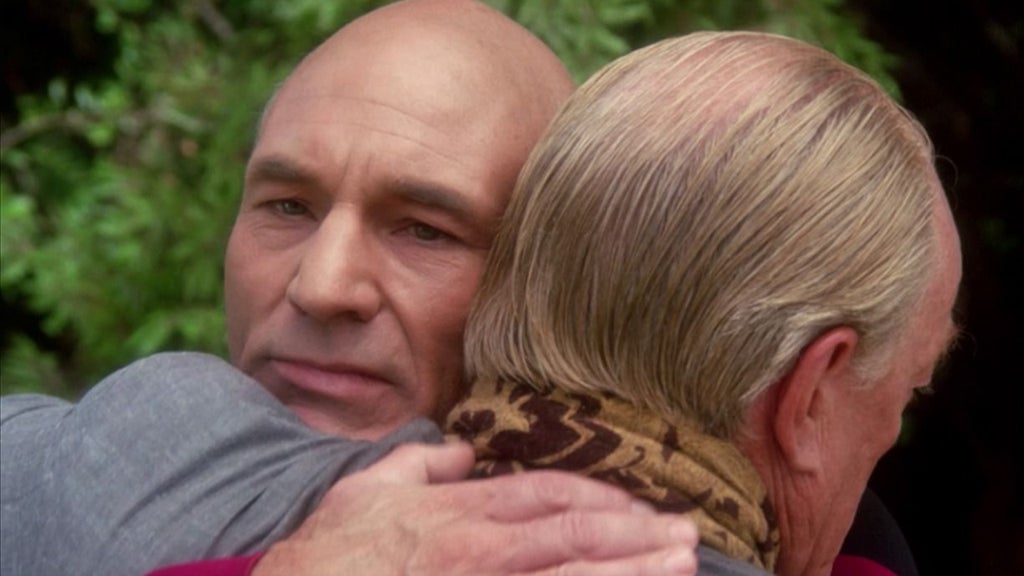
“Family” (Episode 4×02)
“They took everything I was. They used me to kill and to destroy, and I couldn’t stop them! I should have been able to stop them! I tried. I tried so hard! But I wasn’t strong enough! I wasn’t good enough!”
The crew of the Enterprise endures extreme trauma throughout the series, but the series rarely explores the fallout of their experiences. “Family” follows the “Best of Both Worlds” two-parter, and finds Picard seriously considering retirement after inadvertently killing thousands. He returns home to the family vineyard, where his brother Robert (Jeremy Kemp) still lives, resenting his smug and heroic brother. It’s the rare episode with no external stakes, just interpersonal conflict and soul-searching, and it’s one of Stewart’s finest hours.
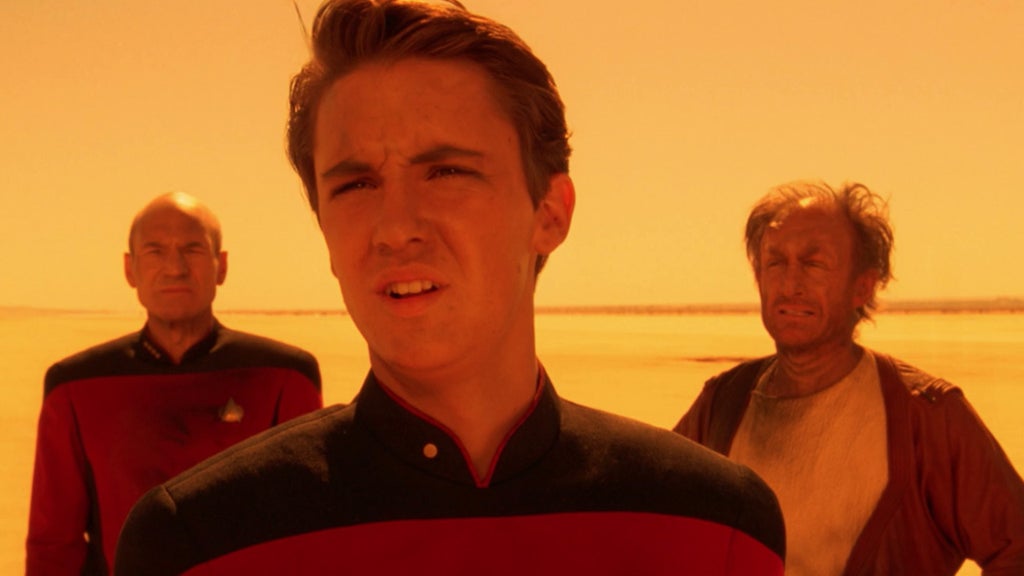
“Final Mission” (Episode 4×09)
“Wesley, you remember… I was always proud of you.”
Wesley is finally leaving for Starfleet Academy, to follow his real father’s footsteps — and also Picard’s. There’s time for one last away mission, but what should have been a simple mission with some old-fashioned male bonding turns into a crisis when the ship crashes on a desert planet, and it’s up to Wesley to save an injured Picard’s life. The set-up is contrived but “Final Mission” is a crucial story, establishing Picard’s growth from a man uncomfortable with being a mentor becoming, suddenly, the person who needs Wesley’s help. It’s a meaningful ending for Wesley, but it’s not the end, because their relationship would eventually be strained to the breaking point.
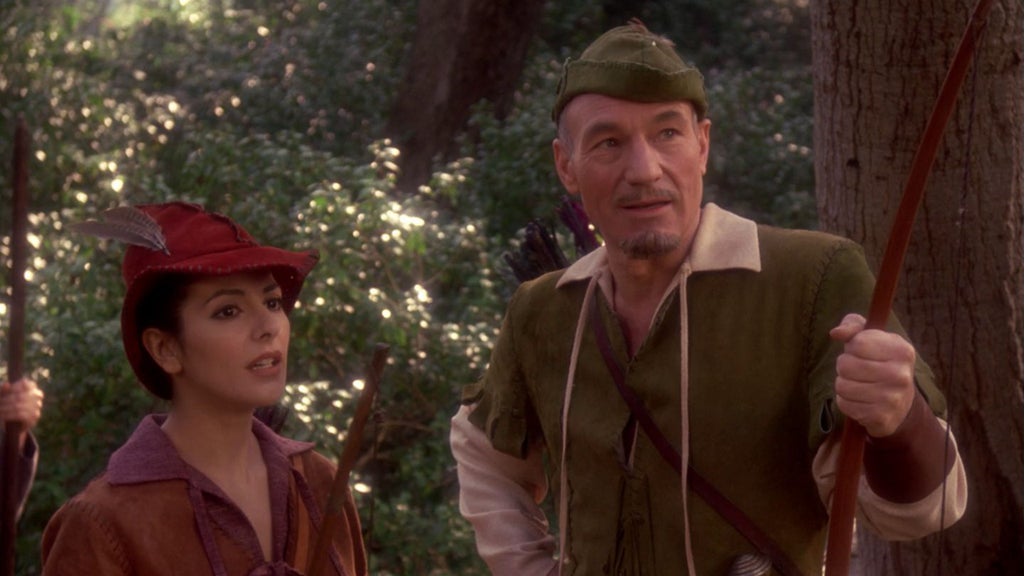
“Qpid” (Episode 4×20)
“I’m not from Nottingham!”
Some episodes of “Star Trek” are very, very, very silly, and some fans don’t like them. But Patrick Stewart seemed to be having the time of his life in “Qpid,” where Vash visits the Enterprise and the all-powerful Q (John de Lancie) gets so jealous, he sends the crew into an alternate reality where Picard is Robin Hood, Vash is Maid Marian, and everyone else one of the merry men. Well, maybe not Worf, who literally yells “I am not a merry man!”, but everyone else seems to qualify. It’s a goofy hour of television but it’s a treat to see Stewart hamming it up, and watching the sexual tension between Picard and Vash — and between Picard and Q, and between Vash and Q — practically explodes.

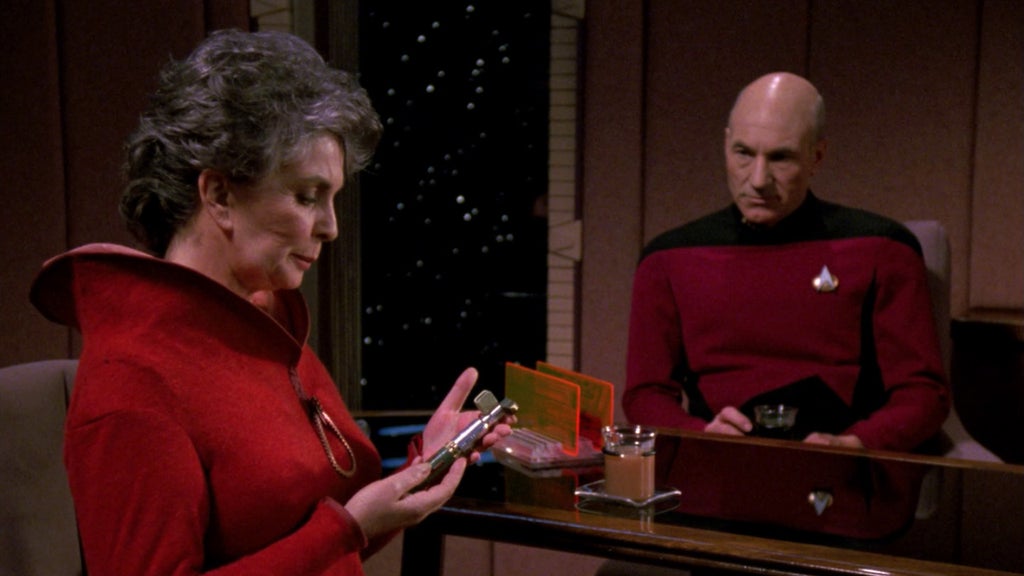
“The Drumhead” (Episode 4×21)
“With the first link, the chain is forged. The first speech censured, the first thought forbidden, the first freedom denied, chains us all irrevocably.”
Admiral Satie (Jean Simmons) arrives on the Enterprise to investigate an act of sabotage, but her investigation of the crew gradually devolves into a witch hunt. When Picard protests he’s accused of treason, and it’s up to the Captain’s unparalleled talent for diplomacy to talk his way out of disaster, and prevent Starfleet from repeating some of history’s ugliest mistakes. Stewart is perfectly matched by Simmons, who remains one of the most exciting guest stars “Star Trek” ever had, and his climactic speech is an incredible test of the actor’s prowess. Overplayed, the scene would be hammy and obvious. Underplayed and there’s no way the audience would believe it worked. Stewart navigates that fine line like a consummate professional, which of course he was.
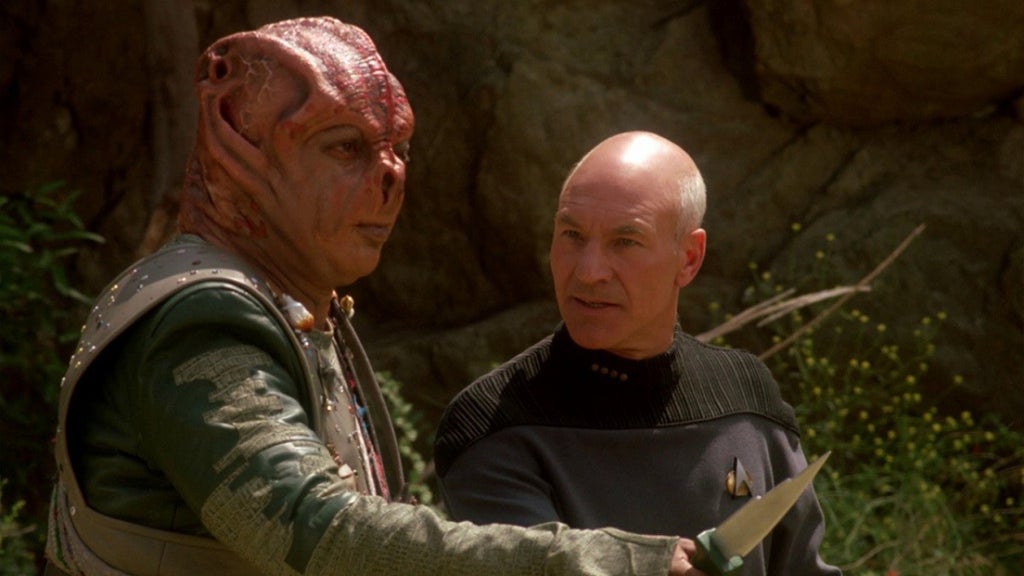
“Darmok” (Episode 5×02)
“In my experience communication is a matter of patience, imagination. I would like to believe that these are qualities that we have in sufficient measure.”
It’s hard to imagine “Star Trek” working as a series without the idea of a universal translator, a plot device that makes it possible for different species to immediately communicate. “Darmok” strips that artifice away, and forces Captain Picard to survive an ordeal with Dathon (Paul Winfield), the captain of an unknown vessel from an unknown species, whose language is entirely rooted in cultural context. Picard knows what he’s saying but has no idea how to interpret it. It’s a tricky concept to pull off, and it’s up to Stewart to think out every line of dialogue, conveying complex information without coming across as didactic. The art of acting in “Star Trek” is often the art of making exposition sound natural. “Darmok” is one the best and trickiest examples, and Stewart nailed it.
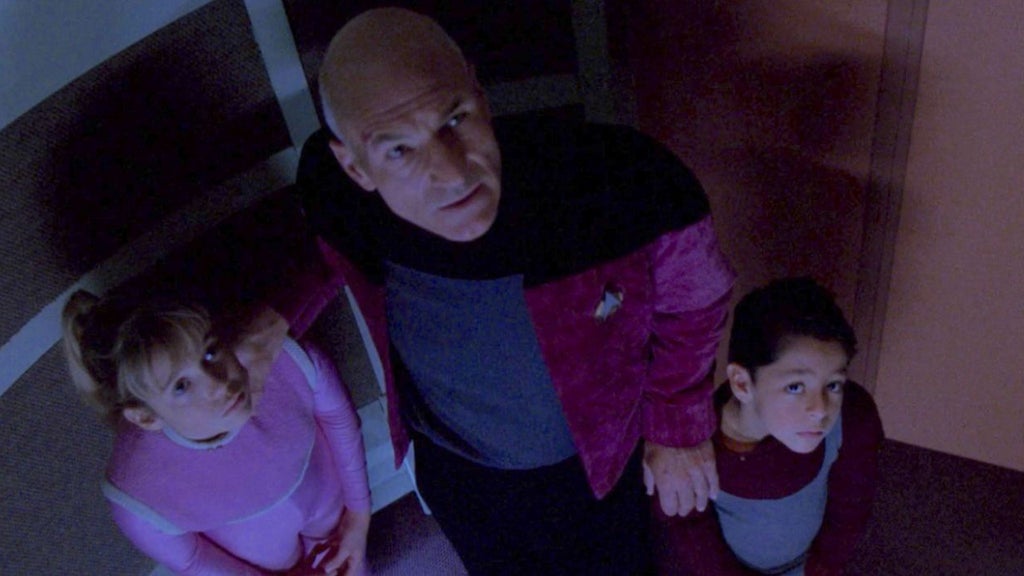
“Disaster” (Episode 5×05)
“The bridge will be sending a rescue party as soon as possible, so I want you all to stop crying!”
Any television series that goes on long enough will eventually do an episode where somebody gets stuck in an elevator, and “Star Trek: The Next Generation” was no exception. When a catastrophe strikes the Enterprise, the crew wind up scattered across the ship and solving different, dangerous problems, just like an old Irwin Allen disaster movie. Picard gets stuck in the turbolift with a group of children, and he’s never been good with kids. He’ll have to step up in more ways than one to keep these children safe and make them feel brave. The softer side of Jean-Luc Picard always warms the heart, and god knows that’s something Patrick Stewart knew how to play.
“The First Duty” (Episode 5×20)
“You should feel bad. And you will pay for what you’ve done.”
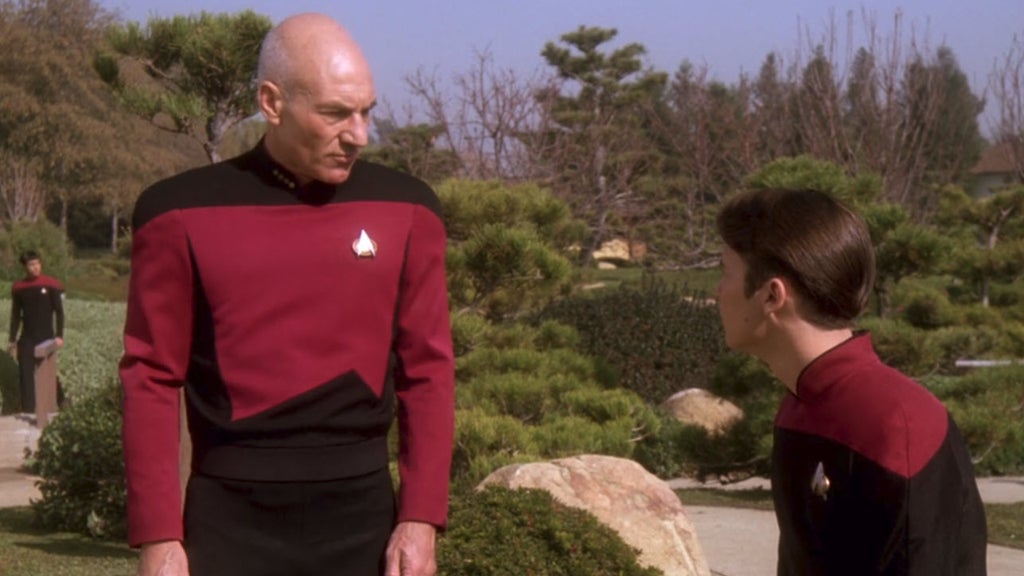
Captain Picard’s relationship with Wesley reaches its breaking point a Starfleet training exercise goes wrong, a cadet dies, and Wesley’s friends decide to cover up their involvement. It’s a tense episode for Wesley but it’s the way Picard reacts that breaks our hearts, because he’s such a principled man that he can’t let this boy off the hook. There’s right, there’s wrong, and Wesley is wrong, and Picard knows it. Watching Stewart wrestle with his feelings about the young man who meant so much to him, who screwed up so badly Picard may never be able to look at him the same way again, is devastating. And it sets up another one of Picard’s greatest moments, two seasons later.
“The Inner Light” (Episode 5×25)
“I always believed that I didn’t need children to complete my life. Now, I couldn’t imagine life without them.”
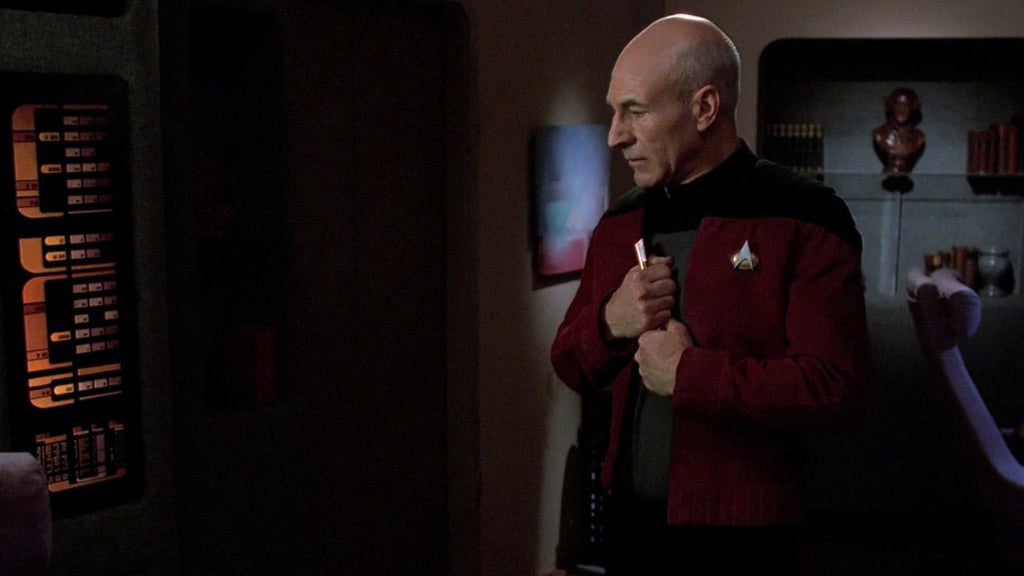
One of “Star Trek’s” most famous episodes doesn’t make a ton of sense, if you think about it. The Enterprise finds a mysterious probe which makes contact with Picard and sends him into a coma. While he’s unconscious, the Captain lives out an entire life on an unknown planet, as a totally different person, who is confused by his memories as a starship captain. The point of the probe was to keep the memory of that culture alive, and that plan is full of gaping holes. What’s more, the fact that Picard spent decades living another life and is expected to go back to work afterwards is bizarre. But “The Inner Light” gives Patrick Stewart the opportunity to make Jean-Luc Picard into a completely different person, who develops very different values. And in subtle ways we do eventually see that the Captain was forever altered by this experience. It’s a tour de force performance.
“Chain of Command, Part II” (Episode 6×11)
“In spite of all you’ve done to me, I find you a pitiable man!”
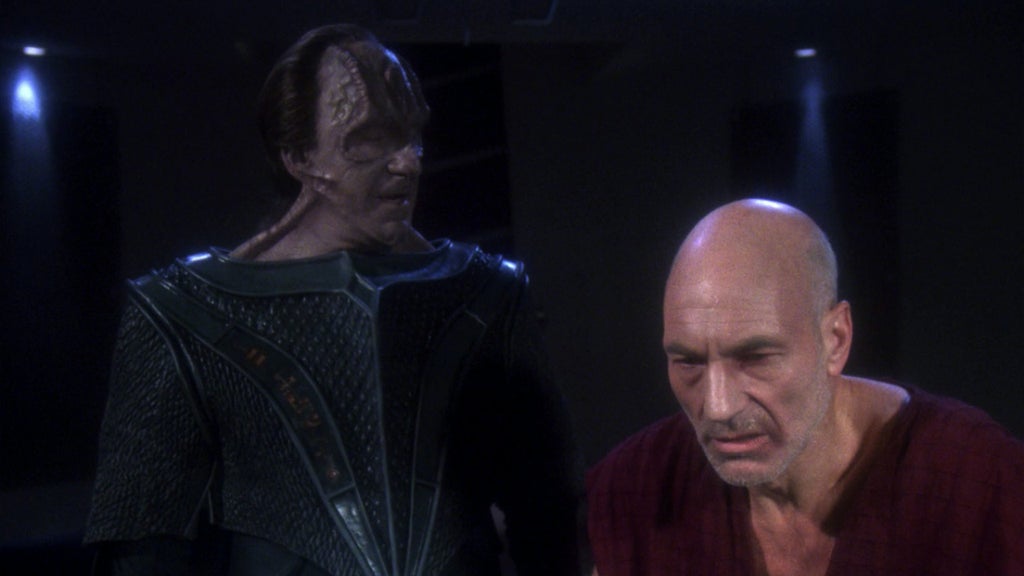
The first half of the two-parter “Chain of Command” finds Picard and several other crew members donning ninja clothes and invading Cardassian territory, while Captain Jellico (Ronny Cox) drives the crew of the Enterprise nuts with his hard-assed leadership style. It’s not a classic episode. The second part, however, is unforgettable. Picard, abducted by the Cardassians, endures horrifying physical and psychological torture. To make it stop, he just has to accept whatever reality his tormentor, Gul Madred (David Warner), tells him to accept. If he sees four lights, he just has to say he saw five. Warner is every bit Stewart’s match in this harrowing battle of wills, and the most shocking moment of all comes when we learn just how close Picard came to losing. He’s a towering figure, but in “Chain of Command, Part II” he’s brought low.
“Tapestry” (Episode 6×15)
“I refuse to believe that the afterlife is run by you. The universe is not so badly designed.”
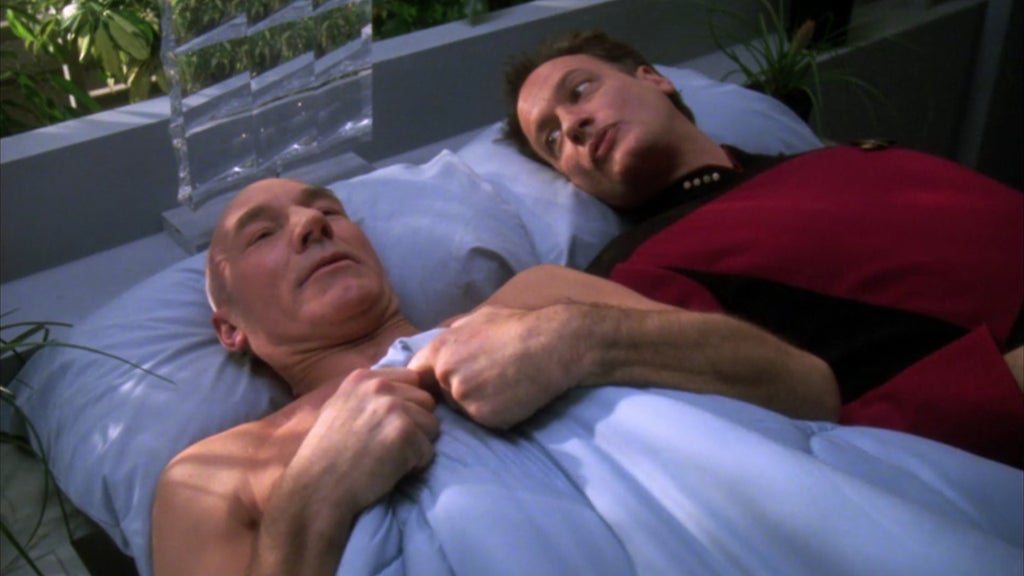
Picard is on death’s door when he’s visited by Q, who offers to send him back in time, so the Captain can choose not to make the biggest mistake of his life. What he discovers is that mistakes are what define us, and not always for the worse. Like many time travel stories, “Tapestry” is a tale about accepting what we cannot change, but it’s such a clever episode that it feels fresh and exciting. Q is, as always, delectable as Picard’s biggest and most annoying fan, and Stewart gets to play his younger self in comedic and eventually heartbreaking scenarios. There’s an argument to be made that “Tapestry” is the best episode of “Star Trek: The Next Generation,” and it’s worth making.

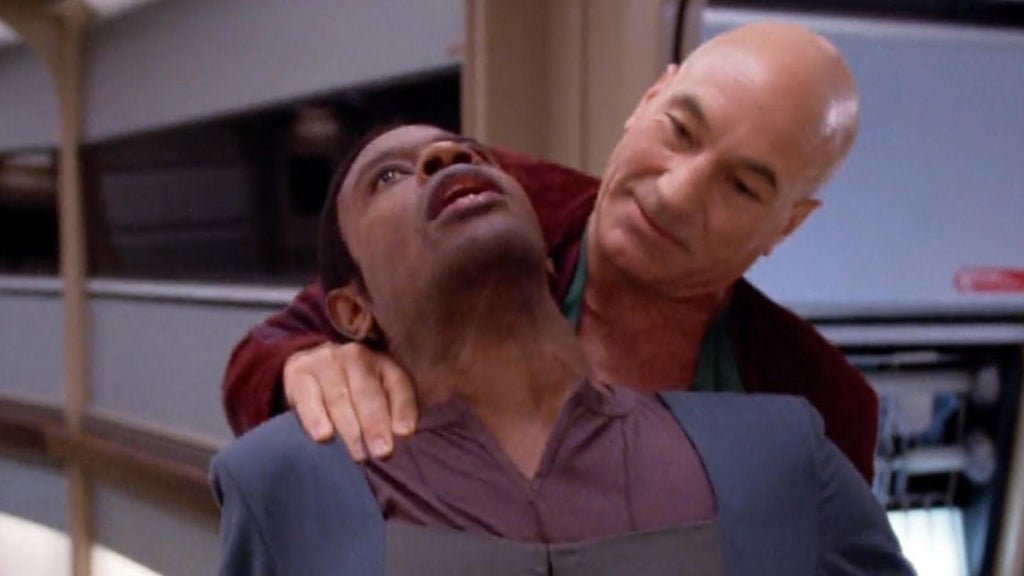
“Starship Mine” (Episode 6×18)
“A saddle is a, a very… personal… thing. It has to be broken in, used, cared for.”
Nobody loved “Action Picard” more than Patrick Stewart, who leapt at every opportunity to treat the Captain like a conventional, butt-kicking hero. “Starship Mine” is one of the best episodes where Stewart went full “Die Hard,” but it’s a “Die Hard” knockoff in space. The Enterprise has to be evacuated for routine maintenance, which gives a gang of thieves the perfect opportunity to rob the ship. They don’t know Picard is still on board, giving him the edge he needs to take them down, one by one. It’s a big tonal shift from most “Star Trek” episodes, which eschew conventional fight scenes in favor of intelligent conversation or clever strategy, but it’s such a hoot — and Stewart is having such a great time — that it works.
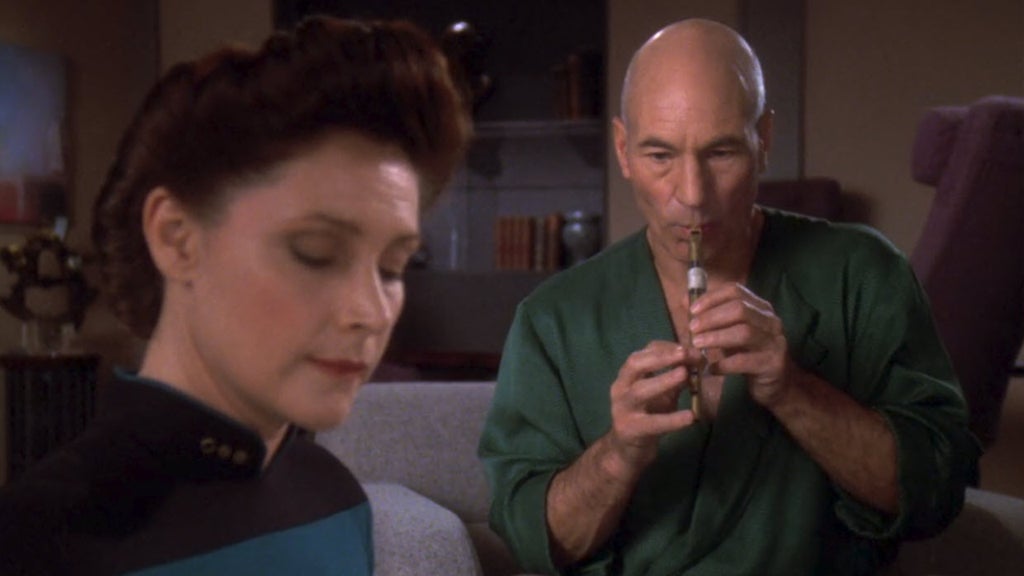
“Lessons” (Episode 6×19)
“I can assure you that I am not given to casual relationships.”
One episode after Picard was kicking hooligans off the Enterprise like John McClane, “Lessons” showed us the softer side of the captain. He meets a new crew member, Lt. Commander Nella Daren (Wendy Hughes), and they fall in love while making beautiful music —literally and figuratively. It’s a sweet, serious love story that’s sullied by the inconvenient reality that Daren is Picard’s subordinate, which makes the rest of the crew uncomfortable and makes it nearly impossible for Picard to give her dangerous, yet necessary orders. The ending of “Lessons” is a sad one, not just because the love affair was always doomed, but because Picard doesn’t make great choices and comes across like the bad guy in the relationship. More wonderful material for Patrick Stewart, who makes the transition from genre pulp to tender, complicated romance with incredible ease.
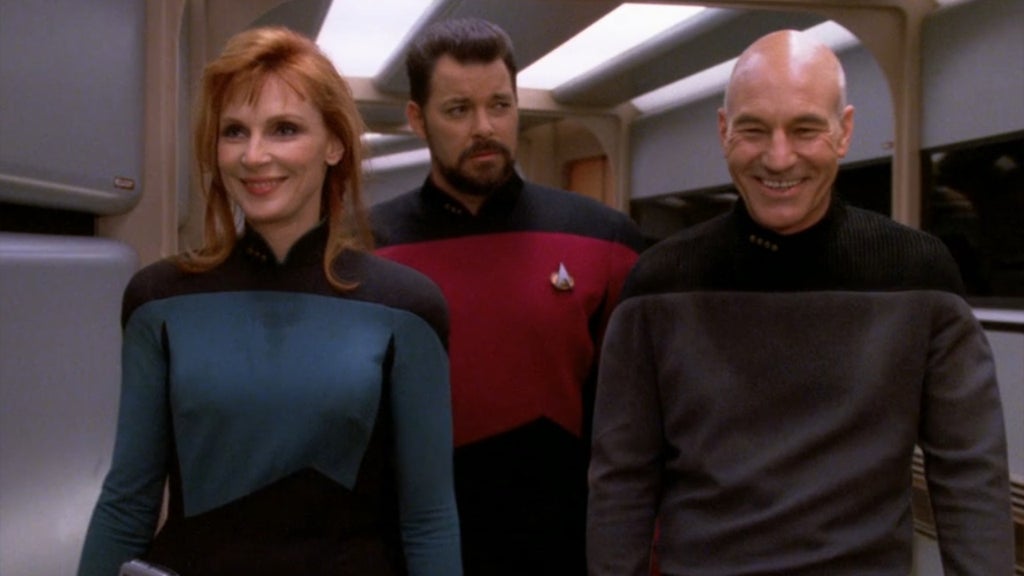
“Attached” (Episode 7×08)
“I promised myself that I would never tell you how I felt. It would be like betraying my friend.”
The will they or won’t they romance simmering between Captain Picard and Dr. Crusher has probably been the stuff of gossip amongst the crew for years, but “The Next Generation” never clarified what they meant to each other, or if they were carrying on when the cameras weren’t looking. But after an unnecessarily contrived set-up, “Attached” finds them telepathically connected, and unable to hide their feelings and desires from one another. In a lesser series this would have been an excuse for wacky comedy or horny shenanigans, but Patrick Stewart and Gates McFadden are mature performers playing mature characters, who don’t give in to their base desires, and instead use the opportunity to bare their souls. It’s a tender storyline, hidden inside a forgettable A-plot about an alien cold war.
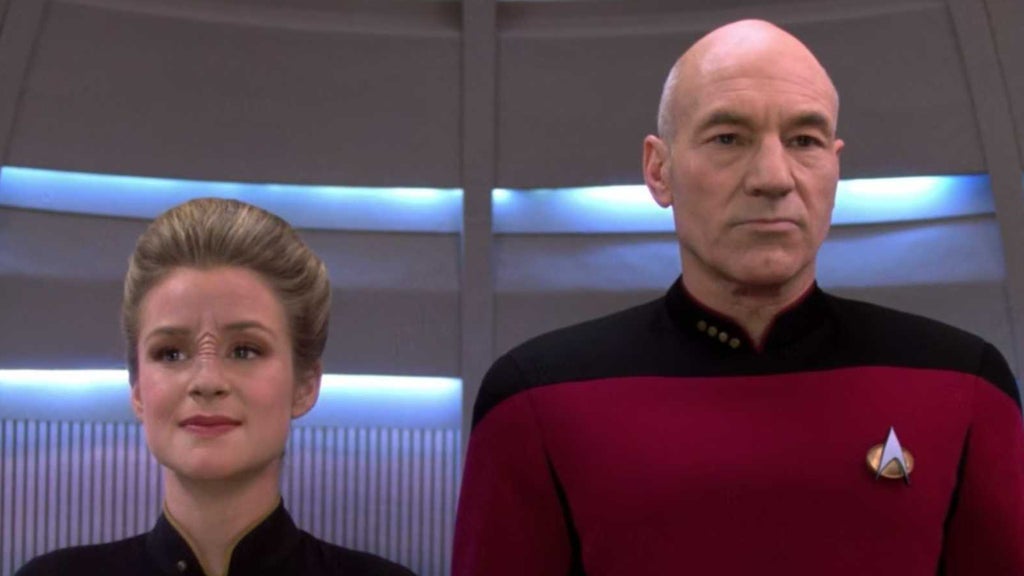
“Lower Decks” (Episode 7×15)
“If you’re looking for a more lenient commander, I don’t think you’ll find one.”
If you rewatch the seventh season of “Star Trek: The Next Generation,” it’s pretty clear the writers were running low on ideas. Except for “Lower Decks,” a truly inspired episode that focused almost entirely on young crew members who, for the most part, were never seen before. When we do see the main cast, we see them through their subordinates eyes, which means Picard comes across like an extremely stern taskmaster. That’s especially true for Ensign Sito (Shannon Fill), who was involved in the same cover-up as Wesley in “The First Duty,” and always feels his judgment. What we learn about Picard, and how Picard processed his disappointment, is and unexpectedly inspiring, and tricky for any actor to pull off. Stewart was up to the challenge.
“All Good Things” (Episode 7×25)
“I should have done this a long time ago.”
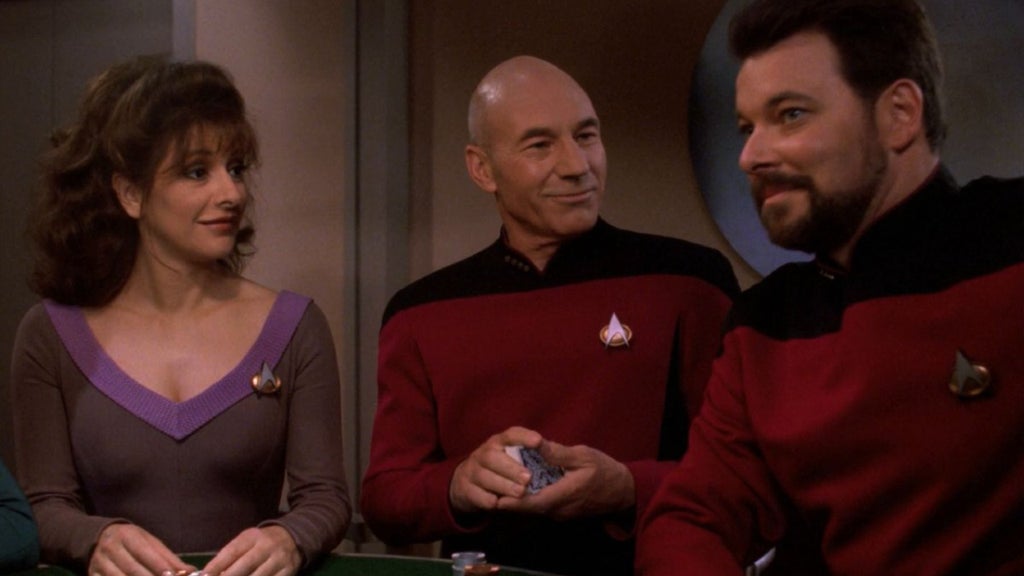
In the history of television, few finales have ever been as satisfying as “All Good Things.” Q decides to take one last test, and unsticks Captain Picard in time. Now he’s living in the past, present and future simultaneously. As he “Slaughterhouse-Fives” his way through his life with the Enterprise crew, he confronts where he’s been, and what lies ahead, a sci-fi rendition of “A Christmas Carol” with all human life in the universe at stake. Patrick Stewart brings the series home with a powerful performance and an endearing conclusion, bringing him closer together with his fellow cast members than ever before.
“Star Trek: First Contact” (1996)
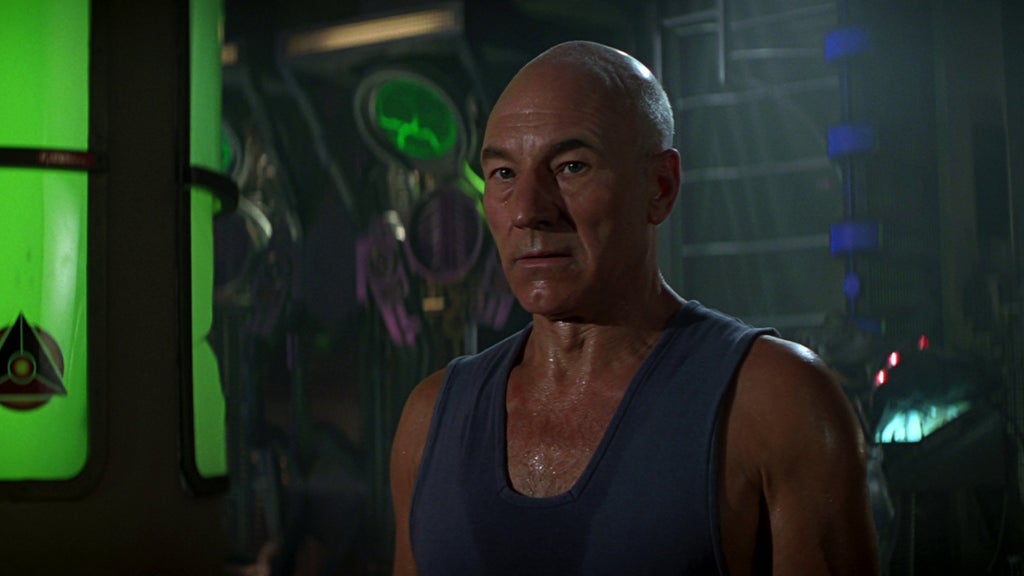
“The line must be drawn here. This far! No further! And I will make them pay for what they’ve done!”
One of the great tragedies of “Star Trek: The Next Generation” is that, although it continued as a series of motion pictures, most of them were underwhelming. And that’s putting it mildly. The best of the lot, “First Contact,” ignores a lot of Picard’s character growth from the series and transforms him into Captain Ahab, risking the ship on a quest for revenge (even though he had his chance for revenge already and decided to be the bigger man in the fifth season episode “I, Borg”). Nevertheless, Patrick Stewart meets the occasion, imbuing this slightly-off version of Picard with strength and frailty, and beating up a whole lot of alien robots in the process. “Star Trek: First Contact” is a pretty good movie, but Stewart is great in it.