
Note: This story contains spoilers from “The Boys” Season 5, Episode 8.
A happy ending for Billy Butcher was never really in the cards on “The Boys” series finale.
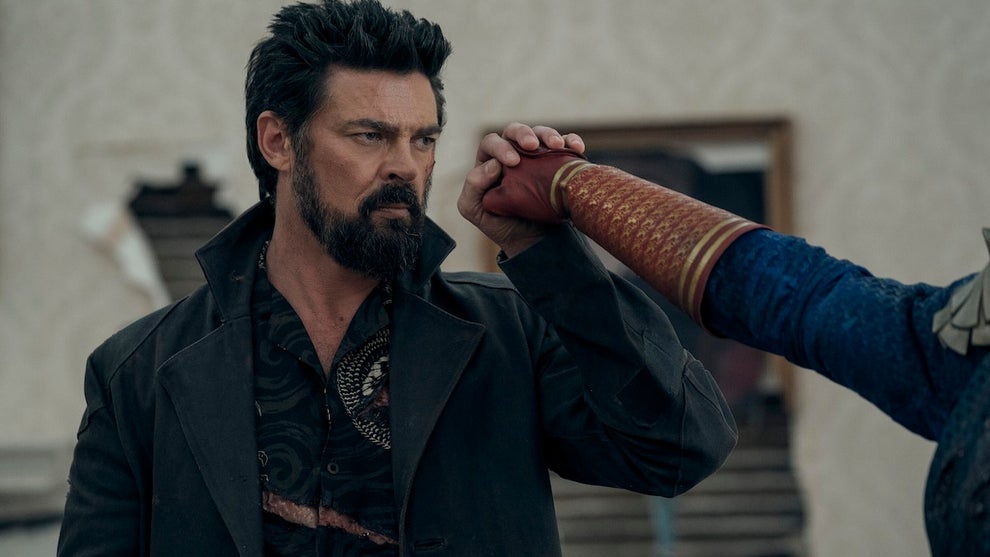
The Prime Video series finished up its five-season run in particularly bloody fashion on Wednesday. Butcher (Karl Urban) and the group managed their ultimate goal of killing Homelander (Antony Starr) — in the Oval Office, no less — but that wasn’t enough for the leader of the team. After being rejected by Ryan following their victory, Butcher decided to lean into his monstrous tendencies and release the supe-killing virus.
“I don’t think there was ever going to be a happy ending in the cards for Butcher,” showrunner Eric Kripke told TheWrap. “He had so turned himself into a monster that even though he had achieved his ultimate goal, he can’t just snap his fingers and suddenly be happy and OK. To give credit where credit’s due, it really was Garth Ennis’ notion in the comics. This is one of the notions that we knew from page one of the pilot we were going building towards, because I just loved that final Hughie/Butcher interaction in the comic, it just felt so honest after what this guy has become, and this sort of secret conflict of Butcher and Hughie that we’ve been laying threads for for seven years now. It was just such a pleasure to bring it out.”
That final confrontation happens in The Seven’s conference room in Vought Towers. Butcher is ready to pull the trigger, release the virus and start a supe genocide. Hughie (Jack Quaid) shows up and, after a few traded blows, manages to affect Butcher just enough to make him think twice about this extreme choice. And in the moment where Butcher considers giving up his crusade, Hughie shoots and kills him. The finale raises a question the comic does not — did Butcher need to be killed or could he have been convinced and lived. Kripke thinks Hughie was the only person to hold Butcher off long enough to end him for good.

“I feel like had Hughie not been there, he probably would have pulled that trigger,” he said. “We just wanted to demonstrate that Hughie served the purpose that Butcher wanted him to serve, which is in this final moment, seeing Hughie, seeing his little brother, you know, gives him just like one second of pause, just long enough for Hughie to stop him.”
“There’s just that little, tiny, super small spark of humanity that Hughie was able to touch in that moment. Hughie being this sort of earnest good guy throughout the entire series, in this one moment, it was crucial to save the world,” Kripke continued. “I think if any other character were standing there, if any other moment was happening, there would have been genocide and then human collateral damage, but it was just Hughie’s goodness in that one crucial moment, I think, that made all the difference.”
With the exception of Butcher’s death, the rest of the finale ends on a much more uplifting note — especially compared to the brutal conclusion to the comic series. Mother’s Milk (Laz Alonso) ends up married, Kimiko (Karen Fukuhara) travels the world trying the food and seeing the sights she talked about with Frenchie (Tomer Capone), and Hughie and Annie (Erin Moriarty) are expecting a child and fighting crime on an independent level. While much of the show’s look on power and social media was cynical, Kripke never viewed the core tenets of the series that way and wanted the finale’s closing moments to reflect that.
“I’ve been saying from the beginning, I don’t see that the show is cynical, I’ve always seen it as hopeful,” Kripke shared. “It’s cynical about authoritarian figures and social media and all the bulls—t that’s thrown at us. It’s never been cynical about the people, and if anything, it’s been earnest and emotional about the people. We really wanted to end it to make the point of, look, nothing’s perfect, there’s a bunch of superheroes running around almost like loose nukes, Annie is throwing up and fighting with her mom. Everything will always be messy, and nothing will ever be totally resolved, but with great sacrifice, a lot of failure and a lot of persistence, hope and happiness are possible.”
“I think a lot of people don’t see it, but for me, that’s always been the message of the show,” he concluded, “or one of the core messages of the show.”
“The Boys” Seasons 1-5 are now available to stream on Prime Video.
