
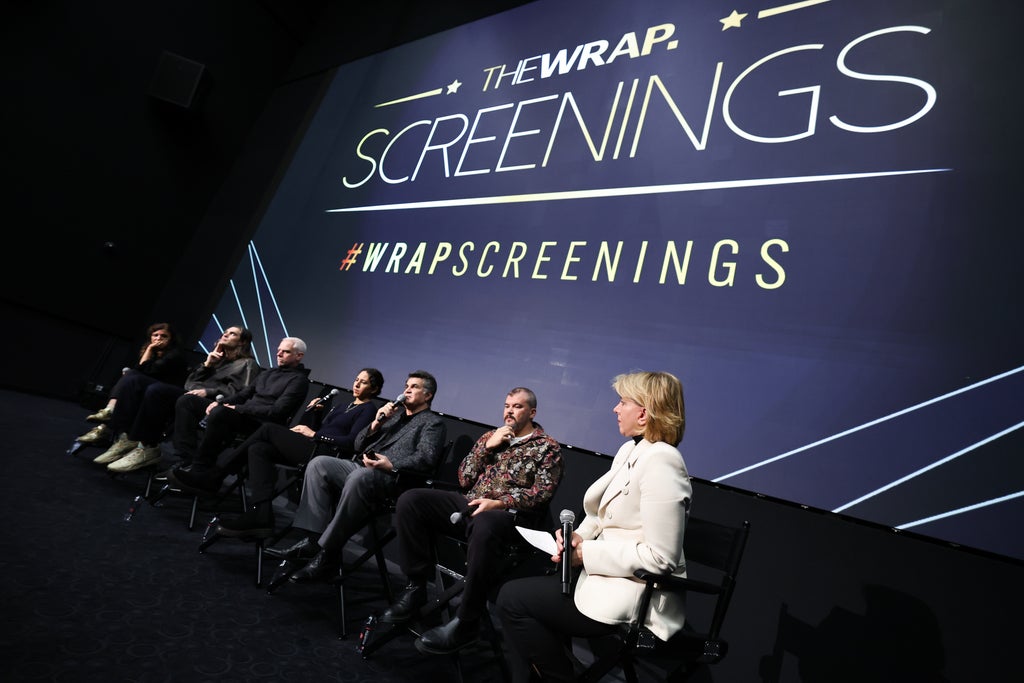
Great movies, regardless of their subjects, tell us something about the world and our places within it. That notion emerged throughout TheWrap’s International Feature Film Showcase on Wednesday, when the makers of five Oscar-nominated films discussed their work with TheWrap’s CEO & Editor-In-Chief Sharon Waxman.
“These incredible pieces of work touch on many similar themes,” Waxman noted as the Q&A began. “Authoritarianism, morality, betrayal, memory, family. These are all universal themes that touch all of us.”
The five movies hail from four different continents and all thrum with a distinctive personal voice: “The Voice of Hind Rajab” (Tunisia) uses real audio recordings to tell the story of young girl’s murder in Gaza; “It Was Just an Accident” (made in Iran, submitted by France) is a thriller about vengeance and morality in modern Tehran; “The Secret Agent” (Brazil) focuses on one man ensnared in his country’s 1970s dictatorship; “Sentimental Value” (Norway) examines pain and reconciliation among a family in Oslo; “Sirāt” (Spain) traces a father’s desperate odyssey in the Moroccan desert.
In discussing the thematic power of their work, all of the panelists addressed the pain, trauma and human drama woven into their films. But the filmmakers also expressed feelings of catharsis that they hoped to share with audiences.
“The Voice of Hind Rajab” director Kaouther Ben Hania, a prior Oscar nominee in the documentary category for 2023’s “Four Daughters,” spoke to the heart of that matter.
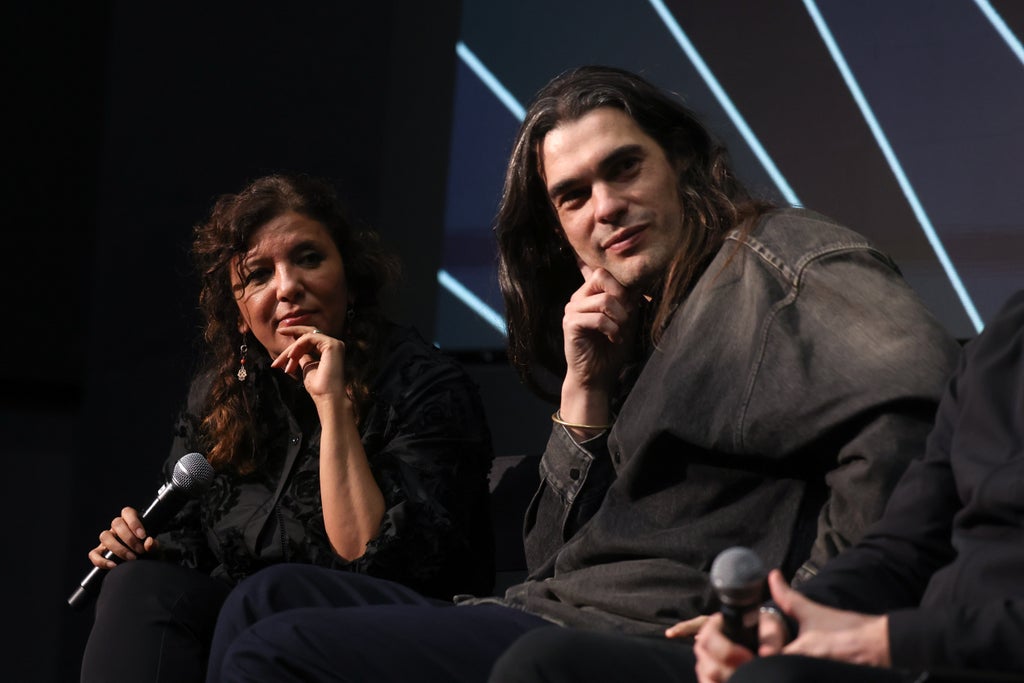
“I needed to tell this story because social media is not a place for remembrance,” she said. “It is a place for scrolling — for amnesia. Cinema can do something social media cannot: create empathy. Stay in a dark room. Listen.”
As she’s done before in her career, Ben Hania opted for a mix of documentary and narrative film for her latest film, which uses the real emergency calls of a 5-year-old girl who was killed in January 2024.
“The voice recording became the backbone of the movie,” she said. “But I needed to tell it in the present tense. I couldn’t make a film that only looked back. Because when you don’t have enough archival material to tell a story in the present tense, you bring actors — vessels for the real people who listened to her voice. So the hybrid form was necessary. Documentary alone was not enough.”

“It Was Just an Accident,” filmed in secret in Iran, depicts of a small group of dissidents, survivors of torture by the Iranian government, who have abducted a man who might be their torturer. Director Jafar Panahi, who has been imprisoned by the Iranian theocracy for his work (and is currently under arrest in absentia), addressed the plot of the film and connected it explicitly to the current murderous crackdown on protests in his country. Thousands of Iranian citizens, including children, have been killed in recent weeks.
“You can think of this film as a document of the people’s nonviolence and the government’s violence,” he said through an interpreter. “In the film, we tried to talk about nonviolence. It testifies to the fact that we were talking about nonviolence, and it shows that the people of Iran are, in fact, nonviolent. But it is this government that tries to push everything toward violence.”
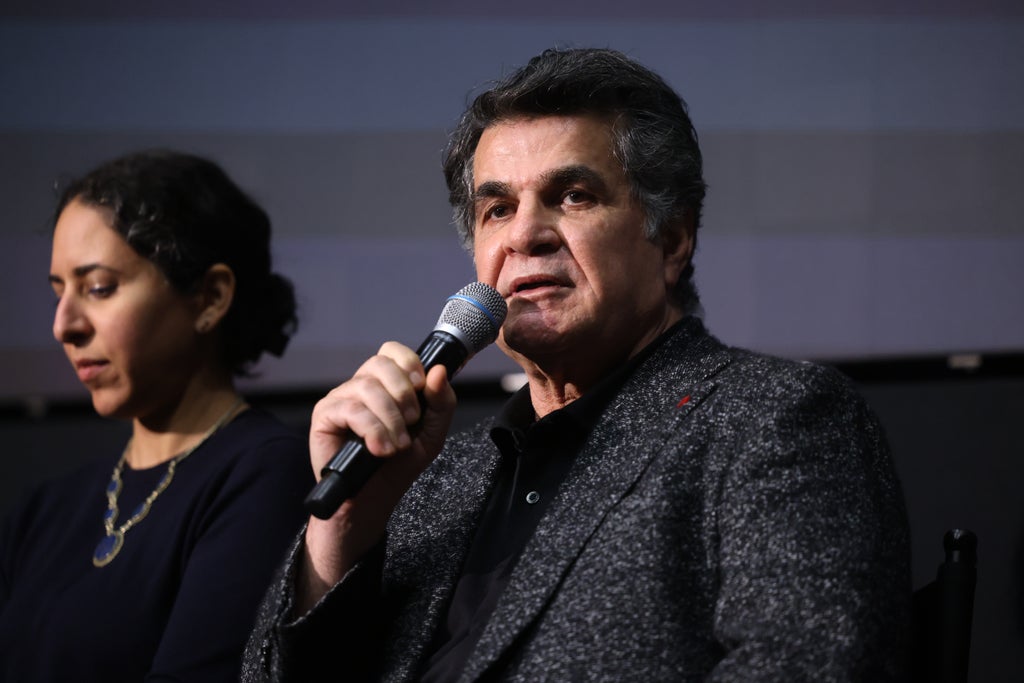
Panahi, also nominated for best screenplay, admitted that it was challenging to think about anything but the crisis unfolding in his homeland. “In Iran, everything else is now at the periphery. No one is really following the news of the Oscars or any other cultural news. Everyone is still in a state of shock. We started campaigning for this film a few months ago, and I have to be here — but I really would prefer that I was there. I don’t know what other feeling to have.”
From a current dictatorship in Iran to a past dictatorship in Brazil: “The Secret Agent,” nominated for four Oscars including Best Picture, was represented by its nominated casting director Gabriel Domingues, who didn’t hesitate to link the movie’s period setting to events today.
“The film is set in the 1970s under dictatorship, but we recently had a very troubling government in Brazil,” he said. “Some characters were inspired by images from recent Brazilian political life — sometimes grotesque, even caricatural. And there’s an ambiguity to some characters.”
Domingues cited the vision of director Kleber Mendonça Filho, whose films are bright and colorful despite the despair of their subjects. “There’s a tradition in Brazilian cinema about dictatorship. Often those films focus heavily on torture and violence. In ‘The Secret Agent,’ there is a heavy atmosphere of persecution, but also courage and vibrancy.”
“Sentimental Value” editor Olivier Bugge Coutté discussed the ideas of redemption at the heart of the nine-time Oscar-nominated film about family trauma, directed by his friend of 30 years, Joachim Trier.
“Growing up in a dysfunctional family is a very personal story and can be equally strong and damaging in the long term for someone’s psyche as receiving bombs on your head,” he said. “I think that’s why it resonates with people.”
Spanish director Oliver Laxe (pronounced Lah-chey) made a larger point about cinema while discussing the use of non-professional actors in his immersive road movie “Sirāt,” set among ravers in the desert, which is also nominated for Best Sound.
“We love people and obviously actors are people too,” he said with a smile. “But the thing is that sometimes actors, they hide fragility, as most of the people in society do. All of us, we are psychologically broken but we hide this wound. We have a kind of neurotic projection of ourself. But I wanted to work with real ravers because they have this vulnerability. They show the wound. They show the scar.”
Laxe also expressed his admiration for his peers on the panel and stated his belief that great movies contain the power to heal.
“We are living on a moment where we are surrounded by a lot of pain,” he said.
“And cinema is a tool that we have to heal. Sometimes through pain, you receive more light and love. This is the mystery of existence.”
The director added, “It’s hard to find films that have images (that are) alive. I’m so happy to be part of this bunch of radical filmmakers.”
For the full 50-minute International Features Showcase conversation, click here.
