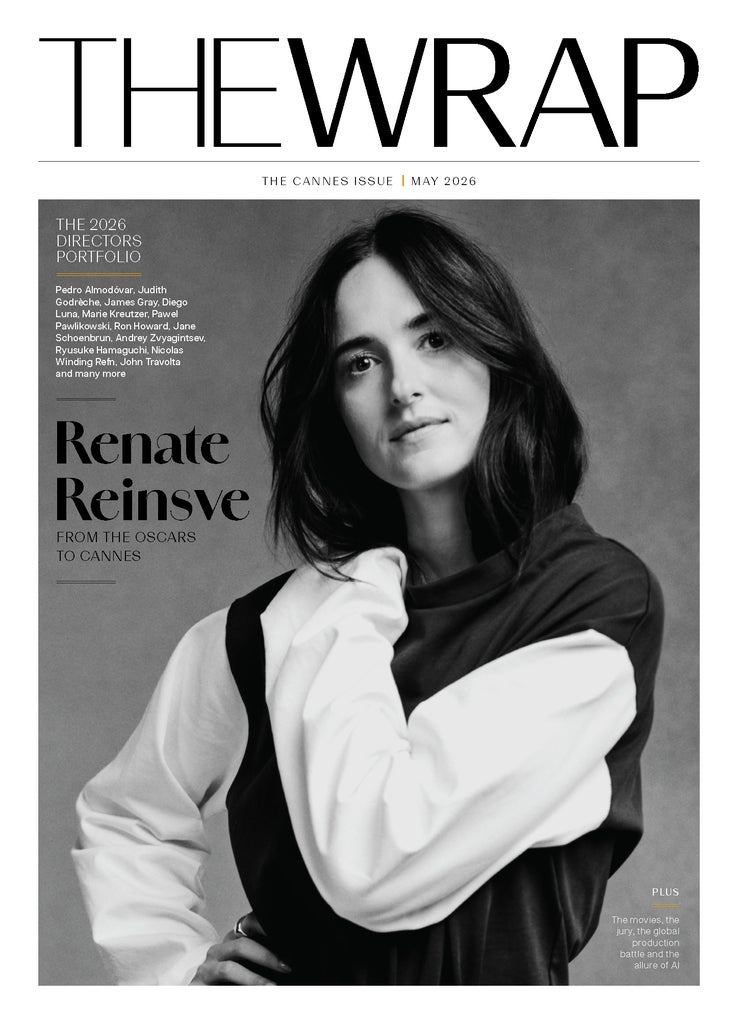
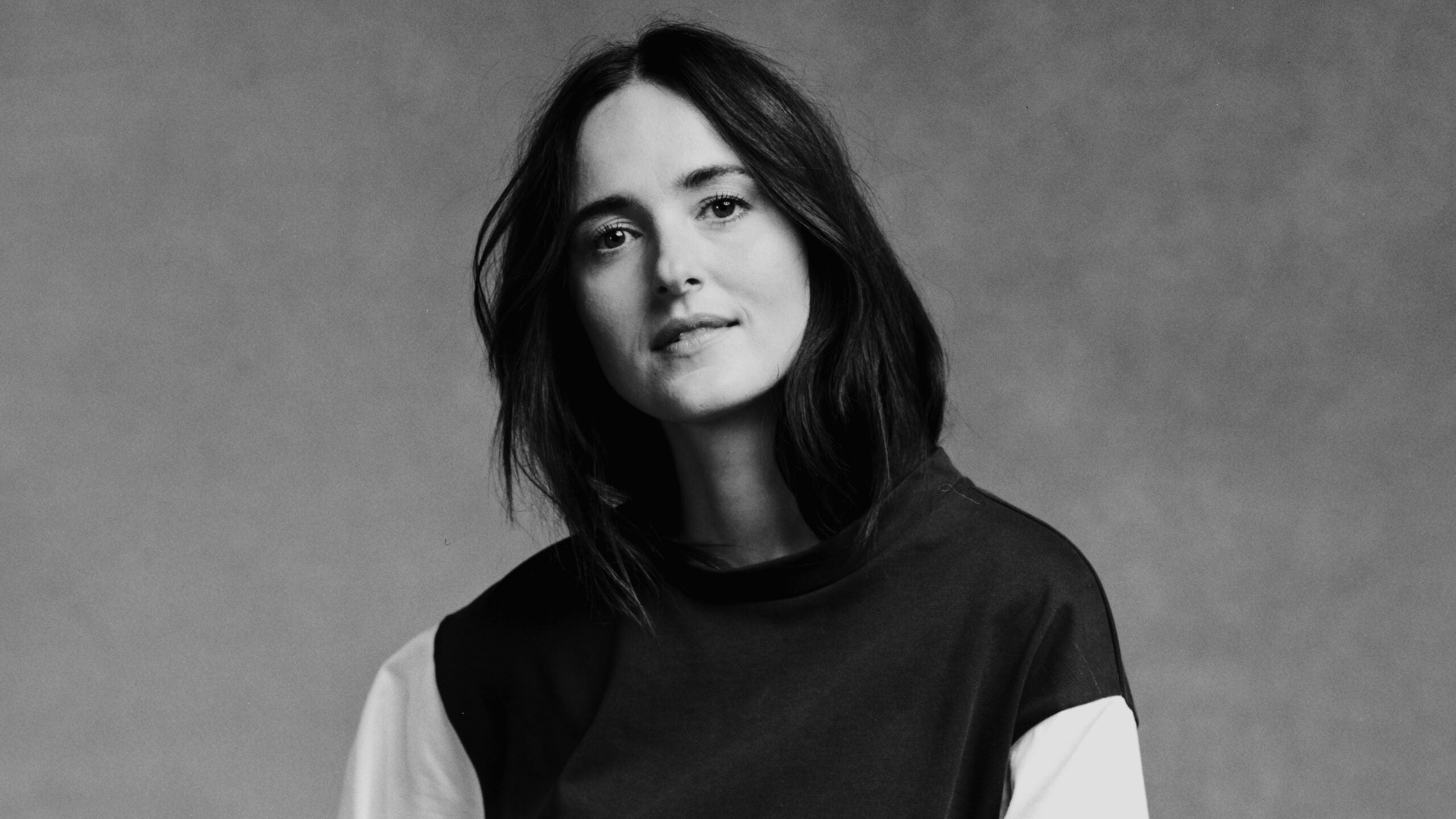
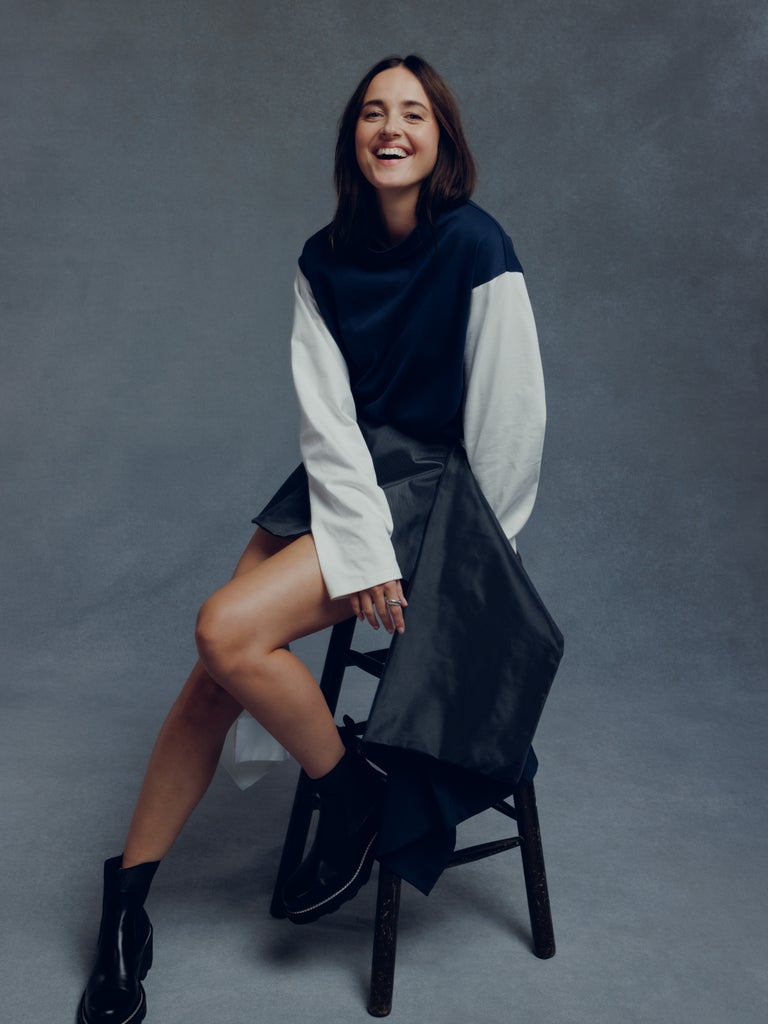
Renate Reinsve grew up in a small town in Norway, but her movie career came of age in a French city about 1,200 miles south of there. The first film in which she had a speaking role, Joachim Trier’s “Oslo, 31 August,” screened in the Un Certain Regard section of the 2011 Cannes Film Festival — though she didn’t attend due to the size of that role, which is ironic considering that her one line was “Let’s go to the party!”
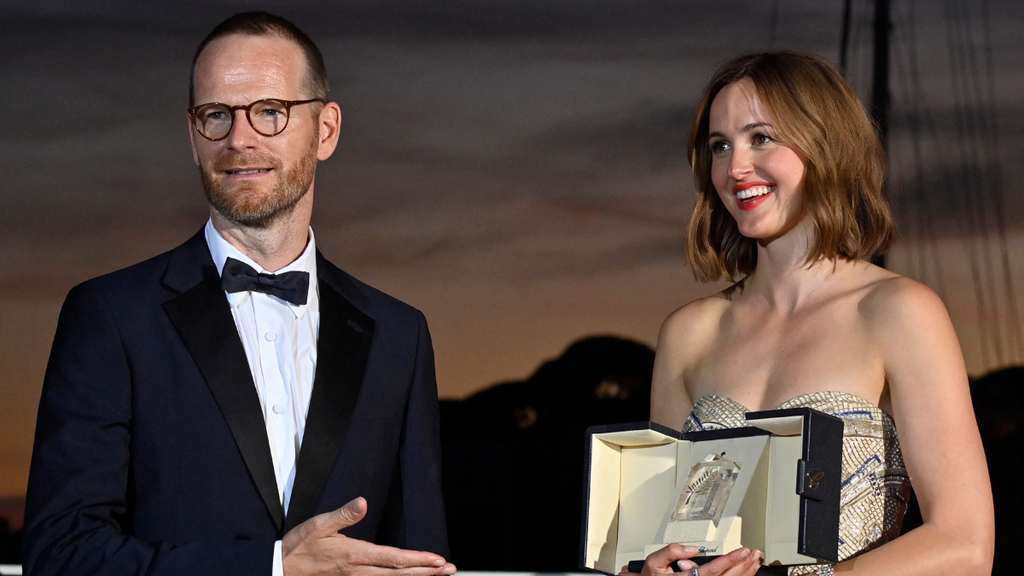
A decade later, she did show up after starring in Trier’s “The Worst Person in the World,” and won the best-actress award from Spike Lee’s jury. And she returned four years after that with a bigger breakthrough, Trier’s “Sentimental Value,” which won the Grand Prix and went on to earn nine Oscar nominations, including Best Picture, Best Director and Best Actress.
That last nom made Reinsve only the second Norwegian ever nominated for Best Actress. The first was Liv Ullmann, the grandmother of writer-director Halfdan Ullmann Tøndel, who directed Reinsve in 2024’s “Armand” — which premiered at, you guessed it, Cannes. “Renate can do anything,” Tøndel said. “She can be raw and tough and she can be sensitive and delicate. She has this amazing range, and when we’re working together, I feel like everything is possible.”
Now she’s back for her fourth Cannes and her third consecutive trip to the Croisette. This time it’s for “Fjord,” a drama by Romanian writer-director Cristian Mungiu (“4 Months, 3 Weeks and 2 Days”) in which Reinsve and Sebastian Stan star as a Norwegian-Romanian couple who move to a small town in Norway, where their conservative religious lifestyle clashes with their liberal neighbors’ values, putting uncomfortable scrutiny on their parenting decisions. It’s Mungiu’s first film set outside Romania, and it comes on the heels of a wild year that thrust Reinsve into the thick of a long and grueling awards season.
The first time we talked, after “The Worst Person in the World” in 2021, you said, “I’ve just surrendered to the chaos in my life.” It strikes me that the chaos must have been steady since then.
Renate Reinsve: It has been chaotic the whole time, but I think I’ve gotten better at compartmentalizing. I like to clean up all the chaos and put it in the right place so I can stay grounded. I think there’s a great contrast in meeting incredible people who have so much knowledge and have good perspectives on the movies I’m in and all the other movies that are out, and then doing crazy red carpets and awards shows. But I really love people, and I’m lucky to love people, because you meet so many of them all the time. (Laughs) And I have less imposter syndrome than I had the first year I did this.
Cannes has been pretty central to your career over the past five years.
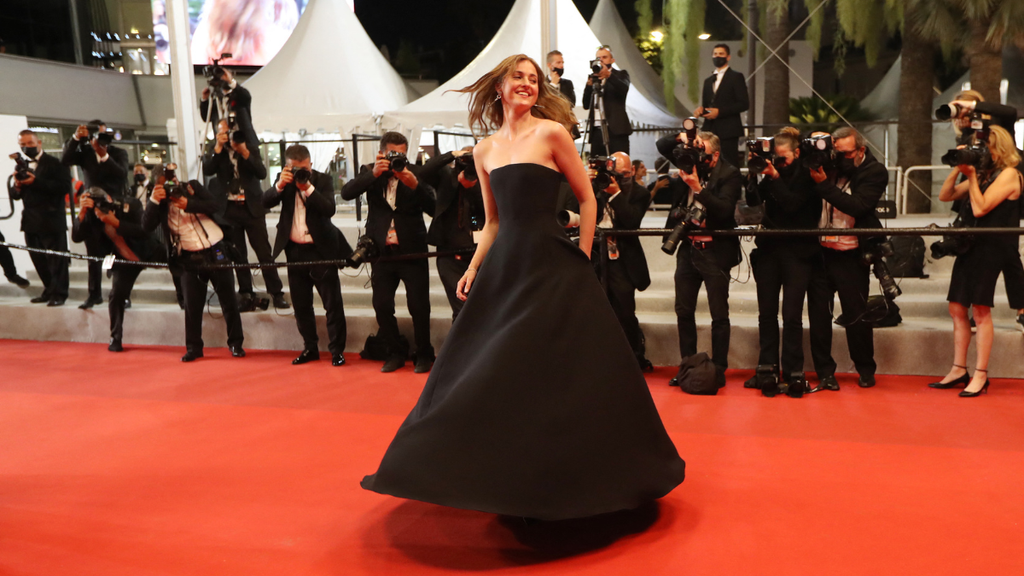
It’s funny, ’cause the first time I went there, with “Worst Person,” I thought it was going to be my first and last time there. (Laughs) So I did a little spin on the red carpet because I thought that no one was ever going to see me there again. But I was also there with “Armand” and “Sentimental Value,” so this is going to be my fourth time. Every time, I can settle in a little bit more and actually be present.
You were overwhelmed by all the attention that first time, weren’t you?
Yes. (Laughs) I did puke when the reviews came out. It was too much for me to take in at the time. It was a pivotal moment in my life, and I think nothing will ever be like that moment for me.
Was it easier to take it all in with “Sentimental Value”?
Yeah, I think it was. But it was a very big moment, with the 19-minute standing ovation. We were open to thinking that it might go nowhere. It was a personal movie, and you don’t know until you show it to an audience. And it’s the same now, going there with “Fjord.” We don’t know how it’s going to be received. I will always be nervous about that, I think.
How did you get involved with Cristian Mungiu?
I heard that he was interested in a story and gathering information on families coming from Romania, where a lot of people are connected deeply to religion, and moving to Norway, which is a very liberal country. So I knew about this project and the world that he was diving into, and then he called me into a reading. It wasn’t an audition in the sense that I’ve been in before. It was more to read and see if there was a role that I connected to.
We had a simple, stripped-down reading of the script, and he was open to me playing two of the female lead roles.
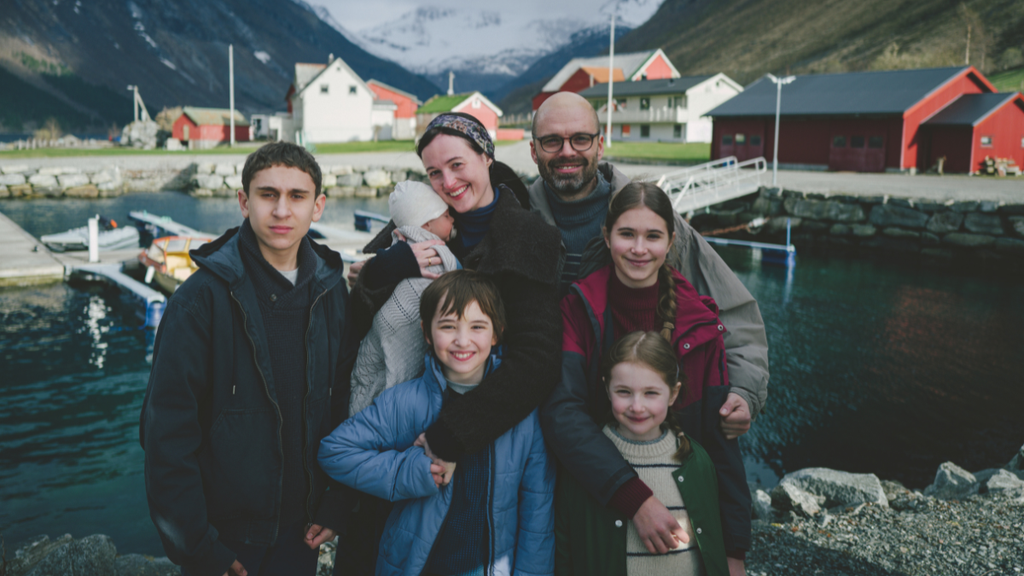
You see this very liberal Norwegian family meeting this Norwegian-Romanian family, and you see how complex it is for them to understand each other. You see the strengths of how the Norwegian-Romanian family lives a religious life, and you see the strengths of living a liberal life. And then you also see the conflicts between them.
I think I connected to Elizabeth (the wife in the Norwegian-Romanian family) because she is a mother of five and I am a mother of one. (Laughs) It was also something about the way she leaned into her faith. I don’t have the same faith as her, but I could really connect to the idea of wanting to be part of something that’s bigger than me, and how that gives my life meaning. So I had this strong connection to her, even though she lives a different life to me. And I knew just from the reading that Cristian’s way of working would be very, very different.
I really enjoy feeling like I don’t know anything and I have to learn everything again. It widens your perspective of what acting can be.
Different in what way?
I had never met anyone similar to Cristian before. He is a special person. He has so much integrity, he’s so calm and he is open to finding whatever comes in the moment without judging the character at all. One of his virtues as a filmmaker is taking away the subjective as much as possible. So when he would give me directions, he wouldn’t talk about her intentions. He wanted to move away from the idea of what her intentions were. That was very different from anything I’ve done before.
It was also quite physical, the way that he builds the poetry within the frame. He does a lot of takes and it’s all one shot. I watched sometimes when he built the mise-en-scène when I was not in the scene and how he would structure all the movements. And then on take 25, he would have perfect movement in the scene. He would rub his hands together, and then I knew he was happy.
Did you try not to think about the character’s intentions, or did you try to figure them out for yourself?
Of course it’s impossible as an actress to not get into the psychology and fall into that. It was a very interesting perspective, because in my training in theater school, you’re always asked to find the intentions and the goal of the character. But this was a lot more stripped down. It was an interesting way of working.
And it was a really incredible shoot. We were shooting in a very difficult place for production because it was in the middle of nowhere, so it was hard to actually find enough electricity and enough food. I think 25 people lived in that small village. And there were stone avalanches every second day. We had to go by boat if the stones were in the road. It created a lot of magic.
I hear you were staying at a hotel that’s been described as being similar to the one from “The Shining.”
There were definitely some ghosts there. (Laughs) Really, we all had experiences with knocks on the doors and things blowing in the air. We heard on the way up that there were ghost stories there, but you don’t think you’re going to experience anything. But I had some knocking on my door, and when I looked, there was nobody there. (Laughs) It also added to the mystery of the whole production.
Do you feel like the film took you places you hadn’t been before as an actress?
Absolutely. I’m a director-oriented actor. I really love trying to understand on a deep level what the director wants and the shape and form that the director wants to work within. I really enjoy feeling like I don’t know anything and I have to learn everything again. And I enjoyed working with Cristian to try to navigate what he wanted from the character without the normal kind of conversations.
You feel fragile and vulnerable in learning something new, and it’s more risky because you don’t know if it’s going to be a good result in the end. And then after, of course, it adds to the next project and it widens your perspective of what acting can be.
Speaking of next projects, I understand you’re working on Alexander Payne’s next movie, “Somewhere Out There.”
Yes. He really is a great filmmaker. And it’s also a very different style again, and something to adapt to as an actor. He knows so well how he’s going to cut the movie, so he doesn’t necessarily give you the (moments that lead) into the (key) moment. He just starts where the moment starts, and then he stops when the moment is over. The takes are pretty short and he doesn’t do that many takes. He also likes the messiness when it doesn’t feel completely finished. I really love that. You get a more humane experience watching his movies, because the people on screen are not perfect and it’s all a bit messy.
Are you working with Halfdan Ullmann Tøndel on another movie after “Armand”?
Yes, it is in the works. He’s also an incredible filmmaker, and it’s fantastic to be in someone’s first movie and see how they build their worlds. I probably can’t say anything about it, but it is definitely in development.
With all the success you’ve had over the past five years, has your perspective changed on what you’re looking to do from here?
I think it’s the same. I am oriented around directors first and foremost, and then the story and the scripts after. The character can always be built with an ensemble if you have a director that wants to take the project somewhere interesting. I feel like I’ve gotten to work with people I really wanted to work with, and that kind of direction for me is not going to change.
This story first ran in the Cannes issue of TheWrap’s awards magazine. Read more from the issue here.