

With all of the major media and tech companies finished reporting their March quarterly results, it’s time to take stock of where the entertainment industry stands.
It’s an industry that’s still on shaky ground. Between the pending merger between Paramount and Warner Bros. Discovery — which still faces resistance — the rise of artificial intelligence, mounting layoffs, political instability with a war in Iran and fights with the Trump administration at home and continued declines in linear TV, volatility is the new norm.
But throughout the nearly two dozen earnings reports and conference calls, some common themes started to stand out. They’re enough to give a sense of how the industry is doing now and where it’s headed in the coming months.
Here are the biggest takeaways:
“Warnermount” casts a large shadow
Paramount’s pending acquisition of Warner Bros. could be felt in a number of places.
The deal is slated to close by the end of the third quarter, and while Paramount CEO David Ellison and Warner Bros. Discovery CEO David Zaslav said little about it during their respective calls, both expressed confidence it would close.
But there’s been a growing sense that the process wouldn’t be as smooth as expected. Hollywood has gotten more vocal about the dangers the merger presents, and are calling for the state attorneys general, led by California AG Rob Bonta, to step in. Bonta previously told TheWrap that “red flags are everywhere when you have a merger of this type” and that the states are prepared to “act timely,” but declined to provide a specific timeline for when a decision could be made.
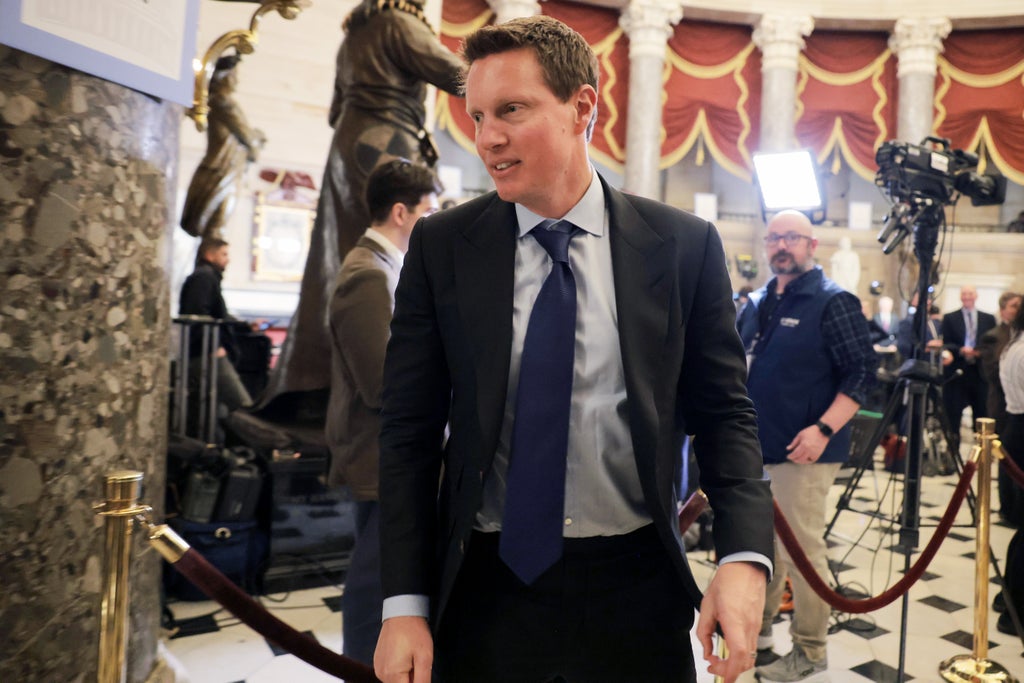
Warner Bros., meanwhile, paid the price of switching suitors when it posted a net loss of $2.92 billion, much of it due to the $2.8 billion break-up fee it paid to Netflix. Paramount will reimburse shareholders when the deal is closed, and it drew on its own credit facility to get the funds ready.
The recipient of that breakup fee, Netflix, could go on its own shopping spree. Fresh off of their agreement falling through, it bought Ben Affleck’s InterPositive in a deal that could reach $600 million.
“We’ve learned so much about deal execution, about early integration, but mostly, we really built our M&A muscle. And the most important benefit of this entire exercise was that we tested our investment discipline,” co-CEO Ted Sarandos said on Netflix’s earnings call.
Few other companies directly addressed the deal, with AMC Theatres CEO Adam Aron being an exception and reiterating his support — a stance that stands in contrast to the rest of the exhibitors.
“We have the sincerest trust in the leadership under David at Paramount and we fully believe he is sincere in the promise he made and confident in his ability to pull it off,” Aron said.

Streaming profits are up
This quarter also cemented the fact that the streaming services, which were largely loss leaders designed to amass huge customer bases, are now growth engines in their own right. As we laid out in our breakdown of how the streamers stacked up this quarter, all but Peacock reported a profit.
WBD saw its streaming revenue grow 9% to $2.9 billion, while profits surged 29% to $438 million.
In a rare comment about the deal, WBD’s Zaslav noted that HBO Max’s turnaround should be a “huge benefit” to Paramount once the two companies combine.
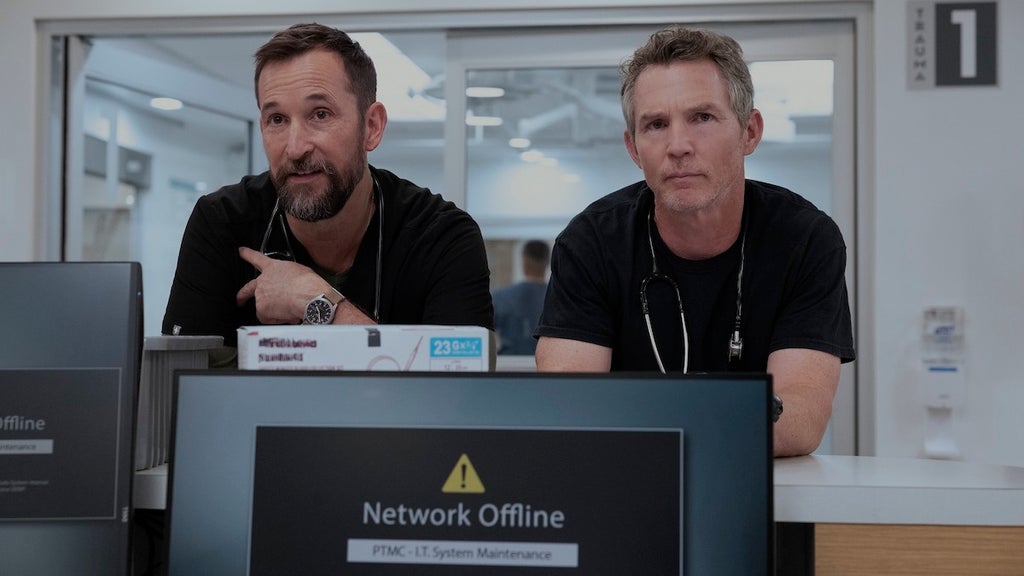
Disney+ and Hulu also grew their combined profit 88% to $582 million and is on track to deliver a streaming operating margin of at least 10% in 2026. The company does not disclose profits for ESPN+.
What’s driving those profits have been consistent price hikes and driving customers to the cheaper ad-based tiers, where advertising revenue helps bolster the bottom line.
The only exception is Peacock, which is the only major streamer still in the red despite seeing revenue grow 12% to $2.1 billion, clearing that mark for the first time. The combination of HBO Max and Paramount+ puts it nearly on par with Netflix and Disney+-Hulu on a subscriber basis, leaving the gap between the top three players and Peacock even wider.
Peacock executives said they see the service approaching profitability in the second quarter, so there’s at least one ray of hope.

The AI arms race gets pricier
While Peacock celebrates passing $2 billion in revenue for the first time, the Big Tech companies are dropping nearly ten times as much on capital investment in artificial intelligence — and getting rewarded by shareholders for it.
As noted in my analysis, companies like Google parent Alphabet and Microsoft are spending upwards of $190 billion — each! — on infrastructure to build out their AI models. Amazon is in for a cool $200 million. The only Big Tech company not all-in is Apple, which is “conservatively” spending an estimated $14 billion this year.
It’s the biggest case of FOMO you’ll ever see, with companies going all-in on making sure it stays on top in the AI arms race.
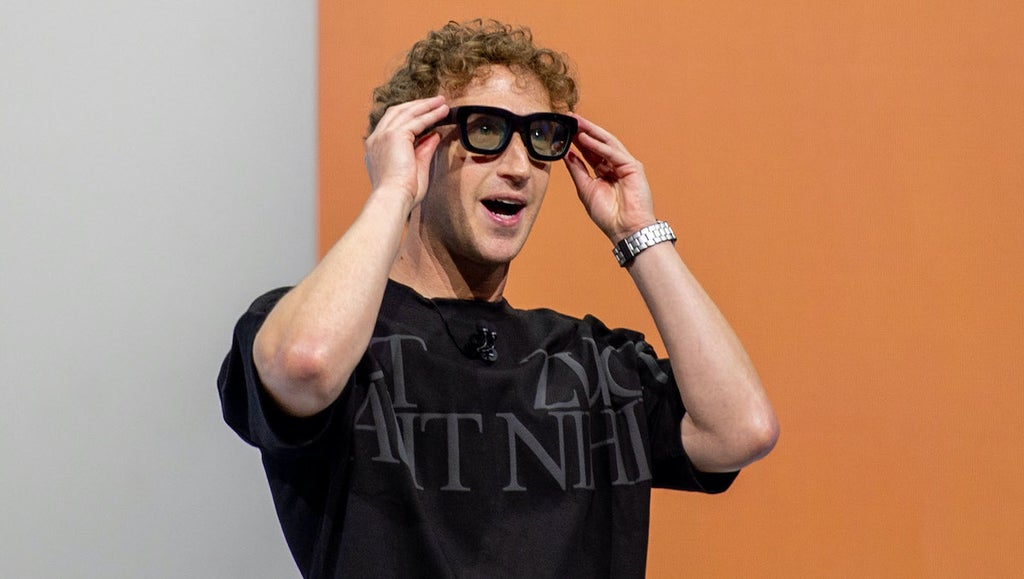
“If you’re a hyperscaler like Google, Amazon or Microsoft, the insane price of AI infrastructure is a rational investment, because you’re selling that compute at a profit,” said Avi Greengart, an analyst at Techsponential. “There’s a risk of overinvestment, but given the potential — and health of their underlying businesses — it would be worse to underinvest if the bull case for AI is true, and then never be able to catch up to demand and lose to rivals who did.”
But AI talk wasn’t just left to the tech players. Both Paramount CEO Ellison and new Walt Disney Co. CEO Josh D’Amaro called tech an “accelerant” to their businesses, and talked up the notion of AI to speed up work flows, and in Disney’s case, improve the customer experience. That includes creating a single “super app,” presumably based on Disney+, that would handle everything from shows and movies to access to the parks.

Parks and theaters drive experiences
Another trend that popped up across multiple companies was the increased value of real-life experiences. A study from National Research Group in collaboration with The Wrap published earlier this year found audiences of all ages (but especially Gen Z and Gen Alpha) expressing a desire to reconnect with reality as a response to how isolated technology has made society. We saw some of that play out in the results.
Disney’s experiences division saw record growth in the second quarter, with revenue rising 7% to $9.49 billion and profits growing 5% to $2.62 billion. Comcast’s Epic Universe park drove theme park revenue up 24% to $2.3 billion and profit up 33% to $551 million.
Comcast co-CEO Mike Cavanagh talked up the investment in additional parks this year, including a new ride at Universal Studios Hollywood themed to “Fast and the Furious,” a Frisco, Texas park aimed at children and a new park in the U.K.
Neither Disney nor Comcast executives said the higher cost of gas was affecting attendance, although warned that could change if the conflict in Iran — and affect on fuel prices — drags on.
While AMC and Cinemark each reported losses in the March quarter, strong revenue growth from a healthy slate of films in the second quarter through summer has executives from both theater chains feeling optimistic.
“So much has been breaking our way of late,” Aron said.
“Our first quarter results marked our strongest first quarter since the onset of the pandemic across all revenue categories and Adjusted EBITDA, with meaningful top-line growth and margin expansion,” said Sean Gamble, president and CEO of Cinemark.
AMC took the live events theme further, announcing a partnership with Arena One to show special performances that are livestreamed from a custom stage to hundreds of AMC theaters at the same time. The company teased that artists performing will be able to see the responses of audiences in real time, although didn’t go into detail about how that would work.
Linear declines are real
As much as the industry would like to move on to streaming, a bulk of its revenue still comes from linear TV, which continues to fall off a cliff.
WBD saw its revenue fall 8% to $4.38 billion as profit fell 9% to $1.63 billion. Paramount’s TV Media segment saw revenue fall 6% to $3.7 billion. Disney reshuffled its reporting structure so its linear business lives within its Entertainment division, but the company has acknowledged a shrinking audience there as people migrate to streaming.
Versant, which spun out of Comcast at the beginning of the year and consists of cable channels like CNBC and the rebranded MS NOW, exemplifies this trend. On Thursday, it reported that revenue fell 1.1% to $1.7 billion thanks largely to linear distribution and ad revenue falling significantly. Its profit tumbled 22.1% to $286 million.
For many of these larger media companies, the linear drag will just keep getting worse, meaning there’s a ticking clock on making sure those streaming services are firing on all cylinders.
