
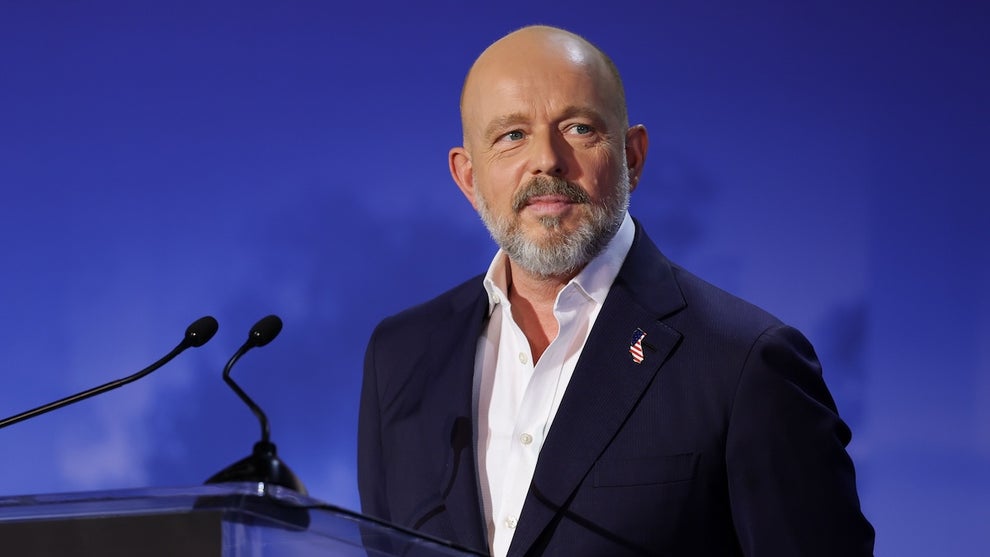
The leading Republican candidate for California governor Steve Hilton unveiled his plan to bring film and television production back to California on Thursday, proposing ambitious federal tax incentives and uncapped state credits.
Endorsed by President Donald Trump, Hilton stated that if elected he would work directly with the Trump administration to secure a federal tax incentive. A program like this does not yet exist in the United States.
The U.S. has a Bush-era tax incentive, Section 181, that allows productions to receive a tax write-off on the first $15 million spent for shoots domestically. However, Hilton proposed a nationwide incentive that would compete with Canada, Australia and the U.K., who operate with national tax incentives.
The British-American politician said that layering a federal credit on top of state incentives would keep the highest share of filming, crews and facilities in America.

Hilton also announced he would support a film tax credit plan that could go up to 60% for some productions and would never fall below 40%. The current tax credit rate for productions in California sits around 35% with a ceiling set at 45%.
This ambitious tax incentive program would substantially increase what is already considered the most generous film tax break program in the country, despite California having a higher cost-of-living than competing states.
Like many of his fellow candidates, Hilton supports an uncapped, open production incentive model. However, he plans to apply tax incentives to spending both above and below-the-line, including post-production fees.
His Democratic competitors Matt Mahan and Tom Steyer both support taking off the cap. Mahan also favors including above-the-line expenses (like high salaries for top directors and talent) in the tax credit, a controversial idea for unions, who want to see the money targeted for middle-class workers.
This tax program could be expensive for California residents, but Hilton may have more room in his budget than his Democratic competitors because he says he will cut spending elsewhere.
The plan also notes that he will reserve a share of the annual program for independent, mid-budget film production.
“These programs were originally designed to protect the people behind the scenes and the broad production economy that supports them,” Hilton’s proposal reads. “The goal was to keep working crews employed and keep production happening in California, not simply to subsidize the largest projects that can already move anywhere.”
California already significantly expanded its program in 2025, increasing the annual cap from $330 million to $750 million and broadening eligibility to include more streaming series, animation and sitcoms. Since then the California Film Commission has approved 147 film and television projects, a 53% year-over-year increase. Hilton argued that the structure still isn’t competitive globally.
The number of shoot days in Los Angeles County in 2025 fell 16% from 2024 to below 20,000, and shoot days recorded in all major film and television categories were at least 30% below the five-year average, underlining the exodus of productions — and labor for local industry workers — as studios seek tax credits elsewhere.
