
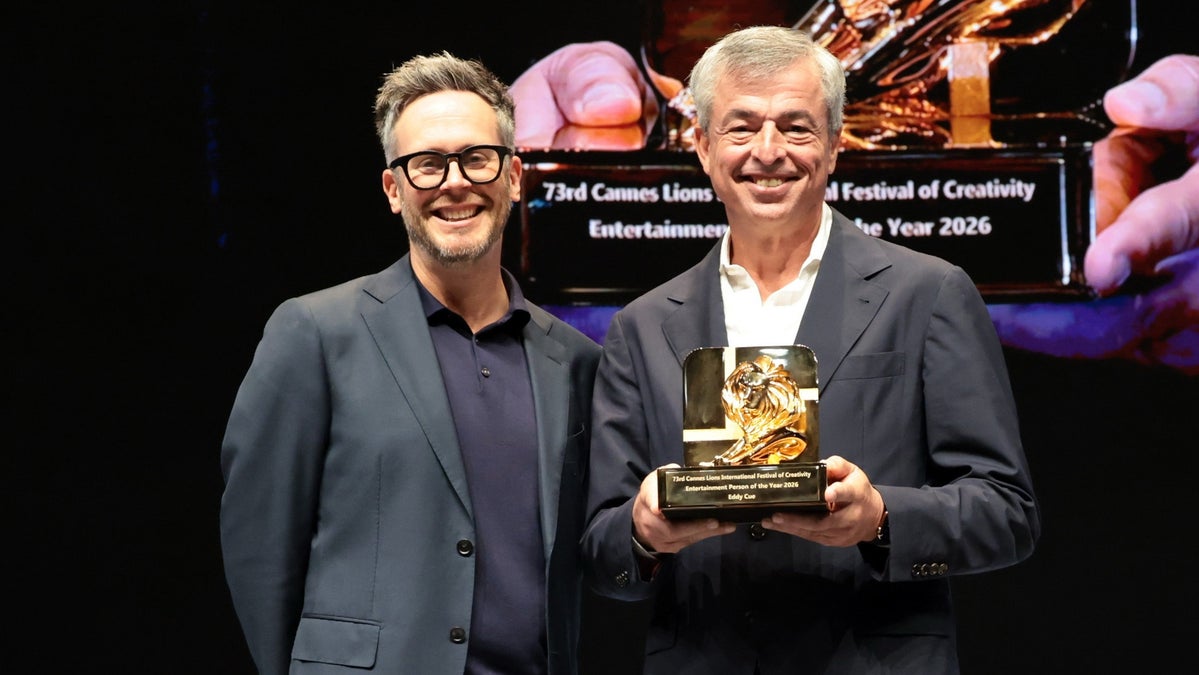
It’s been a good couple of years for Apple’s Eddy Cue.
The trillion dollar company’s Senior Vice President of Services started 2025 with a one-two punch on the television side with the return of Ben Stiller and Dan Erickson’s culture-defining hit “Severance” and the launch of Seth Rogen and Evan Goldberg’s awards darling “The Studio.” Then came Joseph Kosinski’s “F1,” one of the highest grossing movies of last year as well as the highest-grossing film both ever produced by Apple and of star Brad Pitt’s career. That success led to Apple bringing Formula One racing to its platform and resulted in one of the most ambitious and all-encompassing brand integration campaigns ever brought to movies.
That was followed by the premiere of Vince Gilligan’s “Pluribus” and Katie Dippold’s “Widows Bay” — two of the buzziest and most critically acclaimed shows of 2025 and 2026, respectively — and will soon include the return of Apple’s televised crown jewel, “Ted Lasso.” Apple TV has become so synonymous with great content and home for great artists in Hollywood, it’s hard to believe the streamer is less than seven years old.
It’s because of this cultural importance that Cue was named Cannes Lions 2026 Entertainment Person of the Year. “For us to be recognized as creating some of the highest quality, best TV shows and movies in the world is crazy,” Cue told TheWrap. “It’s what we were aiming to do, and it feels good to be here.”

But in many ways, Apple TV is still a new streamer, and Cue has several other responsibilities outside of television and film. The SVP also oversees Apple Music, Apple Podcasts, Apple Books, Apple Pay, Apple News, Apple Fitness+, Apple Card, Apple Maps and iCloud as well as Apple’s productivity and creativity apps.
Fresh off his achievement at Cannes Lions, Cue spoke to TheWrap about how he’s thinking about Apple’s IP as the streamer builds bigger foothold in pop culture, what he thinks about AI’s role in Hollywood and how he’s thinking about incorporating podcasting — another major Apple entertainment product — into the TV and film development process.
TheWrap: Thanks so much, Eddie. This is a big event and congratulations.
Eddy Cue: Thank you. I really appreciate it. It’s an incredible honor, an incredible accomplishment for Apple and the team. That’s what it really is. We started Apple TV six and a half years ago or so, and for us to be recognized as creating some of the highest quality, best TV shows and movies in the world is crazy, so I love it. It’s what we were aiming to do, and it feels good to be here.
There’s been a trend of your competitors pulling back on the kind of content that Apple is really great at making. Do you see that as an opportunity to jump in and do more of these prestigious deals? How do you see the environment these days?
For us, it’s simple. We didn’t look at us as prestige or award-winning or whatever. We wanted to make the best television, the best movies. We’ve always said, “We don’t want to be the most. We want to be the best.” That’s what it’s always been about, and it’s part of the DNA of who Apple is. When we started this, we said, “Let’s figure out a way that we’re going to create a place where the best storytellers in the world are going to want to tell their stories there.” What that means is we have to have a team of folks that complements them and, in a way, makes them better at what they’re doing. We can help them, we can do things with them, and the team’s done an outstanding job at that. And so the best people want to work here because they realize we’re all in.
This is hard, but it helped us. We didn’t have a library. We don’t have a lot of old stuff. Everything matters a lot to us, and so that’s one of the reasons why I think it’s worked so well. But the people have been the key to the whole thing.
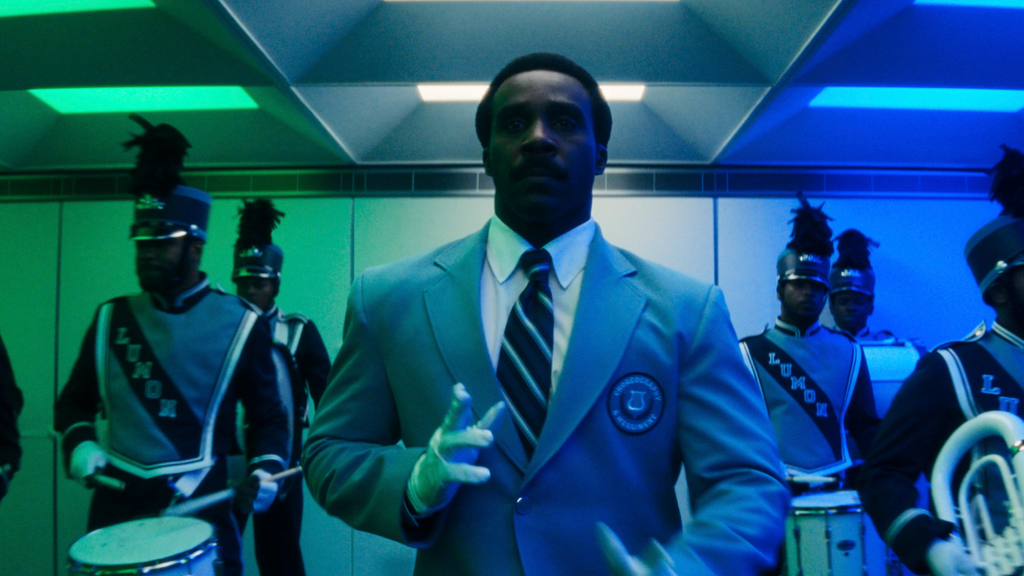
One thing I really respect about Apple’s TV strategy is every time you guys release a new show or movie, it’s a full team push. There are other shows I’ve seen that get lost in the library shuffle. Can you talk about that strategy a bit? And have you figured out “We can only make this many projects a year”? Is there a limit?
I don’t know what the limit is as a number. But the limit is it’s just really hard to do. It’s one of those things where when you see it, it looks easy, but it’s just not. It takes years to make these shows, so that’s really the limit. Can you find the great stories? Can you develop them? Do you have enough people and stories to do that?
We’re at the limit right now of what we can do. Maybe there’s a way to increase it a little bit, but I don’t think there’s a way to increase it a lot. Like I said, we’re all in, so every show matters to us. We’re not after genres. We’re not trying to make shows that are for females between the ages of 25 and 34. We’re making shows for everyone that we think can work with everyone. That’s hard, but that’s what we’re striving to do.
Even if you’re not a horror fan, you should be watching “Widow’s Bay.” It’s an amazing show, and it doesn’t matter that it’s scary or whatever, but it’s just an amazing show that you need to watch. When we do that, that makes me feel really good.
That’s my new obsession right now, along with most other critics. Everyone I know is talking about “Widow’s Bay.”
Obviously because it’s a new show, nobody knows what it is. Nobody knows the name, and it’s just been going, going, going, going up. It’s been a huge sensation for us now.

That really nicely segues into my next question. When you see that happening — when you see a snowballing of interest — what’s the strategy that you implement to really capitalize on that?
We try to market it harder and let more people know about it, and people like yourself help us a lot. We have great word of mouth for our shows generally, which is always the best way. If somebody else is telling you to watch it, that’s the best recommendation you can get, so that’s what we try to do. But one of the great things now is we have Season twos, threes and fours of returning shows. People are coming back for those, and then it’s easier to introduce them to new shows. When everything was new, you had to tell them everything.
You also have an established brand of what Apple TV is.
I grew up at a time where there was one service that when they did a new TV show, I always watched because I always thought it was very high quality and aimed to be the best. That’s who we wanted to be, and I think it’s who Apple tries to be with all of our products. It’s great to see a lot of that right now with “Severance,” “Pluribus,” “The Studio.” We have “Ted Lasso” coming back, obviously finishing “Widow’s Bay.” It’s crazy. These shows are so good.
When we got started with this, I remember looking at the shows that are out there, and I said, “Which shows do I want on our service?” Now I look at them, and a lot of them are the ones that are on our service.
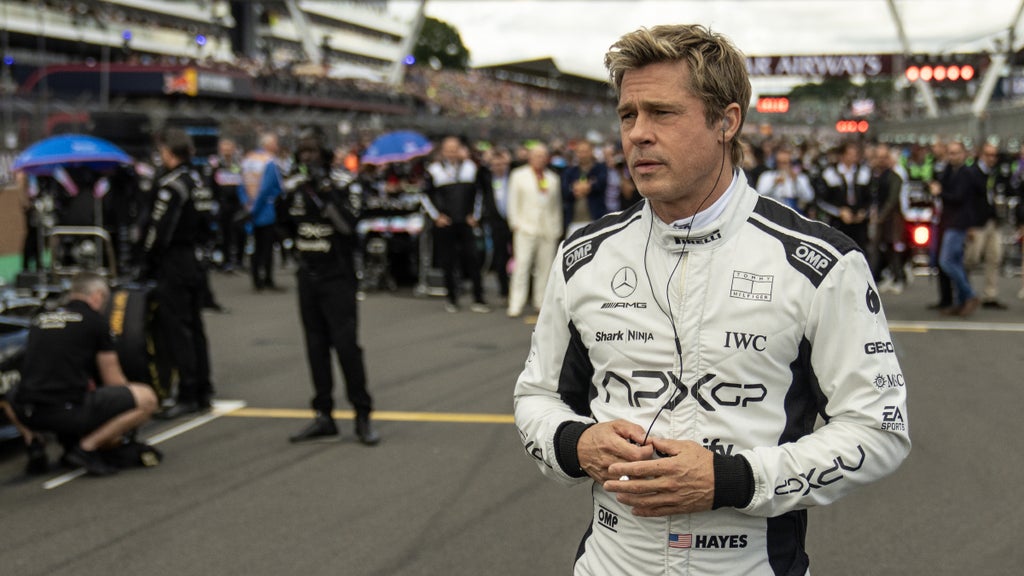
You had a tremendous hit with “F1,” and you have a massive hit with “Severance” as well. When these things become bigger and bigger, how are you thinking about that IP? Are you thinking about possibly expanding it, or you just want it to live in its universe?
We’re learning, honestly. It’s not something we’re as familiar with. Certainly in “F1,” I think if we hadn’t done the movie, we probably would have never done the F1 deal televising the races in the U.S., for example. There are things that you wouldn’t have thought of one leading to the other, and but we got to know the Formula One team, they got to know us, so it made that possible. There’s other things we’ve, we’ve started thinking about, but it’s still early for us.
Netflix has been investing heavily in podcasting and bringing those podcasts into the Netflix ecosystem through the video element. Are you thinking about pulling on Apple originals or pulling in podcasting anyway into your development lifecycle for TV and film?
We’ve done some of it already, in the sense we’ve had some Apple original podcasts that we’ve done. It’s something we’ve experimented with. I wouldn’t say we’ve got the science of it yet. But we want to take advantage of anything that we can to help us from that, and there are great stories to be told in some fashion or another. Obviously, we have a great podcast app and service that we provide, and we have a lot of listeners. We pay attention to that.

We’re in Cannes Lions right now. One of the big topics at all times is AI. How are you thinking about AI’s role in Hollywood these days?
I don’t think there’s ever been a better time to be a content creator than there is today for so many reasons. Number one, it’s global. You can reach everyone in the world. Number two, technology makes creative people better. It always has. We’ve talked about Apple being at the intersection of art and technology, and it was all about empowering creatives with tools, whether it’s an iPhone camera letting you now make a movie without needing to spend $200 million or if you’re a musician, you can have a studio in your house with a Mac and a few instruments. These are things that weren’t possible. So when you look at AI, if it helps some writers write, if it helps editors edit, if it helps special effects and other things like that, I think those will all be great things. It’s still very early, and there’s a lot of fear, but I don’t fear it. A creative person is the only person that can come up with “Severance.” A creative person’s the only one that can do “Widow’s Bay.” I don’t see that going away at any time — that human piece of doing things that doesn’t make sense to everyone until it does.
There’s also a human connection to actors that you feel because you know them or you get connected with them. There’s all these things that we look at. It’s really important that we’re doing this [interview] face to face as opposed to a telephone. It’s a very different conversation, and we need this. I don’t see that changing at all. But I do think it’s great if technology can keep empowering people to do more and be better.
Speaking of technology empowering people to create, I cover a lot of content creators. They’re always creating on iPhones and Macs. Are you looking at the creator economy when you are thinking of developing the next iteration of shows and movies?
It’s a good point. It’s very early. One of the things you always discover is great ideas or great things come from anywhere. The greatest storytellers weren’t the greatest storytellers until they were, and they can be from anywhere. You do have to pay attention, and that empowerment of using technology allows them to be discovered faster, and they can be more successful faster. So, you better be paying attention.
My last question for you is what is one of the biggest takeaways from Cannes Lions you have this year?
Well, look, well, it’s Cannes. First of all, it’s an amazing place. The energy level, you can feel it from the moment you walk out, so that part’s great. I’ve only been here for the film festival, so it’s different in some ways, but it’s got the same thing, which is energy around. You can see that people are excited to be here. It’s been great, and I’ve had some great meetings, which, like I said, you need. I need it. I don’t know if they need it, but I need face to face. I love that this is possible because we’re all here,
I agree with the energy you feel at this [event]. There’s excitement here that I haven’t felt in a second.
It’s a big thing for me. I get asked all the time, what do you look for in people when you’re hiring? I’m like, “Passion.” I want people that love what they do. That’s the kind of thing where you feel the energy, and like I love what I do. I’ve been doing it for a long time, but I’m just excited today as I was when I first started 20 or so years ago. That’s special, and then the people that we have are amazing, because they love what they’re doing.
