
You can’t talk about television in 2026 without mentioning video podcasts. A format that used to be considered a niche interest has dominated headlines over the past two years thanks to the success of shows like the Golden Globe-winning “Good Hang With Amy Poehler” and major deals like Netflix’s partnership with “The Breakfast Club.”
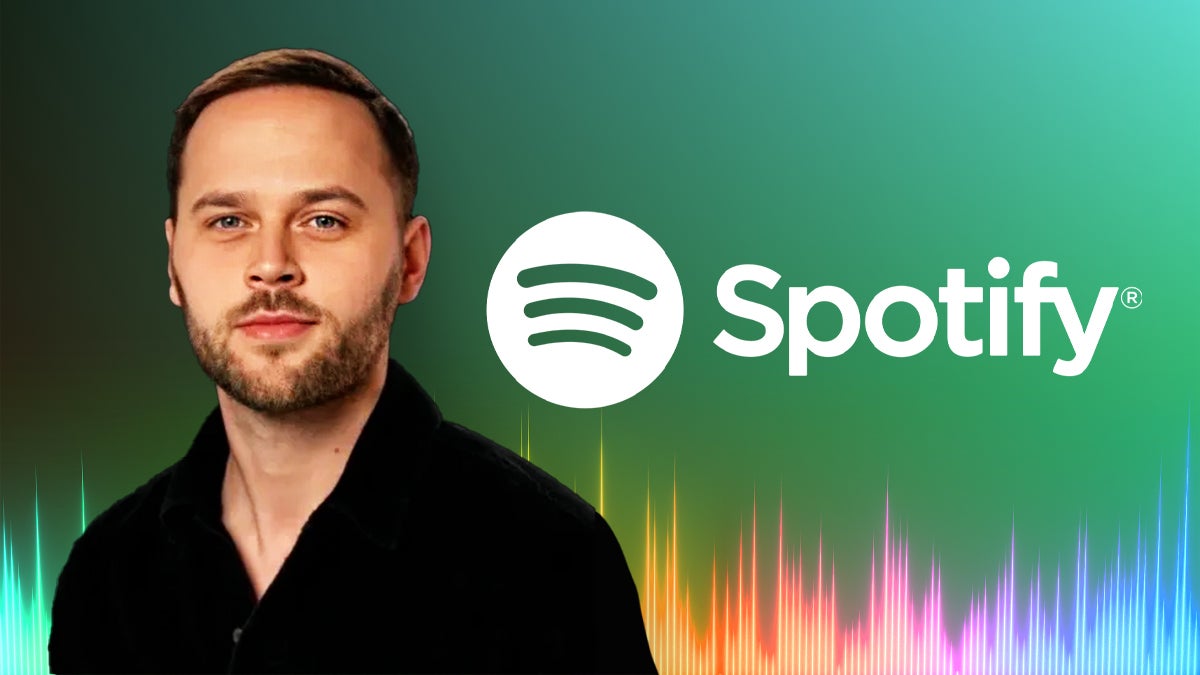
It’s been a trend that’s surprised many in Hollywood. But for Roman Wasenmüller, the vice president of podcast and video at Spotify, it feels more like a natural evolution of the media landscape.
“If you look at a lot of media forms and how they’ve evolved over time, video is always in the mix,” Wasenmüller told TheWrap on Spotify’s beach at Cannes Lions 2026. “I truly believe that a podcast, in essence, is a formula you still can consume with only audio. But video is a layer that gives you more discovery opportunities and deeper engagement. I don’t see reason that video is not incremental to that.”
Few players have been more crucial to podcasting’s evolution than Spotify. The Swedish-based music streaming service first started experimenting with the genre in 2015 when major labels in Germany uploaded audiobooks and audio stories. To the company’s surprise, some of those first uploads became very popular, with two of them making it onto Germany’s list of the most-listened-to content for the year.
Those early signals encouraged Spotify to invest more in podcasting, a push that culminated in 2019 with a series of multimillion-dollar deals with companies and podcasts like Gimlet Media, “The Last Podcast on the Left,” “The Joe Rogan Podcast” and Bill Simmons’ The Ringer network.
But in an age where those kinds of splashy deals have become the norm, Spotify has pulled back from such expensive investments.

“I think [Spotify’s 2019 deals] gave the market a lot of confidence that this could be a big thing. It was still very nascent,” he said. “The main thing is that we went down a soul-searching exercise, which was: ‘What do we do with podcasting?’ and ‘What do we believe in as a business?’”
Its new model is less focused on exclusivity and more on building a platform that’s been optimized for creators and consumers alike, introducing options like memberships for specific creators and a comments section.
“If we truly want to build a win-win-win ecosystem, we better be aligned with creators,” Wasenmüller said.
In conversation with TheWrap, Wasenmüller broke down how Spotify is staying ahead of the ever-changing video podcasting trend.
Spotify invested very heavily in exclusive podcasting deals around the 2019 era, but a lot of the podcasts that are really taking off at this point are creator-owned versus Spotify-produced. Can you talk about that transition?
We’re doing all three things at the same time. We are actually the largest consumer platform when it comes to consumption. So making sure creators have a home on Spotify, we have the Spotify Partner Program where every creator can participate after a certain legibility. [Note: Eligible podcasters can earn a share of revenue from ad-supported streams and watch time from Premium subscribers.]
Then we have what we call our licensed portfolio. It’s what creators own. They produce the content. We represent, distribute and monetize for them. That’s a winning formula because the creators usually feel like we can help in certain areas, and we trust them with their work and how to do it.

And then we have the third model, which is actually our own studios like The Ringer, which is thriving as well. You are betting on key talent, and the team that has been built under Bill Simmons is just phenomenal. They’re finding new [show] hypotheses, like Amy Poehler. They’re developing their shows into larger, category-leading shows … We’re really the only one that is in all those three categories at the same time, which gives us probably more insight and more oversight.
You also have this deal with Netflix. How did that come together, and what are you hoping to get out of this deal?
It was clear that they were going into , and then when we started having conversations with them. First of all, it’s good when a big player like Netflix enters because it’s good for the ecosystem. If there are more top players, then the market just grows. That’s something we learned at Spotify every single time. During very pivotal points, like in 2015 when Apple Music launched and in 2014 when Prime Music launched, guess what happened? Music streaming got bigger.
Then I put my studio hat on and had great conversations with Geoff [Chow] and Bill [Simmons], who run The Ringer, and I was like, “What should we do as a studio? What’s a good setup?” We spoke to our creators as well to try to understand the pros and cons from a business point of view. We decided [partnering with Netflix] is the right thing to do for our business for where we are, but also it helps us to complete the way we think about distribution and monetization overall.

I’ve seen more platforms embrace that lack of exclusivity model, where it’s like, “We’re going to give creators as many tools as possible. Whatever they want to create, I want you to do it on my block.”
We’ve always been the small player from Sweden. If you think about it this way, we’re facing competition from the largest companies in the world with strong hardware ecosystems. One key strategy of ours was always ubiquity; Spotify just needs to be everywhere consumers could engage with music, podcasts, books, etc. Why would the inverse be true for what creators should put there? So it’s very deeply ingrained in our company DNA.
Spotify introduced comments in 2024. How’s that been going?
It’s been going well. What I truly love about this is that you see clear signals of how much more people come and engage with the content. It’s really one of those fandom-building opportunities.
We have this concept internally that we call ‘time well spent’ or ‘no regrets,’ which is basically the idea that we don’t want anyone who’s used Spotify feeling like they regret the time that they spend at Spotify … Comments are part of this. You don’t want to go there and it be negative. You want it to feel great. You want it to feel like a community. It’s kind of cool to see this is how it’s playing out. Creators tell us it is day and night [compared to other platforms].
This conversation has been edited for length and clarity.
