
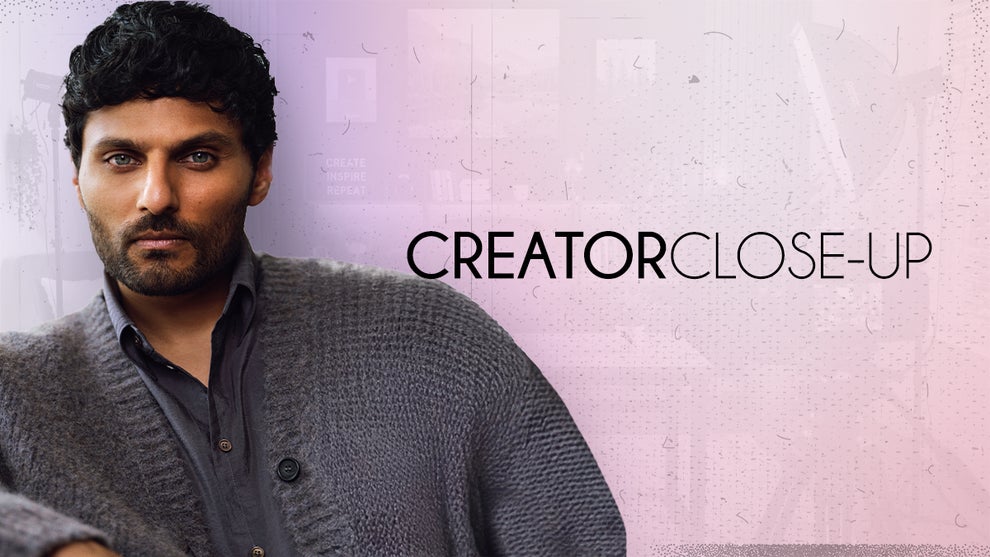
Scrolling though headlines on social media, it would be easy to dismiss Jay Shetty’s deals with Spotify and Netflix as just another example of a creator cashing in on Hollywood’s new obsession. After all, the video rights to Shetty’s podcast “On Purpose” reportedly led to a multiyear deal that cost around $100 million.
In reality, Shetty’s move to Spotify and Netflix on Monday is the result of nearly a decade of work.
“I pitched my first show to Netflix in 2017 or 2018, so like eight or nine years ago. That’s where my relationship with Netflix began. I became really good friends with one of the buyers there,” Shetty told TheWrap on Spotify’s beach at Cannes Lions 2026. Though that first meeting didn’t lead to Netflix partnering with Shetty, it did eventually connect Shetty and his team to Netflix’s Chief Content Officer Bela Bajaria. Then, about five years ago and before he was CEO, Shetty met Spotify’s Daniel Ek.
“I like to give that context because people often think negotiations happen overnight or over a period of months. These have been relationships that have been nurtured on both sides for five to nine years, just to give people a sense of the amount of time that goes into even building an understanding of each other and the brand,” he said. “This particular deal took around nine to 12 months of conversations between myself, other teams, streamers, agents, brands. It was a long-term partnership.”

That transparency is key to Shetty’s brand. One of the most listened to Spotify podcasts of last year, “On Purpose” is known for its radical honesty and consistent approach to mental wellness. Shetty never promises to give his listeners one simple trick to cure their depression or anxiety. Instead, he advocates for actionable daily changes like getting enough sleep or analyzing negative thoughts rather than responding to them emotionally. That safe environment has led to mental health experts sharing their advice and stars like Mille Bobby Brown and Zachary Levi opening up about their mental health struggles. When Shetty started his podcast, he had a list of dream guests that was about 100 names long. By his estimation, he’s interviewed about 98 of them.
Though Shetty is in the midst a whirlwind of success, “On Purpose” has truly been a labor of love.
“I love my life. I’m really lucky. I’m very grateful,” Shetty said. “I tell my whole team this: If we don’t all feel this energy every day that we get to do this, we’re doing something wrong … When I started the show, I sent 1,000 personalized DMs, emails and videos to people. Now we can book anyone on the show. And so to be in a position now where people are reaching out to us, coming to us and everything seems possible, I live in gratitude daily.”
TheWrap: I’m really happy you gave context for how long it took for the Spotify and Netflix deals to come together because is a misconception, not just for creators, but for anyone looking to partner with Hollywood. It takes a very long time.
Jay Shetty: Extremely [long], and the value of genuine relationships. I think we often live in a world now where people think deals come out of nowhere and brands are just picking people up. The reality is I’ve been friends with these two brands for a long time. Even now when I’m joining the family officially, it feels like coming home as opposed to a new partnership or a new deal because there are all these amazing relationships that already exist. For example, Dustee Jenkins [Chief Public Affairs Officer] at Spotify. I met her through Brilliant Minds, which is a conference in Sweden, and then we took a plane to Cannes together. Even though I wasn’t at Spotify at the time, we became really good friends. That’s the organic nature of how these partnerships come about.
What are you hoping to get out of this expanding partnership?
This is a really exciting moment because it’s a first-of-its-kind deal with Spotify and Netflix together. It’s a historic moment for me. It’s a historic moment for the industry because you’re seeing streamers, for the first time, really get excited about video.
Spotify’s commitment to podcasting has always been exceptionally clear. I believe they’ve led the way in having Spotify video as a platform that’s growing, so our ability to reach global audiences through Spotify is only going to expand through this partnership. We’ve never done Spotify video before. We are already one of the top 10 podcasts on Spotify without video, so to add video just makes it a really really exciting growth opportunity for us.
Then, on the Netflix side, it’s really exciting because Netflix wants “On Purpose” to be its premiere interview show, whether it’s Oscar-nominated actors on Netflix coming on the show, whether it’s musicians that have documentaries, whether it’s athletes. We have two partners now that really want to support us. What’s been really beautiful is all creative control is left to us. They want to produce the show that we’ve always been producing.

I’ve covered Netflix for over a decade, and I’ve covered all of their interview and talk shows with “Patriot Act with Hasan Minhaj” probably being the most successful. Have they given you any insights about like, “This is what we’re seeing working well?”
I’ll be honest. They’re like, “We want you to do what you do.” That’s really been their take. They’re willing to provide data and analytics as we launch, but before that, they’re very much like, “We love what you do. We want you to do that, and we want to support that.” That’s been really comforting for us, our community and audience. I don’t want our audience to think that we’re changing anything or that we’re going to start having guests on when it’s not the right time. We’re going to stick to our core vision and values of wanting to have guests on when they’re ready to go there and give us an “On Purpose” interview, rather than give us an interview. That’s been a really, really nice take from both companies.
I’m sure you get this question all the time, but who’s your dream interview?
There are so many. From the world of sport would be Cristiano Ronaldo and LeBron James. I’m a big Cristiano Ronaldo fan. I have been ever since I was like 15 years old, and so I’d be high-fiving my 15-year-old self if that happened. LeBron James would be phenomenal. We’re in touch with both teams and really excited to make those happen at the right time.
From the world of music, I’d have to say Taylor Swift and Rihanna. I love speaking to people who don’t speak a lot, who don’t talk that openly in lots of places. I’d love having them come on and have this be the space where they feel safe and they can really share their stories. And then, when I think about the worlds of TV and film, I think of Leonardo DiCaprio, I think of Dwayne the Rock Johnson. I could go on and on. I have a long dream guest list.

What advice do you have for creators who are looking to partner with Hollywood?
I would say that to not have rose-tinted glasses and be ready for a marathon, not a sprint. I’ve been wanting to do this for a long time. We also, separately of this, have three projects in production at Netflix. So it’s taken a nine-year journey to begin the process.
I would honestly say that being a creator is somewhat freeing because you’re in charge. You’re the director, you’re the producer, you’re the creator. When you start working in Hollywood, there are lots of cooks in the kitchen. There are lots of opinions, there are lots of creative ideas, so you’ve got to have a lot of conviction in who you are. Otherwise, you’re going to very quickly take on a lot of opinions. I almost think that the pace to get there is good because you have a lot more confidence by the time you’re there. I’d also add that if you’re rejected, it might be the best thing that ever happened to you. When I pitched these shows nine years ago and got rejected, if that didn’t happen, “On Purpose” wouldn’t exist.
[As creators], we all have this mainstream bias. I talk to creators about this all the time. For years, we’ve all been looking for mainstream validation, and it almost feels like we were made to want that. And I’d honestly say that the best thing, the only thing better than mainstream validation is ownership of IP. So the fact that I own “On Purpose” fully is the best thing that could ever have happened to me. Another season is only made based on whether I want make one, and no one’s in charge to switch you off. So I’d like to like give creators all the love and enthusiasm and encouragement to say don’t sell yourself short. And I get it. I’ve also wrestled with the same thing time and time again. But I keep coming back to this confidence and conviction that owning your IP and owning your creativity is the greatest lesson you’ll ever have in your entire life.
This interview has been edited for length and clarity.
