


In March, Nielsen sparked an outcry from streamers when a change in methodology caused streaming numbers to fall. In response, it delayed its monthly Gauge viewership report, which just led to more frustration from the entire TV industry.
Now, the measurement firm is determined to get it right.
Among several shifts Nielsen will make to the way it measures TV viewing beginning Sept. 1 is fixing timing delays in the Advertising Research Foundation’s Device and Account Sharing survey, which Nielsen pulls for its monthly snapshot of the state of the TV industry.
Rather than pulling from survey data that had an 18-month delay, the company will now use more timely data, meaning the one-time adjustment — that will see streaming numbers decrease as cable goes up — won’t be as stark as streamers were worried about.
In fact, Nielsen told TheWrap the enhancements won’t change the overall trends reported in the Gauge once implemented in the September interval, which will display that one-time bump. Streaming is still expected to represent the largest share of TV, while broadcast and cable get slightly larger shares versus the current methodology.
The tweak puts to bed a controversy that’s been simmering over the last six months in the ratings world, hopefully quelling concerns from streamers and others that make up Nielsen’s client base that have been stewing. And beyond frustrated streamers, it marks another step towards more accurate ratings that fairly represent the ecosystem between streaming and linear platforms.

“Our objective is to make our data more accurate, and that means removing bias, and it means bringing us closer to the truth. [It] doesn’t always mean bigger numbers,” Nielsen SVP of product leadership Brian Fuhrer told TheWrap. “Our obligation is to the buy side and the sell side to report as accurate of data as we can.”
The fix to the data that fuels the Gauge is among several slight tweaks to the way Nielsen measures viewing, which also include using smart watch-like devices to count co-viewing as well as improving its weighting for its big data plus panel, which Nielsen rolled out last fall.
“We think all of these collectively are really an improvement in accuracy,” Fuhrer said. “These [adjustments] have been scrutinized very closely by the (Media Rating Council) and endorsed by the MRC, and they’ve urged us to get them into the marketplace.”

All of the shifts utilize the technology at Nielsen’s fingertips to more accurately depict viewing across the TV landscape, a space that has continued to be shaken up by streaming in a steep departure from overnight ratings that once reported TV viewing in one fell swoop. In fact, Fuhrer listed live streaming as the company’s next focus of expansion.
“We integrate first party data from companies like Amazon, Netflix, and hopefully in the near future additional companies as we measure their live streaming events as well,” Fuhrer said. “I think live streaming expansion is a really important one.”
As Nielsen doubles down on streaming partnerships, the company may also be speeding up how quickly it delivers its monthly streaming charts, an individual with knowledge told TheWrap, which operate on a month-long delay.
While Nielsen was once the only major voice in the ratings game, competitors like VideoAmp have been popping up and bolstering themselves with partnerships with streamers like Netflix. As Nielsen shakes off any residual contention arising from the Gauge delays, the company said it is committed to maintaining its place as the most-trusted source of ratings data, and is not slowing down on delivering any changes to keep it as such.


“Obsession” makes strong streaming debut
After its major box office success, horror phenomenon “Obsession” garnered impressive streaming viewership after hitting Peacock on July 17. The Inde Navarrette-led movie tallied 456 million minutes in its opening weekend, ranking as the No. 2 streaming movie across all platforms during the week of July 13.
The only title that overtook “Obsession” was “Project Hail Mary,” which held onto the No. 1 spot on Nielsen’s streaming movies chart for the third consecutive week with 699 million minutes viewed.

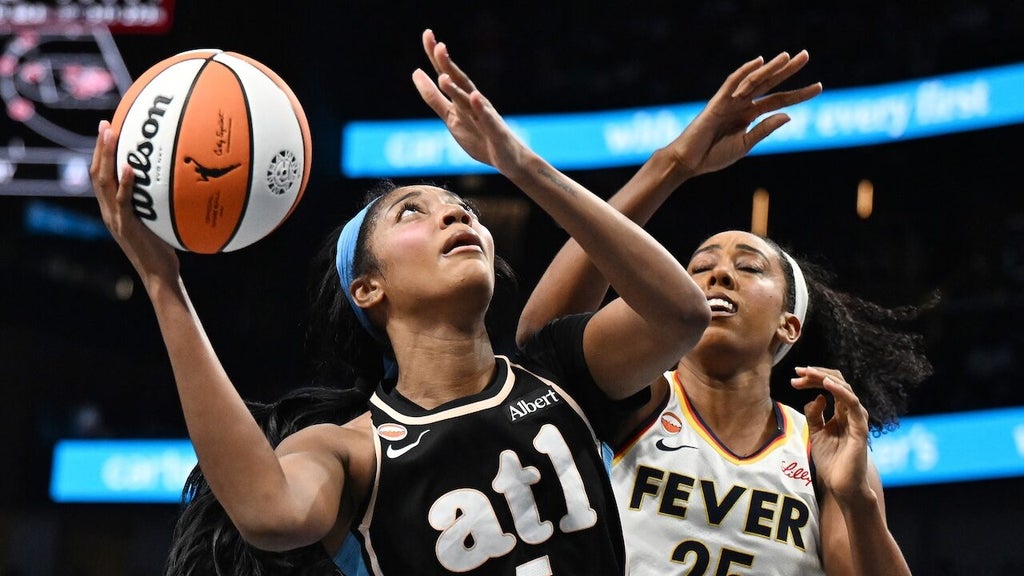
WNBA scores ratings record
Sunday’s match between the Atlanta Dream and Indiana Fever — pitting rebounding machine Angel Reese against ace shooter Caitlin Clark — became the most-watched WNBA game ever on cable — across both regular-season and postseason — as it delivered 2.6 million viewers on ESPN. Viewership for the game, which peaked at 4 million viewers from 7:15-7:29 p.m. ET, was up 178% over last year’s ESPN regular season average.
The second game of the doubleheader, the Portland Fire-Phoenix Mercury matchup, averaged 1.4 million viewers, making it the most-watched non-Indiana regular-season WNBA game ever on ESPN. Through 25 games, the WNBA is averaging 1.4 million viewers on ESPN, up 16% over the comparable point last season.

“Anna Pigeon” makes waves for USA Network
“Anna Pigeon,” which follows the titular character escape city life by becoming a park ranger, debuted as cable’s highest-rated new scripted series premiere in 2026 in both total viewers with 2.3 million viewers, and demo viewers with 269,000 viewers ages 18-49 viewers across USA, E! and SYFY, according to Nielsen live-plus-three-day figures.
The debut also marked the highest-rated USA original scripted series premiere in nearly eight years, and kept growing beyond its first weekend as it tallied 6.6 million total viewers from Aug. 7 to Aug. 10.
ICYMI:
- “My Life With the Walter Boys” Season 3 climbed to the top of Netflix’s top TV list in its second week on the streamer
- The Season 3 finale of “House of the Dragon” saw a slight 2% downtick compared to the Season 3 premiere
- “Ted Lasso” returned to Apple TV with record-breaking ratings, ranking Season 4 as the biggest launch in the streamer’s history
