
Any film history textbook would be incomplete without certain filmmakers whose legendary careers form a cornerstone of the art form as we know it: Alfred Hitchcock, Akira Kurosawa, Maya Deren, Kenneth Anger, Spike Lee — the list goes on. And that list absolutely includes Steven Spielberg, one of America’s most prominent populists, whose impeccable craftsmanship and emotional earnestness sometimes overshadow the complexity of his best (and worst) work.
Spielberg has taken a stab at practically every prominent genre, but when it comes to science-fiction he’s made a particularly deep cut. From beloved blockbusters like “Jurassic Park” and “E.T. the Extra-Terrestrial” to darker, challenging works like “A.I. Artificial Intelligence” and “War of the Worlds,” he’s used the infinite possibilities of scientific discovery to illustrate who we are as people, where we’re going, and what it all means.
A lot of Steven Spielberg’s sci-fi films are beloved classics. Some are interesting, misunderstood mixed bags. A couple are stinkers. It’s time, at last, to take a look at them all.

10. Ready Player One (2018)
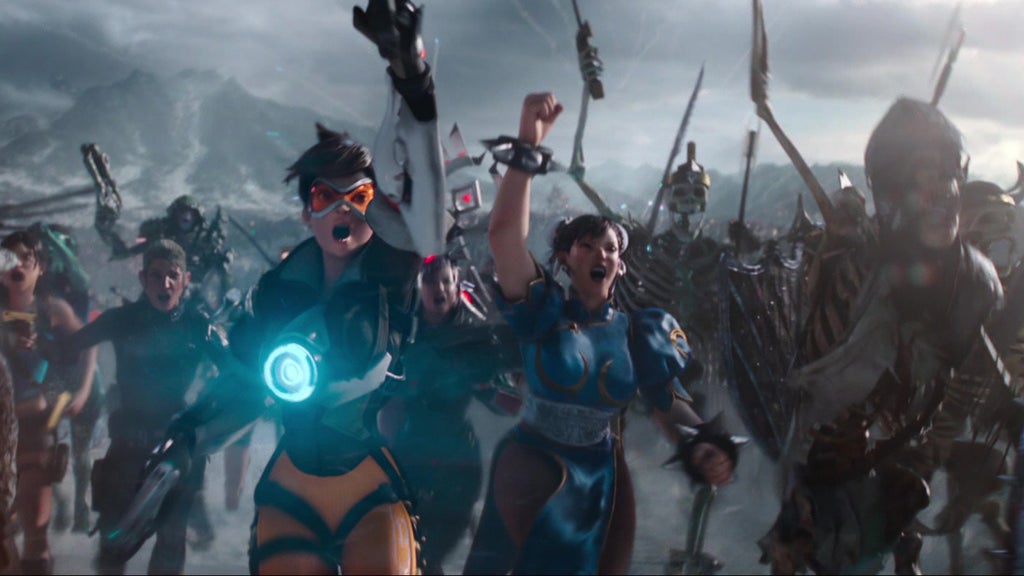
Spielberg’s mostly-CG sci-fi adventure tells the story of a vast online virtual reality video game, where the creator hid secret easter eggs that only the geekiest person on the planet could unlock, and would give that geek control over the lucrative digital realm. Naturally, an evil corporation wants to control it instead and fill the online space with ads and exploitation.
Spielberg seems oblivious to the fact that his interpretation of “Ready Player One” plays like the corrupt corporate version, where every so-called pop culture “cameo” is a shameless commercial, which hollows out any meaning the film could have had. The film literally takes The Iron Giant, a character whose whole identity was that he refused to be turned into a gun, and made the heroes heroically use it as a weapon of mass destruction.
He’s one of the most versatile filmmakers Hollywood has ever had, but “Ready Player One” is about people who grew up watching Spielberg movies, and Spielberg can’t quite wrap his head around what his generation’s artwork really means to people, so it comes across as self-worshipping and out of touch, instead of nostalgic and inspiring.
9. Indiana Jones and the Kingdom of the Crystal Skull (2008)
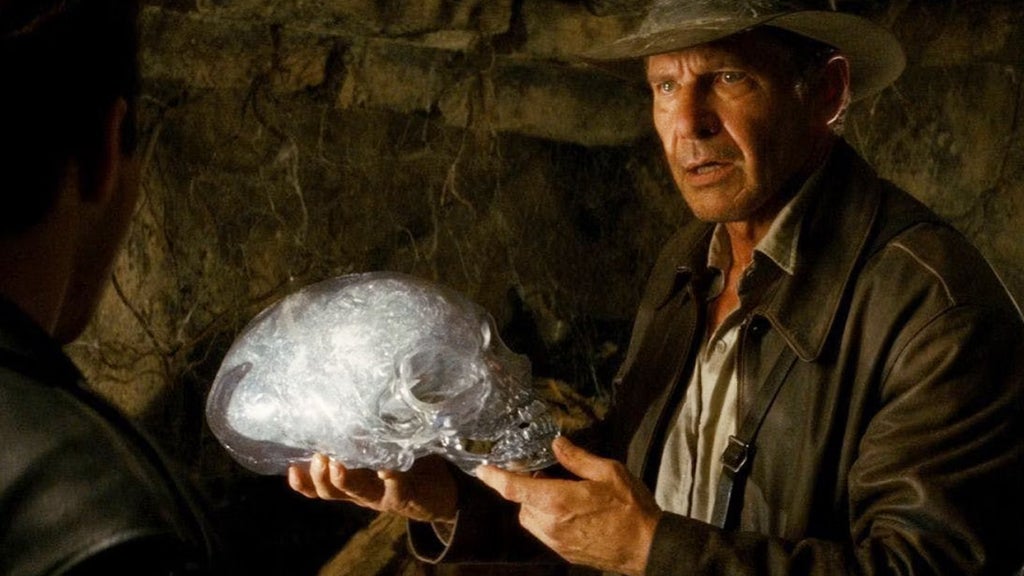
The fourth “Indiana Jones” movie was released nearly 20 years after “Indiana Jones and the Last Crusade” gave the series, and its protagonist, the perfect cinematic send-off. But the idea was an interesting one. Indiana Jones, still played by the perfectly gruff Harrison Ford, spent the 1930s and 1940s reliving adventures straight out of that era’s pulp serials, so now that he’s in the 1950s, he’s tackling Cold War villains, the threat of nuclear weapons, and the newfound enthusiasm for sci-fi alien tales.
So he absconds to discover the secret of the Crystal Skull, a Mesoamerican artifact that may uncover proof of alien life, and unlock incredible technologies the Soviets could use to take over the world. It’s a stretch, but whatever, the problem with the film isn’t its absurd premise. The execution is all over the place, with too many characters fighting for screen time, a plot that barely functions and an incessant, unconvincing argument that the franchise should get taken over by Shia LaBeouf, playing Indiana Jones’s long-lost son. Even the action sequences are rough going, with Spielberg pushing the dial way past eleven, dragging perfectly good action down with laughable CG effects.
Still, if Spielberg’s going to break a bunch of toys, he might as well break his own. “Indiana Jones and the Kingdom of the Crystal Skull” is a misfire but, technically, it’s still “Indiana Jones,” so there are still moments of genuine, spirited adventure sprinkled through this hodgepodge of questionable choices. Getting to them is just a little too hard.

8. The Lost World: Jurassic Park (1997)
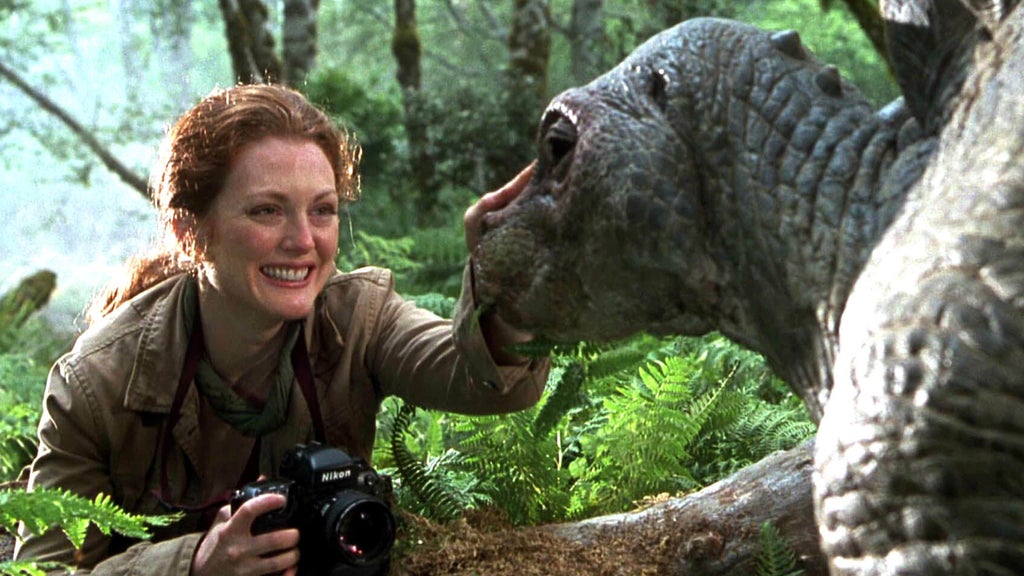
The sequel to Spielberg’s mega-blockbuster “Jurassic Park” is, in many respects, more of the same. A bunch of people travel to an island filled with dangerous dinosaurs, and whoops! Now they’re eaten by the dinosaurs. The visual effects are still stellar, especially for the late 1990s, and the story and characters take a back seat to make room for memorable, albeit unimportant, action sequences. Standard Hollywood sequel-itis.
To his credit, Spielberg imbues “The Lost World: Jurassic Park” with a different energy. His first film was an “Island of Dr. Moreau” riff about science gone mad. The second takes its influences from early Hollywood safari adventures, the kind where morally bankrupt colonialist hunters were portrayed as the good guys. “The Lost World” flips that script and makes them the villains, while modern environmentalist heroes fight to protect the dinosaurs (who, to be fair, are mostly able to protect themselves). Spielberg can’t help but trip this film up with dorky jokes, and there’s no excuse for putting one of the actors in brownface, but it’s mostly a thrilling time, even though it’s wildly inferior to the original.
7. Disclosure Day (2026)
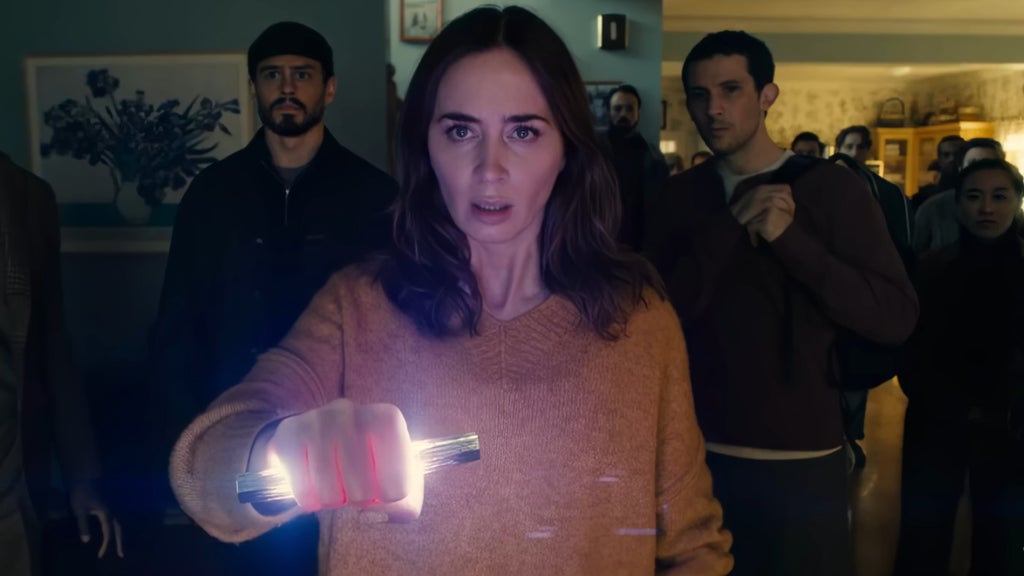
There are a lot of big ideas in “Disclosure Day.” Spielberg once again returns to the idea that believing in aliens is like believing in God, a theme he previously explored 49 years ago in “Close Encounters of the Third Kind,” except this time the conspiracy to hide the truth is sinister. Josh O’Connor plays a whistleblower trying to spread the news, Colin Firth plays the evil corporate agent trying to cover it up, and Emily Blunt plays a woman who suddenly turns psychic and might be the key to mankind’s future.
“Disclosure Day” is a chase movie first and foremost, and it’s a doozy. High-adrenaline thrills from start to (almost) finish, sometimes stopping to dump a load of clumsy exposition, and awkwardly talk about what the plot really means. It would help if the plot made sense, but it’s such a corker that it’s hard to complain. Who cares if Firth’s minions are all incompetent Keystone Cops? It’s fun to watch them run and go splat.
The problem with “Disclosure Day” is that Spielberg seems convinced he knows how to fix society, and uses old-fashioned “X-Files” clichés to get his point across. It’s a retro view of how conspiracies work, and an optimistic — some would say naive — belief that people all over the world could agree on a consensus reality, in the 2020s, because of what they saw on the news. Spielberg’s hope for humanity is endearing. It’s just hard to believe.

6. A.I. Artificial Intelligence (2001)
Whether you love it or hate it, “A.I. Artificial Intelligence” is one of Spielberg’s most fascinating productions. The long-gestating sci-fi project was intended to be a close collaboration between Spielberg, a notoriously populist storyteller, and Stanley Kubrick, a notoriously challenging, even clinical arthouse filmmaker. Their styles couldn’t be more different, but that was the point, and if Kubrick hadn’t died before the movie went into production, the film’s balance might be less of an issue.
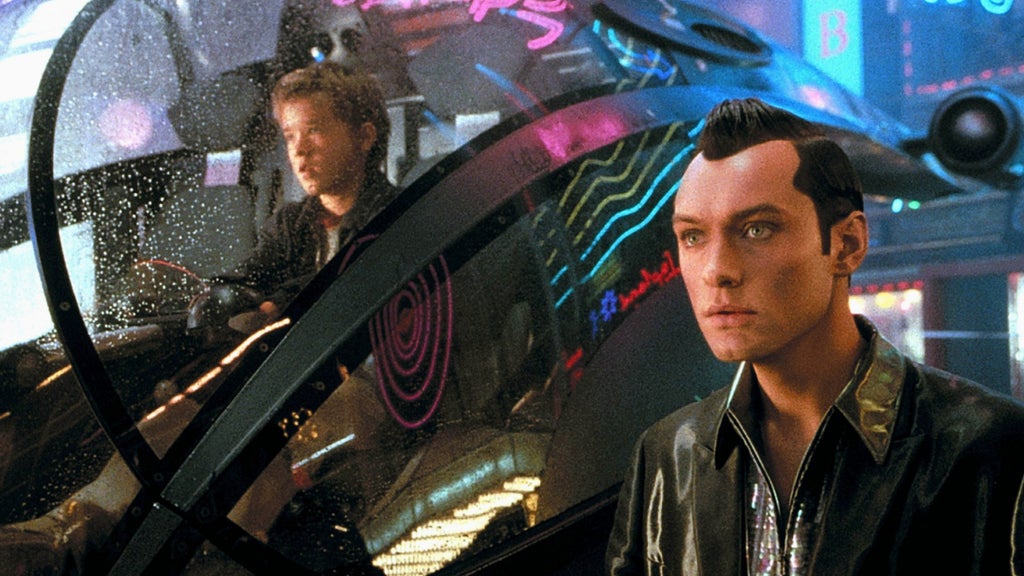
As it stands, Spielberg’s sentimentality shines brightly, to a fault, in this tragic tale about an artificially intelligent robot who looks like a child, loves like a child, but is abandoned by his owner in favor of her biological son. Heartbroken and rejected, David (Haley Joel Osment) goes on a heavily “Pinocchio”-inspired journey to become a real boy, which can’t possibly end well, because he’s not real. He’s a robot.
“A.I.” is an astounding visual achievement, with impressive and imaginative practical and CG effects. When Spielberg emphasizes the metaphor that artificially-intelligent robots are the stand-in for every socially-despised group — including sex workers, represented by the tragic Gigolo Joe (Jude Law, in arguably his best performance) — he gets away with it. But the specific story of David is so overwrought it overshadows everything else, leading to a conclusion that’s unsatisfying-ly saccharine and unsatisfying-ly melancholic.
5. War of the Worlds (2005)
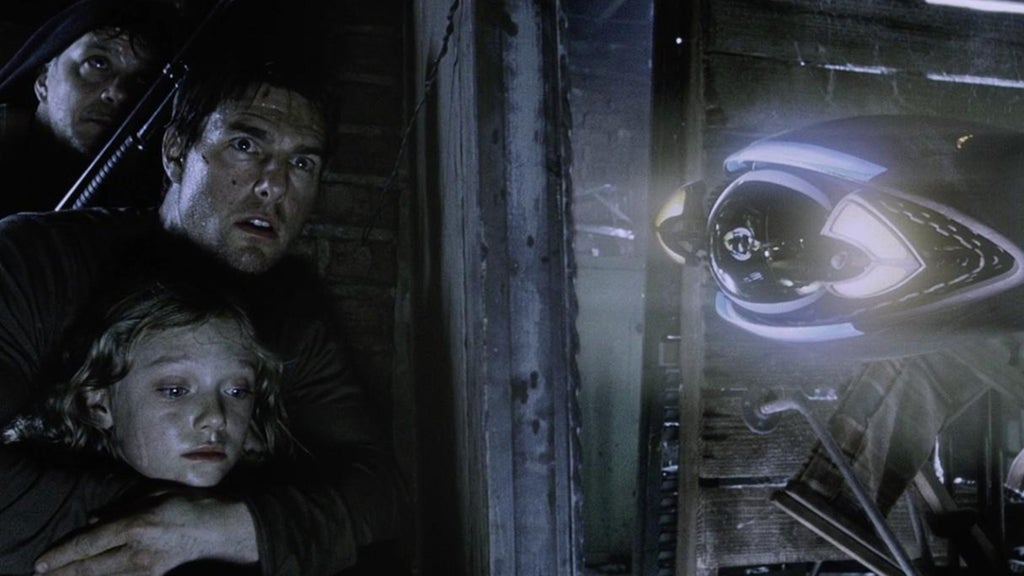
H.G. Wells’ classic novel “War of the Worlds” has been adapted many times before, into groundbreaking radio dramas and blockbuster movie events. In the wake of 9/11, Spielberg resurrected the sci-fi horror story as a grim representation of the world’s recent horrors. There’s no excitement when cities blow up, there’s no humor to make the medicine go down. It’s a harsh, overwhelmingly apocalyptic approach to the alien invasion drama.
And it works. “War of the Worlds” is often overlooked in Spielberg’s filmography, but it’s an impressively assured motion picture. Tom Cruise stars as an everyman— which in Spielberg’s films, usually means he’s a crappy father — who has to save his children when Martians attack planet Earth in gigantic three-legged warships. We don’t see what the military is up to; it doesn’t matter what the president is doing. It’s everyday people trying to adapt to a suddenly threatening world, barely keeping their panic in check as they narrowly avert disaster or, sometimes, run headlong into it.
Spielberg can’t really help himself, and he gives “War of the Worlds” an implausibly upbeat last couple of minutes. You could argue that it’s unconvincing because it’s a fantasy, or you could throw up your hands and accept that Spielberg didn’t stick the landing. But the majority of “War of the Worlds” is Spielberg at his most epic, and most vicious; a world-class entertainer using the language of blockbuster cinema to process an inconceivable tragedy, and all the emotions — good and bad — that come with it.
4. Minority Report (2002)
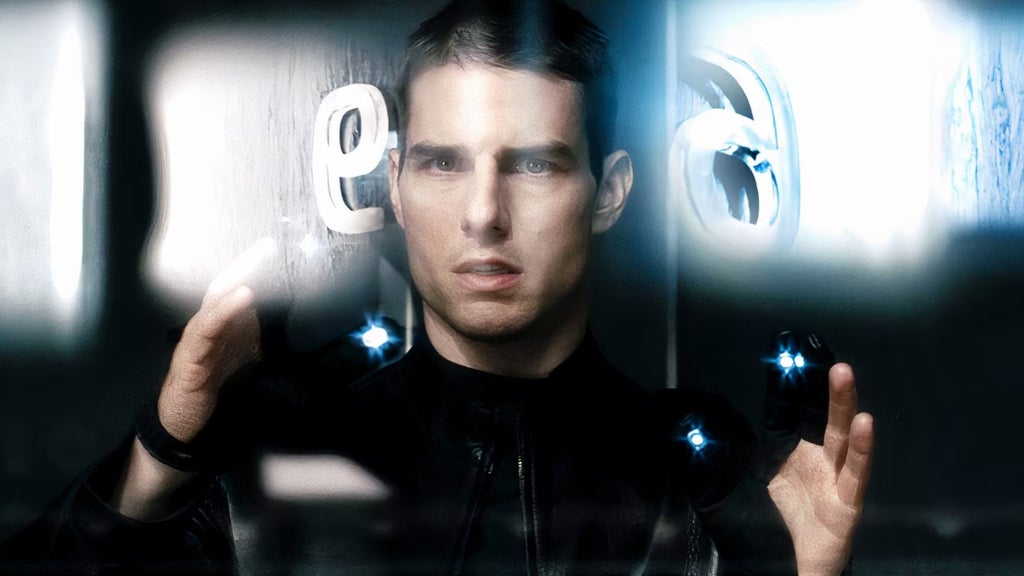
Spielberg’s incredible “wrong man” thriller “Minority Report” combines the sci-fi paranoia of author Philip K. Dick and the everyday paranoia of Alfred Hitchcock. Tom Cruise plays a cop in the near future, when three psychics predict murders before they happen, and the prison is filled with criminals who were prevented from ever committing a crime. When the “precogs” accuse our hero of planning a murder, which he hasn’t been doing, he goes on the run to prove the whole legal system is wrong, and turn society upside down in the process.
Ever the showman, Spielberg fills “Minority Report” with incredible set pieces that don’t make sense in any other context, like a gigantic car chase on magnetic roads, and an inspired sequence where a kidnapped psychic, played by Samantha Morton, uses ESP to predict the future and outwit the cops. Spielberg even resurrected an idea from Hitchcock’s “North By Northwest” that the master of suspense never figured out on his own, involving a car being built on camera.
But it’s also just smart filmmaking. Like “War of the Worlds” it felt punishingly relevant at the time, as the American government insisted that the ends justify the means, and law and order were more important than privacy and freedom. “Minority Report” finds an exhilarating way to dramatize very real problems, a Hitchcockian thrill ride through the synapses of Dick’s dark imagination.
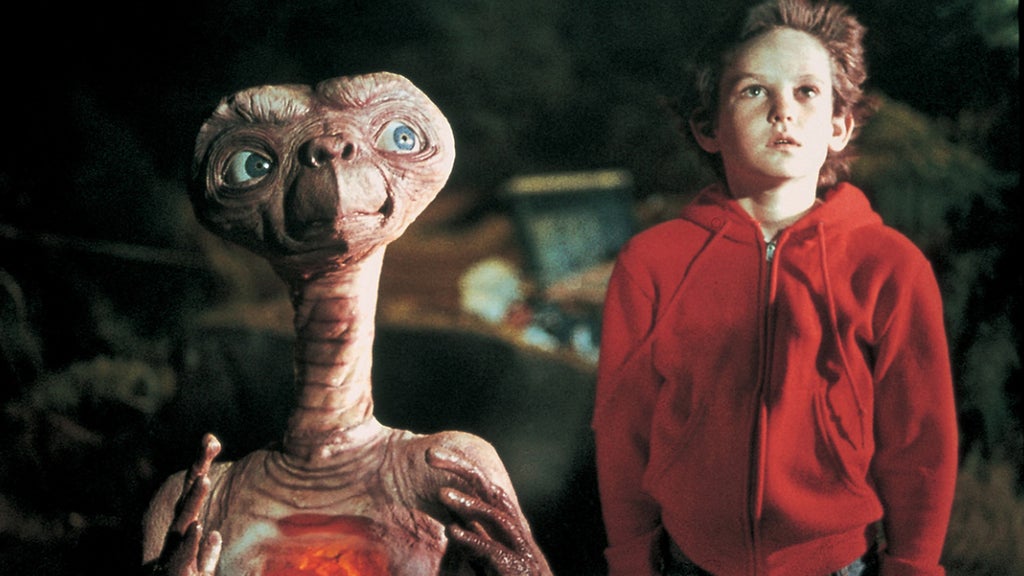
3. E.T. the Extra-Terrestrial (1982)
“E.T. the Extra-Terrestrial” is one of the most beloved movies in history, and it’s easy to see why. It’s a story about aliens, but that’s almost incidental, because it’s really a story about friendship. A group of latchkey kids wrestle with their new family dynamic, living with their divorced mom, who struggles to keep their lives together. They meet another child, who has it harder than they do because they can’t find their parents. The child just happens to be a big-eyed, wrinkly creature from outer space with magic powers who likes Reese’s Pieces.
The premise is sweet, but it’s Spielberg’s filmmaking that sells it. He keeps the camera low, from a child’s perspective, making it impossible to watch the film without feeling their loneliness. John Williams contributes a soaring score that underlines, italicizes and highlights every emotional cue, making even the smallest moments overwhelming. Watching “E.T.” is like being a kid again, experiencing life’s big moments for the very first time, with all the possibilities in the world ahead of you, along with a frustrating sense of powerlessness because you’re still a kid, and none of the adults really understand you.
It’s a wonderful film, practically perfect, and the sci-fi trappings are endearing and impressive. But Spielberg has made two films that delve deeper into the science-fiction genre. “E.T.” might be a better movie, but there are two other Spielberg films that are, arguably, better “sci-fi movies.”
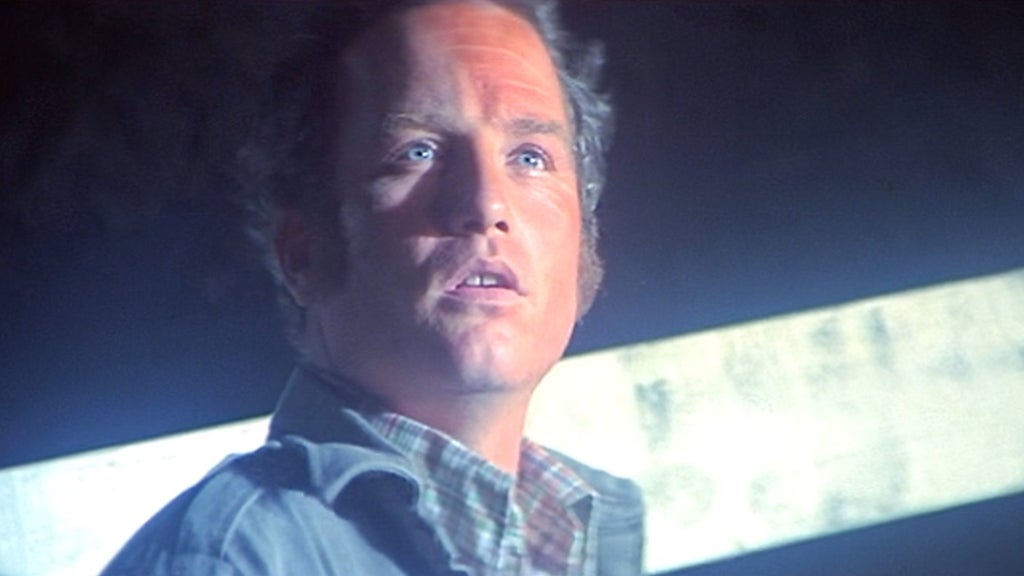
2. Close Encounters of the Third Kind (1977)
“Close Encounters of the Third Kind,” like “E.T.,” uses science-fiction as a metaphor for real, everyday human problems. Richard Dreyfuss stars as a stressed-out father who witnesses a U.F.O. and emerges completely changed, almost as though he’s suddenly found God. His family doesn’t understand him, and doesn’t believe him, and before long, he loses them but gains a deeper understanding of himself and the universe. Again, like “E.T.,” Spielberg didn’t technically need science-fiction to tell that story.
But “Close Encounters of the Third Kind” is a significantly nerdier film, and absolutely fascinated with the practical impact that first contact would have on science, government and potentially the world at large. Legendary director François Truffaut co-stars as the man in charge of deciphering what the aliens want, including a language based on tonality instead of articulated speech, leading John Williams to not only pack an emotional punch but also develop an all-new musical vocabulary.
It’s heady, intelligent filmmaking, groundbreaking in many ways. Spielberg pulls an astounding balancing act, with Dreyfuss playing a man who only understands the impact of this great discovery on the human soul, and Truffaut wrestling with the same problems from a logical angle. They’re both solving the same puzzle, but neither of them has all the pieces. The two halves of “Close Encounters” combine for the audience, more than anyone else, giving us a breathtaking glimpse at what’s possible, and what it all means.
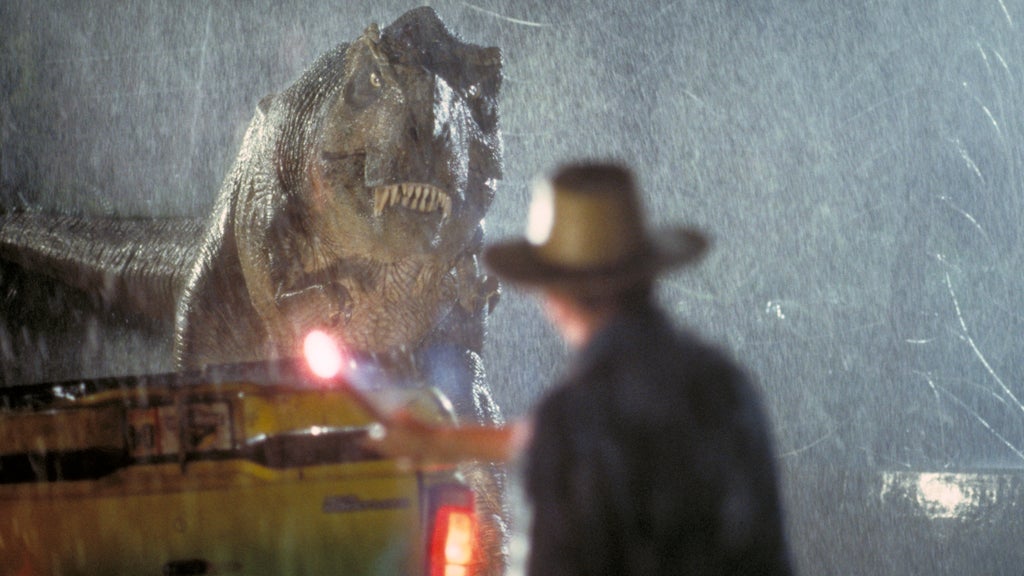
1. Jurassic Park (1993)
“Jurassic Park” has everything. Groundbreaking visual effects, a brilliant premise, unforgettable characters, epic action sequences, shocking horror sequences (for a PG-13 blockbuster, at least), and intelligent thoughts about the deeper meaning of making an amusement park for dinosaur clones.
On the surface it’s a straightforward monster movie, “The Island of Doctor Moreau” with bigger creatures and an unlimited budget, but Spielberg’s adaptation of Michael Crichton’s (significantly darker) novel makes it a story about the allure of producing wonders and the responsibility that comes with showmanship. It’s about playing God, not just with the science of cloning, but the science of visual effects, and the unforeseeable x-factors which no one can predict but somebody has to be accountable for.
It’s also, and this is important, an incredibly good time at the movies. Spielberg can make brilliant motion pictures that explore the human condition in our past, present and future, but at his best he also makes those stories absorbing. And he is often, very often, at his best. (“Ready Player One” and “Indiana Jones and the Kingdom of the Crystal Skull” notwithstanding.)
