Prime Video’s “Fallout,” developed by Graham Wagner and Geneva Robertson-Dworet and executive produced by Lisa Joy and Jonathan Nolan, takes place in a wild, post-apocalyptic world full of knights wearing robotic suits, immortal mutants (known as ghouls in the show’s parlance) and, as introduced in Season 2, giant, demonic monsters (Deathclaws, in “Fallout”-speak).
The show, based on the videogame series published by Bethesda, is full of action and danger. In other words, it’s a smorgasbord for a show’s stunt team.
Casey O’Neill, the show’s stunt coordinator and second unit director, starts thinking about the stunts from the very beginning. “You’re just trying to take what’s on the page and even bump it up a little bit,” O’Neill told TheWrap. “I always love reading the ‘Fallout’ scripts. You read the whole thing in one go, because it’s always so exciting and so interesting, and then to see that put up on screen is even more rewarding. I’ve done a lot of projects that I probably haven’t even seen, but this show I’m a huge fan of. It’s really very rewarding, for sure.”
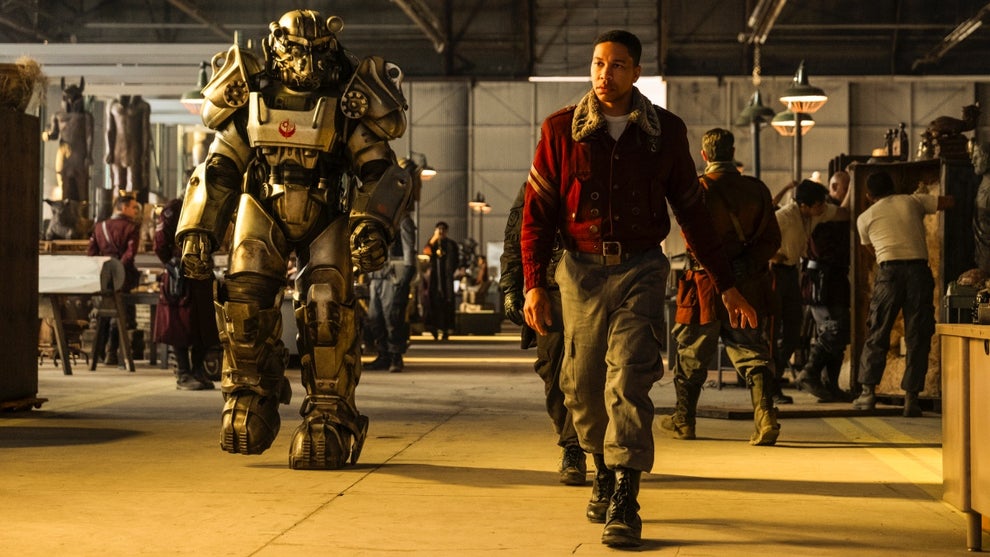
For Season 2, O’Neill said one of the biggest challenges was the power-armor suit that Brotherhood of Steel member Maximus (Aaron Moten) wears. Stunt performers must be slim to fit inside the suit, which he estimates weighs around 100 pounds. They must make the suit come to life, even performing stunts while hanging from wires.
“Just getting through the day is a pretty taxing physical thing,” O’Neill said.

The other significant hurdles for Season 2 were the Deathclaws, which wander around a desolate, sun-bleached New Vegas and will eat you alive.
There were physical Deathclaws on set, designed and controlled by a team at Legacy Effects, a studio founded by legendary effects wizard Stan Winston’s lieutenants following his death in 2008. Again, a stunt performer was inside the creature to “bring the Deathclaw to life.”
O’Neill called the two elaborate suits “definitely the most challenging things to put on screen and make them look good.”
With both the mechanical suits and the Deathclaws, O’Neill was responsible for imbuing those characters with real personality so you can read them emotionally, even though neither one has any remotely human characteristics.
“Whether it’s wirework or fights, the suits are built specifically around one person and they have to take on that actor’s mannerisms,” he said. “They’re just learning, ‘This is the goofy guy or this is the strong person in there that knows how to use the suit.’”
The Deathclaws, O’Neill noted, were even trickier because the characters are a collaboration of the visual-effects, stunt, wirework and puppeteering teams. “It’s bringing all those pieces together to make the movements look correct, and to bring out that character’s charisma on screen so it looks believable,” he said.
In addition, few streaming series have more action than “Fallout,” which kept O’Neill and his team on their toes. (Unlike many streaming series, which take years to release new seasons, the second season of “Fallout” was on Prime Video just a year after the first.)
“The biggest challenge, when there’s a lot of action in each episode, is trying to really stay creative and keep up with that,” O’Neill said. “Overlap rehearsals when we can, or work with the actors if they’re learning choreography for fights when are they available, those kinds of things. As the season goes on, it gets a little more difficult to put the pieces together, because the machine is already moving.”
And the machine is not stopping anytime soon: O’Neill is already working on Season 3. “I’m in prep right now, going through scripts,” he said. “Then we’ll start our rehearsal processes. I’m super excited about it, and just like I said, I read the scripts and they’re so good and so interesting that it just grabs you right away.”
A version of this story first appeared in the Drama Issue of TheWrap’s awards magazine. Read more from the issue here.