
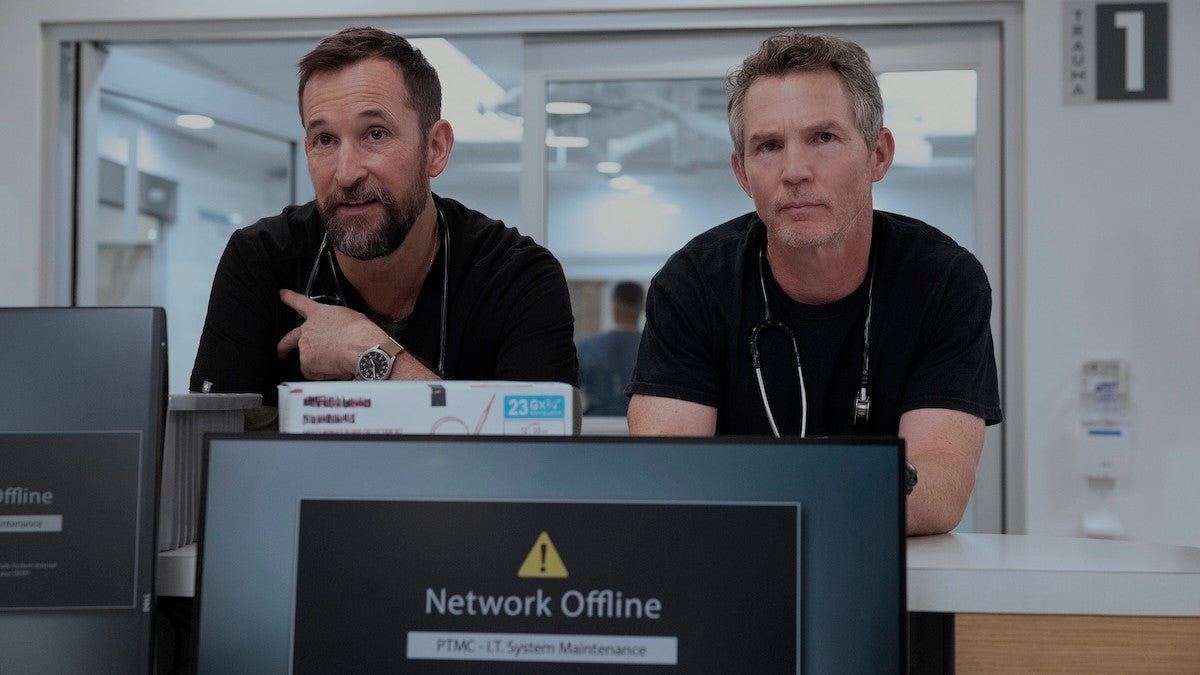
The morning that Emmy nominations were announced, the cast and crew of “The Pitt” were at work on the Warner Bros. soundstage where the HBO Max series is shot. Ten months after the show won the Emmy for Outstanding Drama Series along with acting awards for Noah Wyle, Katherine LaNasa and Shawn Hatosy, Wyle and crew knew they’d probably improve on the three acting noms and 13 total nods from the previous year — but they weren’t expecting to earn 24, including 13 for the actors alone.
“We were trying to get some work done, rehearsing a scene,” Wyle said. “People were coming in with these big grins on their faces, and I started to get the sense that it was a pretty amazing event. We were over the moon, because it’s such a collective effort. It really feels like everybody is pulling their own weight and somehow we’re making something that’s larger than the sum of all its parts.”
The 13 acting nominees, one shy of the record set by “Succession,” spoke to TheWrap about life in the Pittsburgh Trauma Medical Center.

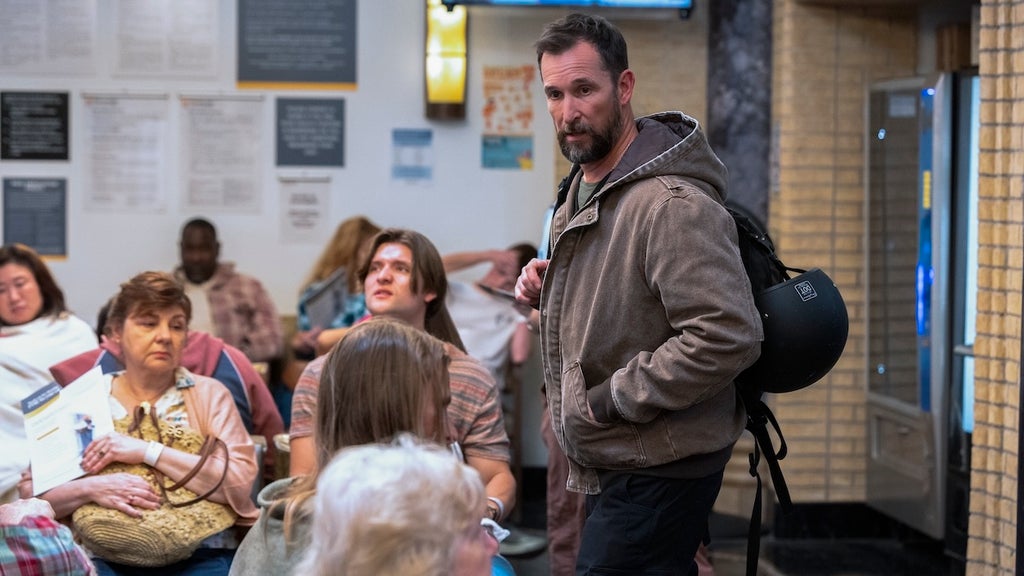
NOAH WYLE
(Dr. Michael “Robby” Rabinovitch)
Outstanding Lead Actor in a Drama Series
If Wyle’s Dr. Robby is a broken hero in the first season, he’s shattered in the second, mistreating his staff and acting so self-destructively that he seems borderline suicidal. His perpetually dark mood did not go unnoticed among “Pitt” fans.
Once more with feeling
“We left a lot on the floor with Season 1. And then with Season 2, it was just ‘Thank God we don’t have to do that again. Oh, wait, we do have to do that again.’ It was a challenge to come back and try to dig deeper as opposed to broader in our character work. The speculative gamble was that if you take the mass casualty and the protagonist’s nervous breakdown out of the architecture and just have a day in the life, that will be satisfying viewing. There’s a lot of identification with people going to work and trying to do the best they can and feeling that the deck is stacked against them. That’s sort of a universal American experience right now.”
Blues for Dr. Robby
“We’re watching a man behave rather ungracefully as he contemplates ending his life. And for me, there’s an aspect to that storyline that was extremely antithetical to a happy life. It required a lot of thoughtful analysis, both literally and metaphorically, to balance. I have built up the ability to compartmentalize to a very high degree, but as soon as we started rolling the cameras, it was very clear what my job was.”
In summary
“To me, Season 1 is ‘the doctor is the patient.’ Season 2 is ‘doctors don’t make very good patients.’ Season 3 is ‘doctors benefit from being patients.’ It’s very hard when your entire life is geared toward helping others, and the aggregate toll of helping others in their worst moments every 15 minutes over 12-hour shifts and a 20-, 30-year career is extreme.”
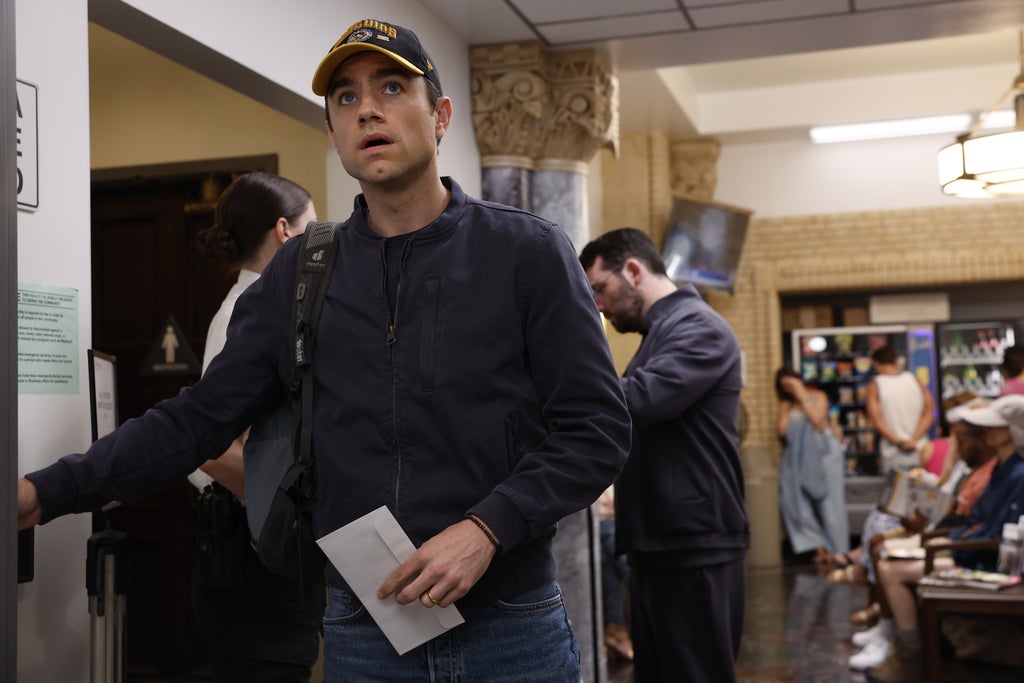
PATRICK BALL
(Dr. Frank Langdon)
Outstanding Supporting Actor in a Drama Series
After stealing patients’ drugs and being banished from the ER in Season 1, Dr. Langdon makes a sheepish post-rehab return. It doesn’t go smoothly.
Cleanup time
“When the writers’ room was getting going for Season 2, I said to Noah, ‘If Langdon gets clean and goes to rehab, there has to be a fundamental energetic shift that happens.’ I was really excited about that, because I think it’s true to life. I’m sober, and I know that first year there was a real reorganizing of your sense of self, and a real fear that in getting sober, I’m going to lose the fun parts of myself that everybody liked.”
Pleased to (re)meet you
“It’s a great dramatic setup to have Langdon be away for 10 months and then come back. He’s been changed by his time away, and he comes back in the door and we get to see through his eyes how everybody else has changed. So he’s like, ‘Oh, wait. Whitaker is not the novice he was when I saw him last. Robby is different. Dana does not seem to be doing well. What happened to my friends when I was away?’ I have to learn about it in bits and bobs across the season rather than watching the change happen in real time.”
Just don’t make him sing
“I pray that they never make me do a karaoke scene. I cannot sing. It makes me deeply uncomfortable. (Pauses) Well, I can sing Johnny Cash. I think that would be Langdon’s karaoke song, because it’s the only thing I can sing.”
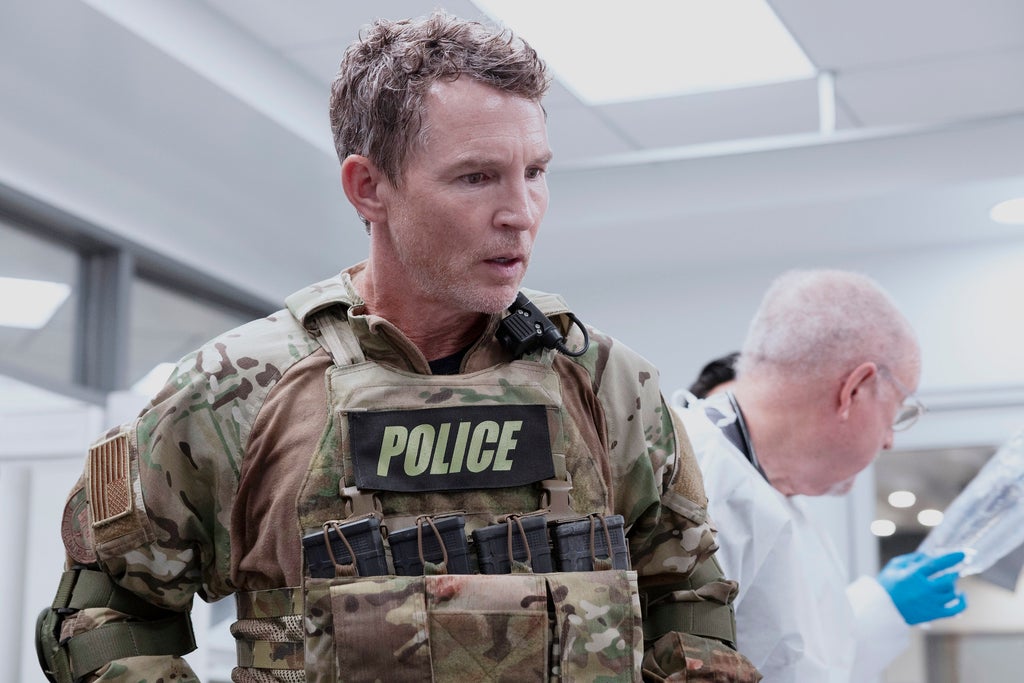
SHAWN HATOSY
(Dr. Jack Abbot)
Outstanding Supporting Actor in a Drama Series
The beloved night-shift doctor whom Dr. Robby once talked off a literal ledge enters Season 2 with a new coping mechanism: moonlighting — or in his case, daylighting? — as a SWAT doctor for the police department. (Hatosy also moonlighted as the director of one episode this season.)
Dr. Robby’s mirror
“[Robby and Abbot] are so damn competent in this world. There’s nothing that they can’t medically take care of — but when it comes to inside the brain, they don’t have the tools. I think, for Abbot, seeing Robby at this place, he’s very much at a loss. All he can really offer is his experience and his perspective. And sometimes, when you are struggling, just knowing that somebody hears you and somebody can also understand you, it’s enough to set you on your way.”
Leading the nightcrawlers
“It takes a certain kind of person to decide to work nights and to work with a guy like Abbot, who’s always asking everybody to rally together and say, ‘Hooah!’ He’s a bit of a dork, in the best possible way.”
Double duty
“That’s always a challenge, acting and directing at the same time. ‘The Pitt’ is such a special show, and it’s unique how we do it. We don’t have marks. We shoot in order, which is such a rare thing, and it pretty much takes place in one location. The style, the look, the feel, the smell of it — it’s all very much defined by what John Wells and [cinematographer Johanna] ‘JoJo’ Coelho gave us in that pilot episode. So as a director, you’re trying to keep the wheels on.”

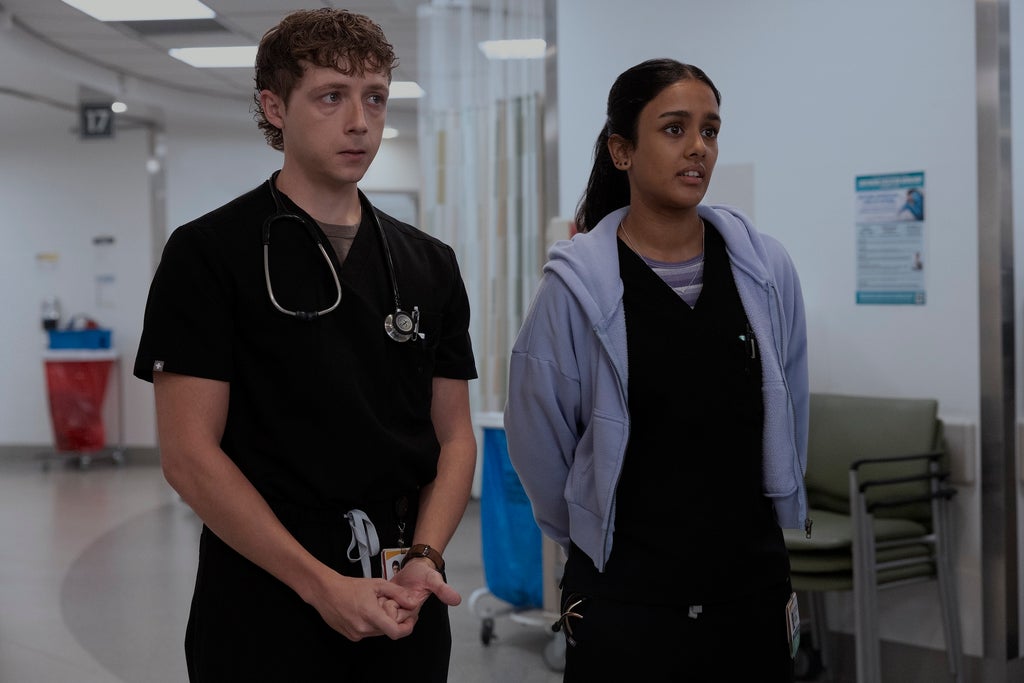
GERRAN HOWELL
(Dr. Dennis Whitaker)
Outstanding Supporting Actor in a Drama Series
In Season 1, Dr. Whitaker is so naive and clueless that Dr. Santos (Isa Briones) nicknames him “Huckleberry” and teases him mercilessly. By Season 2, he’s settled in enough to blast Dr. Langdon when he thinks the senior doctor is treating him dismissively.
Huckleberry grows up
“I knew there had to be a big change in Whitaker. I sort of served as a surrogate for the audience in Season 1, being completely overwhelmed and having things taught to him. I served a purpose and I was happy to carry that torch, but I knew it wasn’t sustainable for Season 2. So for me personally, it was about shedding a lot of those actor instincts that were very useful for Whitaker, like the feeling of being an impostor. It was a case of taking him back to square one and working out how he has managed to find his place here. Being competent, appearing like I know what I’m doing, was my biggest challenge.”
The showdown with Langdon
“Langdon’s coming back in and seeing me as the old me. At that point in the season, it’s just too much for Whitaker to handle, so he has an outburst. I wanted to show that maybe Whitaker isn’t very good at expressing his emotions and that’s why he keeps them inside. It was fun to play. It made Langdon understand Whitaker a little bit better, I think.”
If Whitaker ever gets his own karaoke scene…
“Line dancing, I think, would be appropriate. I can see him in a line-dancing bar or something like that. He’s full of surprises.”
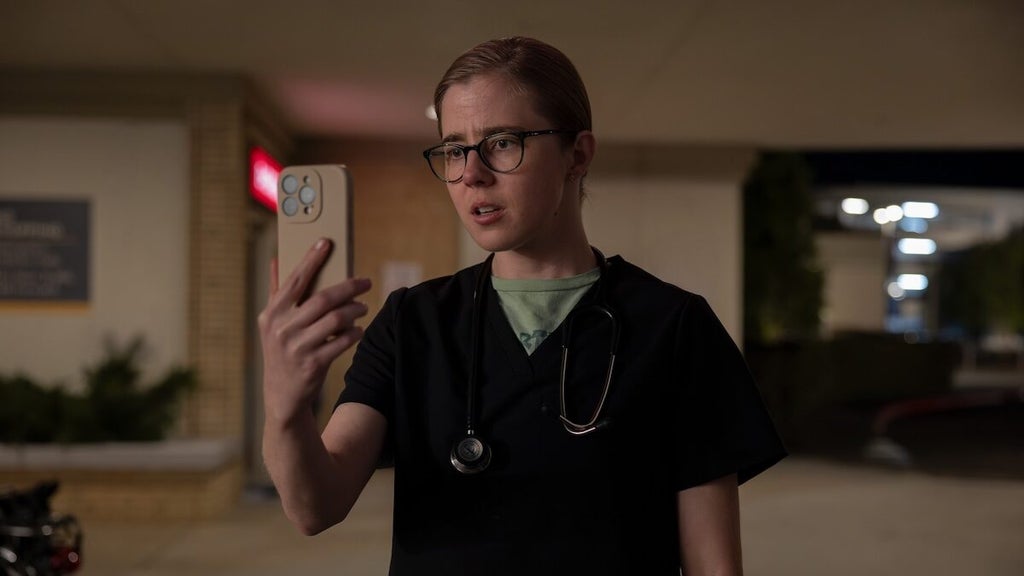
TAYLOR DEARDEN
(Dr. Melissa King)
Outstanding Supporting Actress in a Drama Series
Dr. King spends a big chunk of Season 2 fretting about her deposition for a malpractice lawsuit. But her warm reunion with her friend Dr. Langdon, who becomes more adept with neurodivergent patients thanks to her and Becca (Tal Anderson), her twin sister with autism, helps keep her spirits up.
Shifting dynamics with Dr. Langdon
“Season 1 was total mentor-mentee, and Season 2 you actually see them as equals. Patrick and I would go over stuff with the writers, trying to change the relationship, which would boost Mel up in confidence and also bring him down in humility. The thing for Langdon, especially, is it doesn’t seem like anyone believes he’s going to be OK. They’re all, ‘Eh, he’s gonna relapse.’ Mel is the one who’s like, ‘No, I believe that you did it. You’re good.’”
About those King/Langdon (a.k.a. Kingdon) shippers
“It’s really important to show a friendship between two people who technically have the potential of being attracted to each other. [A romance] just feels like a waste of an opportunity. It’s not the show, it’s not the vibe and it wouldn’t happen. He’s married with kids. I think it’s also sad that we’re trying to make everything romantic. There’s so much more value in friendship. I’m all for fan theories — you know, fantasize as much as you want. It’s just, I like what we’re doing better.”
Where she’d like to take Mel
“I’d love to see what baseline Mel is. First season is Mel’s first day [as a doctor], second season is Mel’s worst day. I’d love to see what normal Mel is. It’s still going to be the Mel we all know, because with disability — with all of us — it gets worse when we’re under pressure. So to see what her baseline is would be fun to play.”

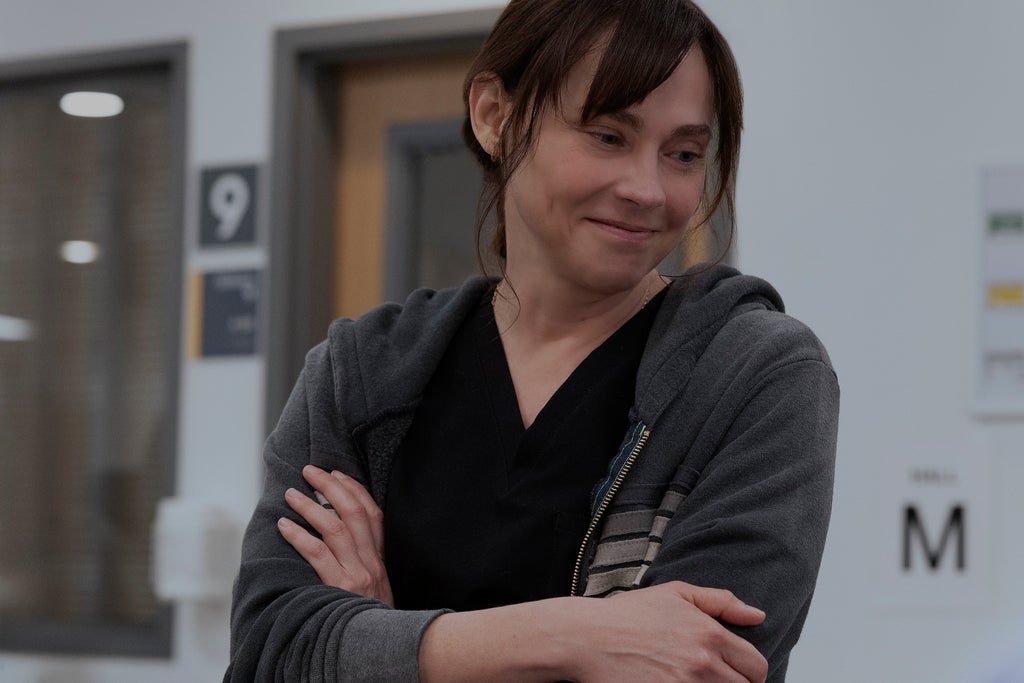
FIONA DOURIF
(Dr. Cassie McKay)
Outstanding Supporting Actress in a Drama Series
Dr. McKay is more settled in Season 2, free of the ankle monitor that was a result of her custody battle with her ex-husband. But overseeing end-of-life care for terminal cancer patient Roxie (Brittany Allen) makes her realize how lonely she is and how much she’s given up to be an ER doctor.
Surgery déjà vu
“I did a complicated eye procedure (in Season 1) that is an actual surgery that my older sister bullied me into watching when I was a kid. In the ’90s, they used to have a surgery channel, and she used to try to scare me. But then I got to perform it 30 years later, and that was very cool.”
Feedback from the medical world
“I was in a coffee shop and I talked to this emergency-room doctor for 30 minutes. I feel like I’ve been led into this club of people who are really serious and compassionate and interesting and want to talk to me about their work. I avoided hospitals my whole life—it’s a world that I never really wanted to think about. And it’s a world that we’re all headed toward. I think about how important this work is, and how beautiful it is that I get to help portray it.”
The personal is the professional
“This show has mirrored real life in a lot of ways for me. The themes I’m dealing with are quite personal for Fiona Dourif in Season 3, I was told, so I’m excited to see where that goes.”
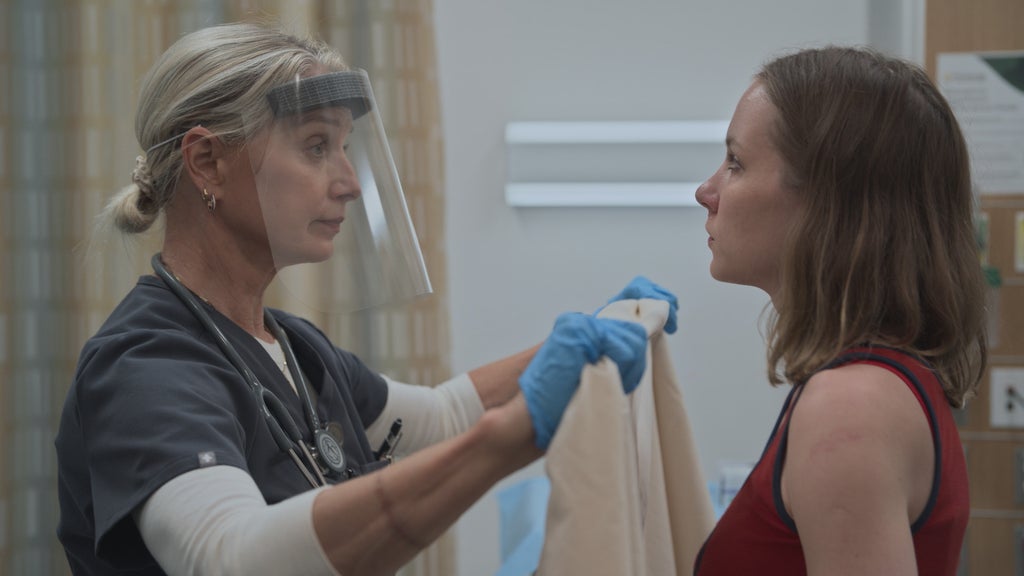
KATHERINE LaNASA
(Charge Nurse Dana Evans)
Outstanding Supporting Actress in a Drama Series
After being punched in the face by a patient in Season 1, the ER’s mama bear returns to work in Season 2 drained and wary but every bit as dedicated. She provides a safe space for a sexual assault survivor, Ilana (Tina Ivlev), and keeps an eye on Dr. Robby as he continues to fall apart. When he gives her the third degree for sedating a violent patient, she is not happy.
Preparing for a key scene with the sexual assault survivor
“I went to the Rape Treatment Center in Los Angeles and toured the Stuart House, which is for juvenile victims of sexual assault. I asked them if they would go through the rape kit with me, and they spent a few hours doing that.
“It’s interesting. When you ask people who are not actors how they feel, I don’t think they always know how to answer that because they’re not thinking about themselves, they’re thinking about the patient. When they start talking about what they do, then you really get how they feel and stuff starts to come out. So that was really, really helpful. It’s just amazing work that they’re doing and long overdue for women to be getting this kind of treatment.”
Working with Tina Ivlev
“She’s one of the best actresses I’ve ever worked with. She brought so much fragility and vulnerability. And she was so great that I think that also informed the way it read on film, because I, Katherine, felt protective of Tina, and Dana feels protective of Ilana. I just owe so much to her for the performance that she brought.”
Snapping back at Dr. Robby
“I was mad at him for not having my back. I was enraged because it’s like, ‘Are you kidding me right now? You know what I go through, you know what I’ve been through, you know what I’ve covered for you, and you’re going to investigate me now over this?’ This is a work marriage, basically, so it’s got to have that. And what I really appreciate about the writing of this show is that people are multidimensional. Dana is the mama bear and she’s also snappy and angry and this and that. It’s real.”

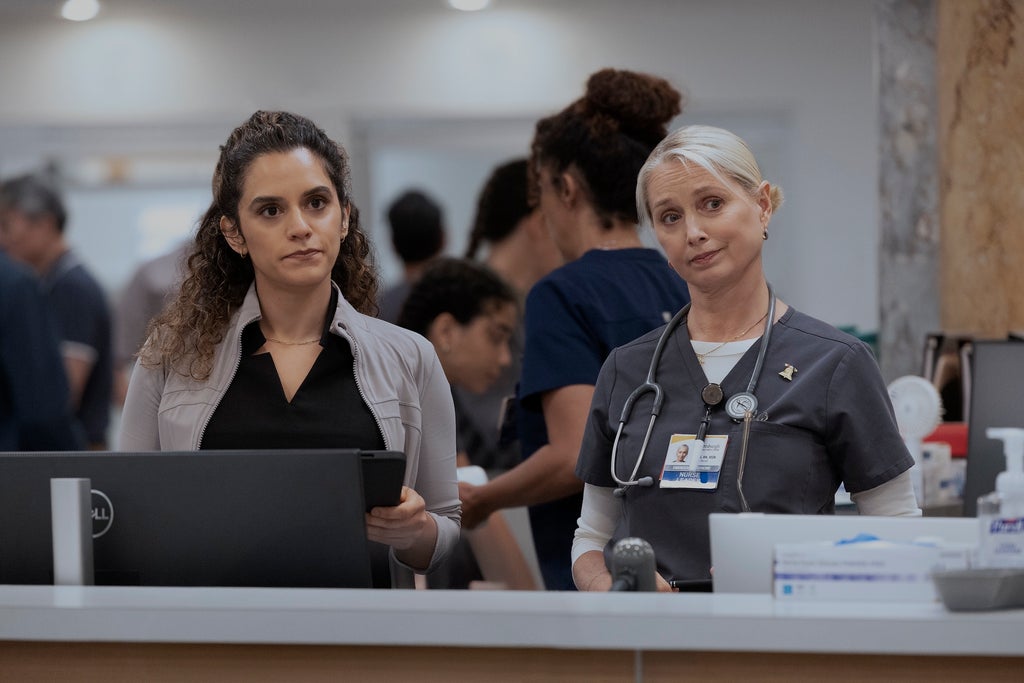
SEPIDEH MOAFI
(Dr. Baran Al-Hashimi)
Outstanding Supporting Actress in a Drama Series
Dr. Al-Hashimi joins the staff in Season 2 to fill in for Dr. Robby during his sabbatical. They clash over management styles and whether her epilepsy disqualifies her from running the ER. She ends the season crying alone in her car.
A warm bedside manner
“One of the many reasons I love her is that we see Robby become more callous and hardened, but she becomes more tender and empathic, from the hardship that she’s experienced, either in her work or in her personal life. Being on both sides of the hospital bed, a lifelong patient and a doctor, it’s made her open. She represents a very strong, vulnerable feminine leadership style.”
Butting heads with Dr. Robby
“The moment when Dr. Al-Hashimi reveals her condition to him, per the ADA, what needs to happen is the hospital needs to make accommodations, and he needs to spearhead that. We’ve seen his potentially suicidal position. He’s compromised, too. He’s at a breaking point, he’s not healthy. He needs the support and care to help him get through what he’s struggling with, as does Dr. Al-Hashimi.”
The total breakdown
“She’s had to deal with hardship challenges throughout her whole life, so it’s tough, but she’s someone who doesn’t let life knock her down. She’s very resilient, so I’m confident that she’ll come back stronger. It might take time for her to trust Robby, if ever.”
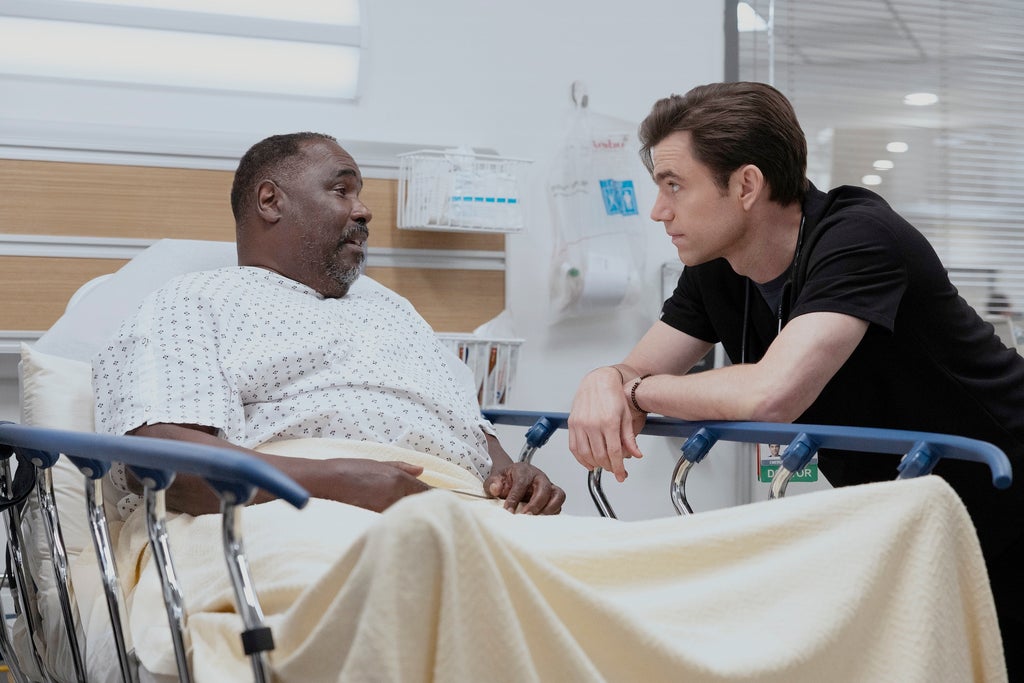
ERNEST HARDEN Jr.
(Louie Cloverfield)
Outstanding Guest Actor in a Drama Series
Louie, an alcoholic and regular visitor to the emergency room, is a rare instance of a patient having a significant storyline across two seasons. This year, Dr. Langdon admits that his addictions drove him to steal Louie’s meds—but after he forgives the doctor, Louie’s own ailments end up killing him early in the Fourth of July shift, leaving the staff to mourn him as one of their own.
The big secret
“Only the doctors on the show were privy to some of what was going on, but I wasn’t at all. There were people around the set who were telling me, ‘Oh, you’re going to die. I’m so sorry.’ I was like, ‘Die? What do you mean, die?’ So I talked to Noah, because he had his hand on that arc of my character. He said, ‘Ernest, yes, you’re going to die, but America is going to cry for you. Believe me.’”
Dr. Langdon’s confession
“It’s two addicted people relating to each other. He’s addicted to those pills and I’m addicted to alcohol, so I can relate to him. That’s why I said, ‘Well, if it helps you, then fine.’ I think the people understood that.”
Team effort
“Everybody is so good. They collected a group of actors that are amazing. We were family. They looked at me as the old man on the set, because I’ve been around so long and they all wanted to pick my brain about the old days (of Hollywood). I just had a ball with all of them.”

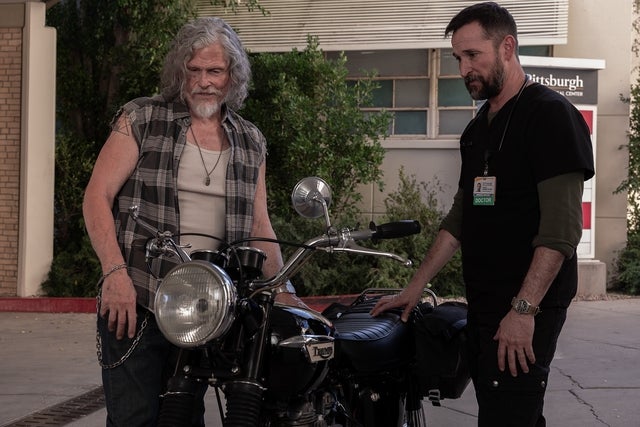
JEFF KOBER
(Duke Ekins)
Outstanding Guest Actor in a Drama Series
A motorcyclist friend of Dr. Robby’s, Duke comes to the ER and learns he has an aortic aneurysm. On a loading dock outside the hospital, he fixes Dr. Robby’s damaged Triumph and tries talking sense into his deeply depressed pal after watching him struggle through his shift.
A familiar face
“It was just in my wheelhouse, you know? Just the guy who’s rough around the edges and has been through some shit and has come out the other side and can recognize the same thing happening in a friend. So yeah, I just knew that guy.”
The saga of Duke and Robby
“There were no conversations [with Wyle] about who these guys were to each other because it’s in the material. It’s there waiting to be experienced and expressed. We’ve both been at it for a while, so we know what our job is, and our job is to fall in love with each other to the extent that friends find that for each other. The beauty in a scene like this, in a relationship like this, is that the work you’re doing to get free as an actor is the same work you’re doing to be full and free and vulnerable with another human being. It was easy in that regard.”
Get me out of here!
“I’d been stuck in a (hospital) room for the whole season with a couple of forays out in a wheelchair, so it was like a breath of fresh air to be outside. And the way they shoot it, you really feel that you’re out there by yourselves. You have the sense that this is a real conversation going on.”
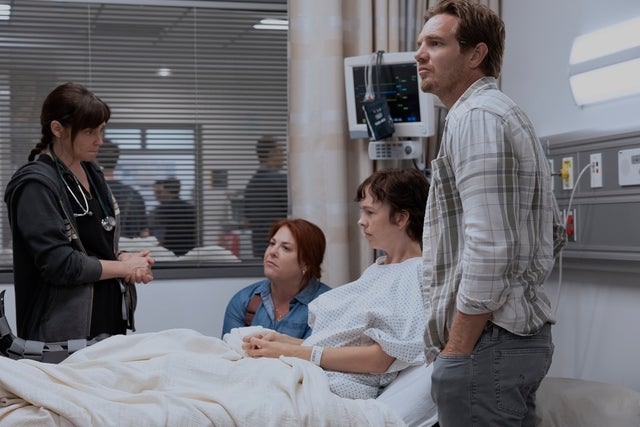
BRITTANY ALLEN
(Roxie Hamler)
Outstanding Guest Actress in a Drama Series
Roxie, a devoted wife and mother with terminal cancer, arrives at the Pitt in the final hours of her life after opting to die at the hospital to make things easier for her family. What follows is a raw portrayal of a woman coming to terms with her mortality and questioning the fairness of her fate in a heartrending final scene with Dr. McKay.
Preparing with a heavy heart
“I felt a huge responsibility to explore death in the most honest way that I could. I read every memoir I could find on the subject of death and dying and terminal illness. I also worked with a death doula, spoke with some cancer experts. I held on to that for many months. It was a deep heaviness in my heart.”
On her final scene
“When I first read the script, it was one of those scenes that you simultaneously are beyond excited for and beyond terrified for, because you know that this is the apex moment for this character’s arc. She is speaking the deepest truths of life. She’s in immense pain. She’s wrestling with so many of the most terrifying aspects of being alive. She’s hours away from dying, so you know that you have to go there.
“I worked on that monologue from every angle. I was rattling around ideas of how to come at it, and all the many thoughts and feelings that she would be wrestling with. It was a really beautiful morning when we shot that. It felt like I went in and came out the other side, and something pretty meaningful had transpired between us.”

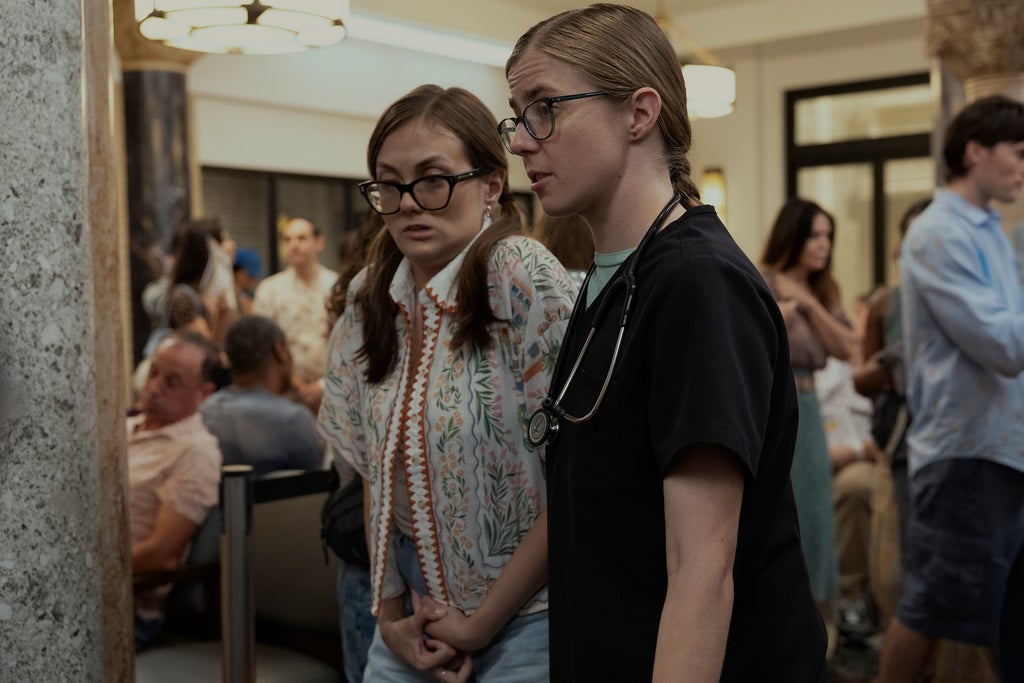
TAL ANDERSON
(Becca King)
Outstanding Guest Actress in a Drama Series
After appearing briefly in Season 1, Dr. King’s sister is admitted to the hospital on the same day that Mel faces her malpractice deposition in Season 2. Her visit, which includes a rare but heated argument between the two, unveils Mel’s codependency as Becca puts boundaries in place for her personal life.
Sibling sparring
“Don’t hate me, but I loved doing that sister fight so much. It was just so much fun. When I first read the script, I was devastated when Mel got so angry with Becca. Honestly, my first reaction reading it was ‘Oh no,’ because I didn’t want them to fight. But after looking at the story from the bigger perspective, I knew that I needed to infuse my own indignation into Becca because she was really being infantilized.
“It was important that Becca not have the knowledge that Mel was looking at herself in the mirror and seeing her own shortcomings, because Becca needed to stand up for her bodily autonomy and privacy. If she would have been more sympathetic, Becca would have had a harder time standing her ground.”
A massive responsibility
“I could see how important this storyline was going to be — not just for Becca and Mel, or for me as an actor, but also for the disability community. And I did not want to mess it up. That was my biggest challenge: believing that I wouldn’t screw it up for the whole disabled community. Ultimately, it came down to me trusting myself and trusting the writers and directors and Taylor and Patrick and believing that they pushed me in the right direction if I was blowing it.”
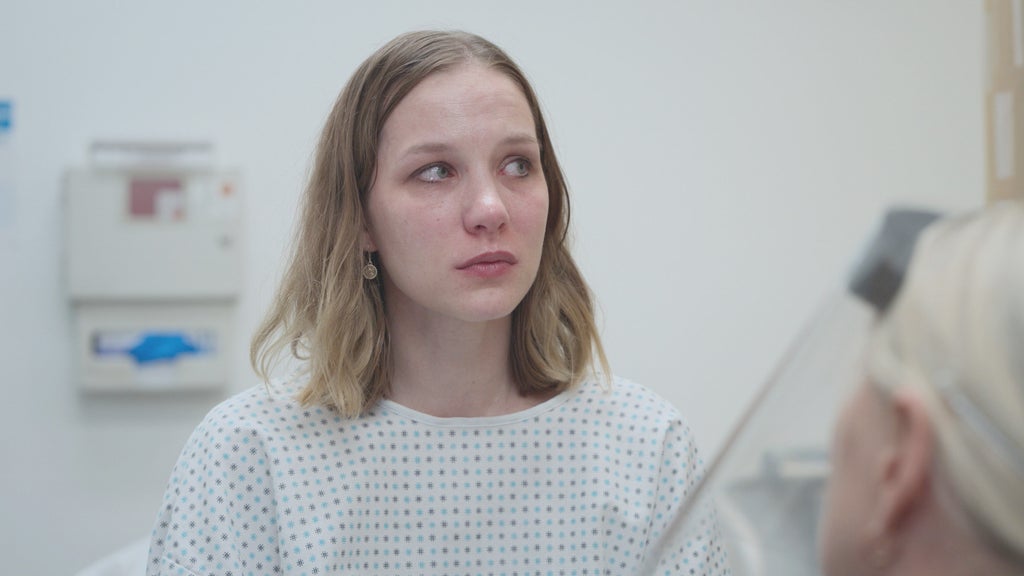
TINA IVLEV
(Ilana Miller)
Outstanding Guest Actress in a Drama Series
Ilana, the victim of a sexual assault at a Fourth of July barbecue, spends most of her time in the emergency room in shock, barely speaking as Dana Evans quietly takes her through the rape protocol. Her two-episode storyline has an explosive ending when the nurse discovers a weeks-old rape kit that was never picked up by the police department.
Finding the tone
“It was a heartbreaking character, a heartbreaking story. I felt a definite responsibility, so I started researching right away. I read a lot of stories that people posted about their experiences and what it was like in the exam process, and it runs the spectrum.
“But I figured out what I wanted to do pretty quickly. I picked up on an irritability in the character and thought that maybe the overlaying emotion could be an anger that pops in in certain places. I wanted it to feel like she had all these thoughts bouncing around in her head in the confusion of the moment, and also a feeling of ‘I just need to get through this by whatever means necessary.’”
No way out
“The set is so immersive. You’re on the stage for a prolonged period of time, and it felt like it was a real ER room. You’re not really engaging with lighting setups, touch-ups, things that would normally be happening on other sets. It was hard to take yourself out of it, which was tough because of the emotional component. I remember thinking, ‘OK, you can’t let it go. You can’t. You have to sit with it and collect it, and when they say ‘Action,’ you have to be right there.’”
Written and reported by Jose Alejandro Bastidas, Jacob Bryant, Steve Pond, Missy Schwartz and Loree Seitz
This story first ran in the Down to the Wire Drama issue of TheWrap’s awards magazine. Read more from the issue here.