
Shares of Netflix are down 40% in the past year and 23% in the past six months as Wall Street continues to sour on the streamer’s stock over engagement concerns.
On Tuesday, HSBC analyst Mohammed Khallouf downgraded Netflix from a Buy to Hold rating and cut his price target from $96 to $76, which he attributed to YouTube’s “rapidly expanding” living room footprint and Netflix’s share of U.S. TV time dropping to 7.8% in July.
He argued that the Alphabet-owned video platform has benefitted from a “declining reception”to Netflix’s original content and believes a “near-term recovery in engagement looks unlikely.”
Khallouf’s downgrade of Netflix comes less than a week after Wells Fargo lowered its rating on the stock to underweight from equal weight and its price target from $80 to $57 on “worrying” engagement trends.

What’s Netflix’s Next Growth Engine?
On Friday, Wells Fargo analyst Steve Cahall estimated that Netflix’s members watched an average of 1.6 hours a day in the first half of 2026, roughly 8% less than the same period in 2023 when adjusting for the extra households brought in by the company’s password sharing crackdown.
Cahall warned that hours spent watching Netflix’s top 100 original programs could fall 21% year over year in the second half of the year.
Netflix has “lacked big original series and it’s showing,” Cahall wrote. “We see breakout hits as a must for the stock to work again.”

The pair of downgrades come as Netflix has pushed into areas like podcasts, live events, sports, vertical video and gaming in an effort to boost engagement.
It has also made efforts to lure YouTube talent to its platform, expanded its content lineup overseas through a partnership with French broadcaster TF1. and is reportedly exploring adding live channels and bundles with services such as Peacock.
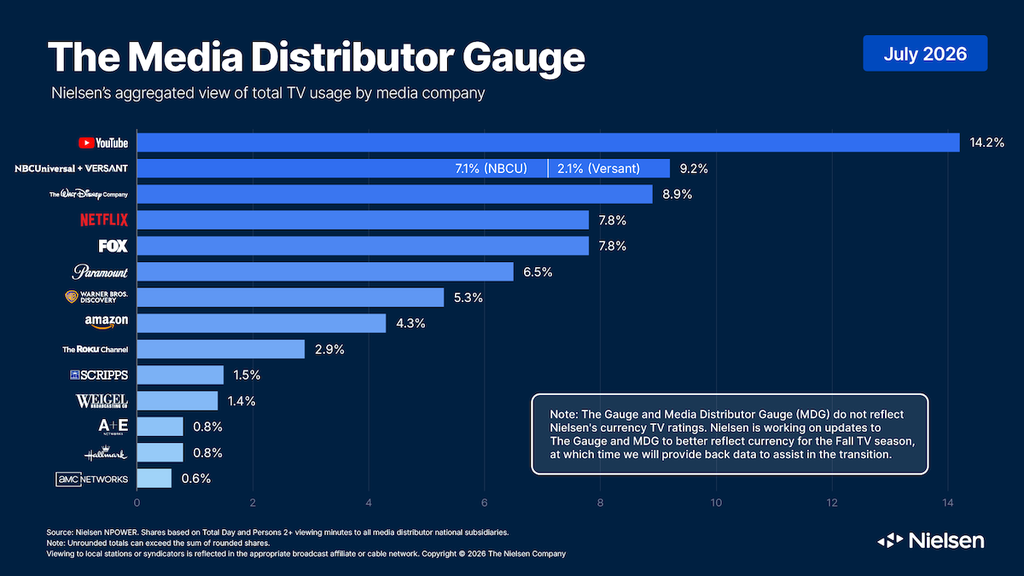
In addition to YouTube, Netflix faces competition from legacy rivals such as Disney and Paramount, the latter of which is on track to close its $110 billion merger with Warner Bros. Discovery in the next two weeks.
Once closed, Paramount-WBD would become the second-largest TV distributor by U.S. viewership based on Nielsen’s July figures, though its individual share of streaming viewership still remains behind Netflix.
As of Wednesday afternoon, Netflix shares were trading at $71.74 apiece, well below its 52-week high of $124.86 per share but still above its 52-week low of $65.08.
In addition to its declines in the past year and past six months, Netflix stock has fallen 21% year to date, 10% in the past month and 6.6% in the past five days, but is up 21% in the past five years.
