
A year ago, Netflix co-CEO Ted Sarandos affirmed that the streaming giant aspires to double its revenue and hit a market capitalization of $1 trillion by 2030.
“There’s a path to it,” he said in April 2025.
But given everything that’s happened since then, is that realistic?
The streamer has seen shares of the company fall 37% in the past year and 19% in the past six months, with much of the volatility related to its failed $83 billion pursuit of Warner Bros. Discovery, which is on track to be acquired by Paramount Skydance later this year.
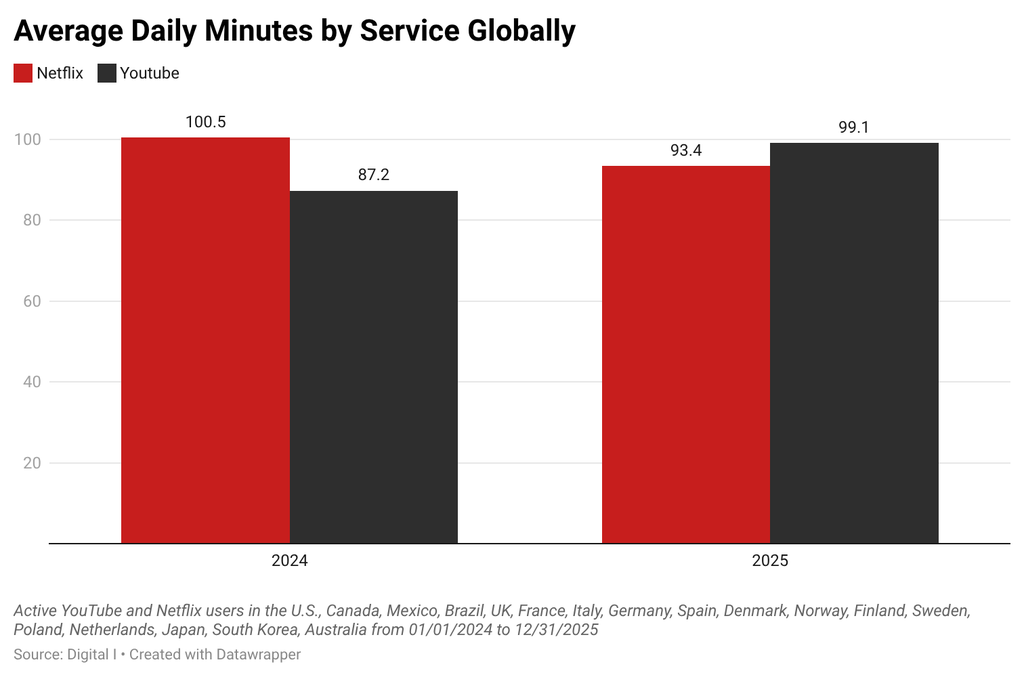
A study by the United Kingdom-based research firm Digital I published earlier this month found that YouTube has overtaken Netflix in average daily viewership in addition to consistently dominating in Nielsen’s monthly Gauge reports – highlighting how Netflix’s shift in focus to engagement and attention is a much more complicated arena than the battle for subscribers.
But Netflix does have a few weapons in this fight. They include a burgeoning ad business and leaning into trends like vertical videos. There’s always the option to raise prices. Longer term, it’s looking to diversify its content lineup through live events, sports, podcasts, gaming and striking more partnerships like its tie-up with French broadcaster TF1. It also has left the door open for M&A, though management is taking a disciplined approach when evaluating opportunities.
“Netflix is doing a better job than anyone else in trying to catch up with YouTube in terms of how much time people spend watching it. But no one is able to exceed YouTube,” eMarketer senior analyst Ross Benes told TheWrap. “The challenge is YouTube is everything – social, TV, podcasts, video gaming, shopping, so on – and most streaming services fulfill a more specific need.”
In addition to YouTube, Netflix is competing for eyeballs with social media platforms and short-form entertainment, such as TikTok, as well as free, ad-supported streaming platforms like Tubi and The Roku Channel. Fox, which already owns Tubi, has reached a $22 billion deal to acquire Roku in a move that would make the Murdoch-owned media giant the third largest player by U.S. viewership behind Disney and YouTube.
Netflix declined to comment, but pointed to co-CEO Greg Peters’ previous argument that “not all engagement is created equal” and that viewing hours are just one metric. It also measures engagement performance based on the quality of the experience — whether audiences loved a piece of content enough to keep watching — and the variety of content being offered.
The company estimates its share of global TV viewing is just 5%, with the company penetrated in under 45% of addressable households and capturing 7% of addressable revenue, suggesting there’s plenty of room to grow.
In recent conversations with TheWrap, Netflix leaders remain very bullish on achieving their ambitious growth targets. With a market cap of $324 billion as of Wednesday’s close, it would have to nearly triple in value over the next three and a half years. But the key question remains: Are their current efforts enough to reach that lofty goal?
“If Netflix wants to accelerate growth, it needs to expand what engagement looks like by showing up in more moments across the day. That could mean experimenting with formats like microdramas and other short-form content,” Forrester director of research Mike Proulx told TheWrap. “The challenge is doing that without diluting what made Netflix successful in the first place.”

Netflix’s levers of growth
When it comes to Netflix’s next phase of growth, expanding its ad-supported tier has been front and center. In May, the streamer revealed that its ad tier has surpassed 250 million monthly active viewers globally, up from the previous 190 million disclosed in November, with over 80% of ad plan members actively watching each week.
The ad-supported tier accounted for more than 60% of signups in the 12 countries where it’s available during the first quarter. The offering is set to expand to another 15 countries, including Austria, Belgium, Colombia, Denmark, Indonesia, Ireland, the Netherlands, New Zealand, Norway, Peru, the Philippines, Poland, Sweden, Switzerland and Thailand. Additionally, Netflix is working with more than 4,000 advertisers as of the end of 2025 – a 70% year-over-year increase.
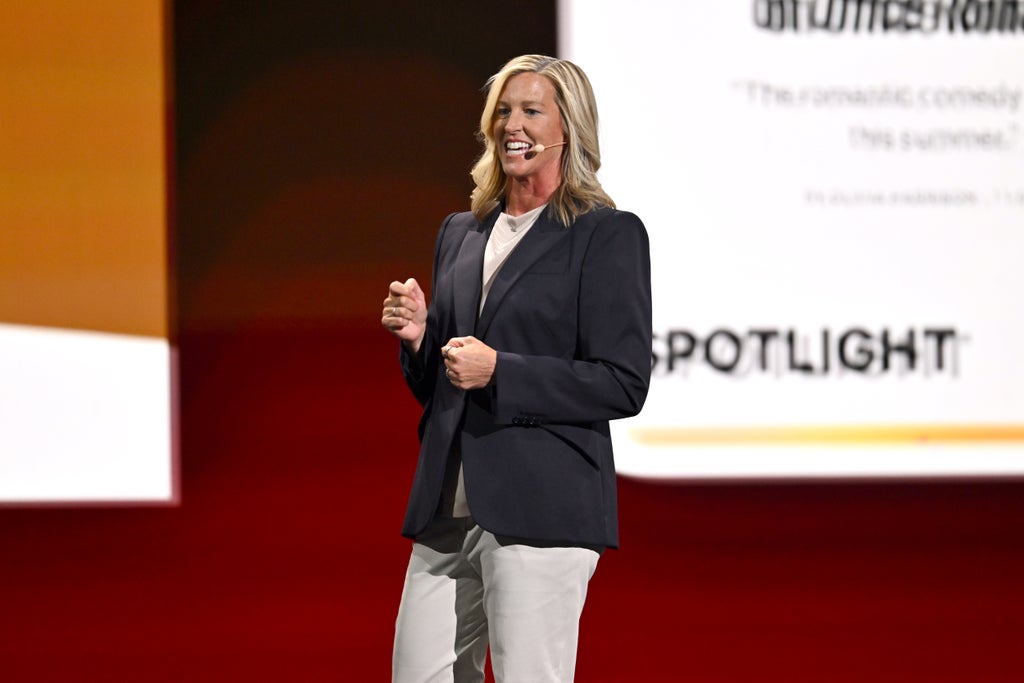
“If the last couple of years were about proving we’re a durable player, this year is about establishing ourselves as a more formidable one,” Netflix advertising president Amy Reinhard said during the company’s upfront presentation.
Netflix is forecasting ad revenue will double to $3 billion in 2026 – a small portion of its revenue forecast of $50.7 billion to $51.7 billion for the year – and is aiming for roughly $9 billion in ad sales by 2030. While Jefferies analyst James Heaney said the ad tier appears to “engage somewhat less on a per-user basis,” he believes its growth trends are healthy and predicted the offering’s share of total subscribers will reach roughly 25% by 2030.
The company has also continued to benefit from price increases, with U.S. plans now ranging between $8.99 and $26.99 per month. But that lever has its limits, as the streamer received some pushback on this front overseas with an Italian court ordering it to reimburse consumers and roll back its price hikes in the country. A Netflix spokesperson previously told TheWrap it would appeal the decision.
To justify those increases, Netflix continues to pour billions into its programming and improving the quality of that experience. Over the last decade, the streamer has invested over $135 billion in films and series that have contributed more than $325 billion to the global economy. It spent $18 billion on programming in 2025 alone and forecasts content costs will increase by 10% in 2026, with higher growth in the first half of the year due to the timing of title launches.
“We expect Netflix to invest more in content spending with a renewed focus not just on volume, but on higher-demand programming,” MoffetNathanson analyst Robert Fishman wrote in a May note to clients. “We believe these efforts will translate into higher quality engagement, and in turn better monetization of its industry-leading scale.”
The company has also updated its homepage and revamped its mobile app with a vertical video feed, known as “Clips,” to help subscribers discover and sample content faster. The Clips feature will be expanded to include podcasts, live programming and themed collections at a later date.
But veteran TV producer Evan Shapiro told TheWrap that Netflix should lean even further into the “vertical premium space,” such as reformatting their true crime library into three-minute chapters, commissioning vertical original dating shows or licensing old shows like “Gilmore Girls” and refashioning them into vertical syndicated series.

Long-term opportunities
Longer term, Netflix has been focused on ramping up its pipeline of live programming. The company has produced over 200 live events since 2023, including celebrity roasts, comedy specials, the Actor Awards, “BTS: The Comeback Live,” the “Love is Blind” reunion special and “Skyscraper Live.”
Pivotal Research Group analyst Jeff Wlodarczak told TheWrap that Netflix’s one-off sporting events have been “pretty smart and helpful” for engagement and believes the streamer will inevitably get more aggressive in bidding on rights.
For example, the World Baseball Classic became Netflix’s No. 3 most-watched program in Japan and sparked its largest day of sign-ups in the country. Its other sporting events have included WWE Raw, MLB Opening Night between the New York Yankees and the San Francisco Giants, Tyson Fury vs. Arslanbek Makhmudov and Ronda Rousey vs. Gina Carano.
Looking ahead, it will exclusively broadcast the FIFA Women’s World Cup in the U.S. and Canada in the summers of 2027 and 2031, and it struck a deal with Concacaf in Mexico. It also expanded its partnership with the NFL, adding the league’s first-ever regular season game in Australia on Sept. 10 and first-ever Thanksgiving Eve game on Nov. 25 in addition to its pair of Christmas Day games.

In addition to sports and live events, Netflix is expanding its content offering through a partnership with French broadcaster TF1, which kicks off on Friday and will serve as a test before exploring partnerships with other broadcasters. Netflix leaders told TheWrap that the model employed with TF1 could easily be replicated in other countries.
It is also dipping its toe into video podcasts through partnerships with Spotify and iHeartMedia, with the offering focused on daytime viewing and mobile devices thus far. In doing so, Netflix is trying to compete with YouTube where it excels: in getting someone to open the YouTube app when they have a spare few minutes, vs. the commitment required for a Netflix show. It’s something Netflix calls “winning the most valuable moments of truth when people choose what they want to watch.”
And after struggling to gain traction in its mobile games offering, Netflix has pivoted to a focus on party games, narrative games, kids games, mainstream games and more games on TV. In April, the streamer introduced Netflix Playground, a games offering aimed at children ages 8 and under, which has been actively used by 10% of all kids profiles, with half of that content viewed on mobile devices and tablets. Its virtual game controller app to play cloud TV games also jumped to the top of the most downloaded IOS app chart during the month.
Last week, Netflix launched FIFA World Cup: Launch Edition, an arcade-style soccer game timed with the big sporting event.

Will Netflix pursue more M&A?
Despite Netflix’s long-term stance of being “builders versus buyers,” its attempt to buy Warner Bros. showed it was willing to make a deal, and its executives haven’t ruled out M&A to fuel growth. In March, Netflix acquired Ben Affleck’s InterPositive in a deal valued at up to $600 million, which will expand its suite of AI-powered tools for filmmakers.
On Tuesday, Semafor reported that Netflix bowed out from the bidding process for Roku and is one of a number of media companies interested in Lionsgate. But Netflix denied it, telling TheWrap it “did not make a bid” for Roku and is “not interested and not pursuing” a Lionsgate acquisition. Representatives for Lionsgate declined to comment, while Roku did not immediately return TheWrap’s request for comment.
Some analysts have also floated Netflix as a potential suitor for Imax following news it was exploring a sale, though an insider previously told TheWrap that it has never had any discussions with the premium large format technology company. But ultimately, experts say that any major studio acquisition would be a nice-to-have, not a must-have.
“I don’t think they need any studios to increase engagement, but it would lower content costs. They’ve learned that there will be significant regulatory scrutiny and industry pushback for any sizeable deals with any studio,” Wedbush Securities analyst Alicia Reese said. “Netflix has the cash to pay for as much content as it needs to drive engagement, low churn and advertiser interest.”
