
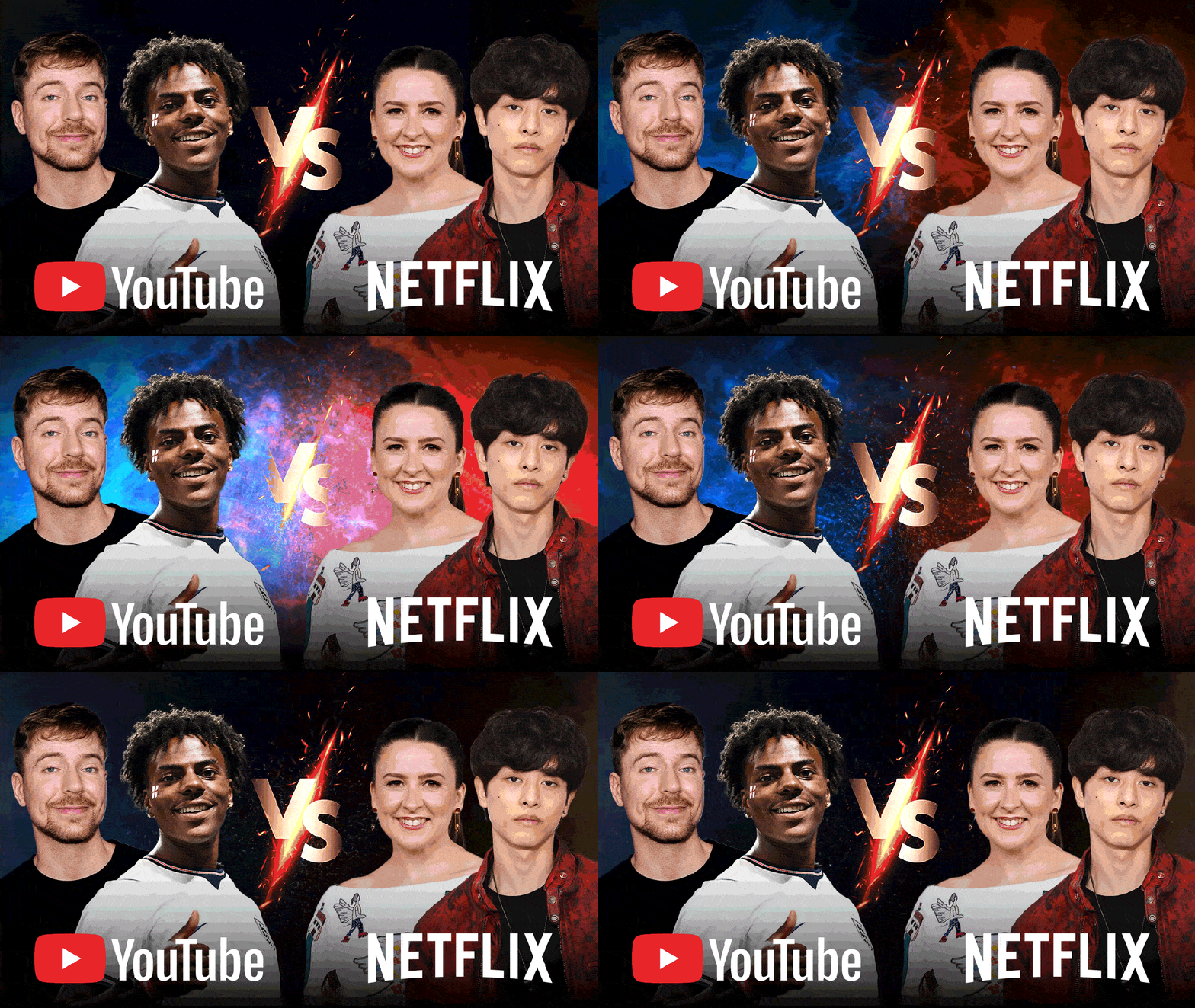
With creators like Ms. Rachel and Mark Rober scoring huge numbers on Netflix, YouTube has approached its top stars and offered them incentives to stay on its platform, begging the question: Has war broken out between the two streaming giants?
That narrative has emerged over the last few weeks, especially with Netflix targeting some of YouTube’s top talent like the Stokes Twins (145 million subscribers) and Nick DiGiovanni (45.5 million subscribers) in a bid to secure a wider — and younger — audience.
“[We ask] who are their favorite personalities? A lot of them are creators. So we want to make sure that we have our audience’s favorite people and content on the service,” a Netflix insider told TheWrap.
But the idea that there is a full-blown bidding war between these two companies simplifies the creator ecosystem into just another studio story rather than the revolutionary force it is. It underestimates how different and varied creators are — while many have the heft of a TV studio, they don’t all pursue the same goals. While a creator could be making content now, they may ultimately have no desire to be a showrunner, director or star. Instead, they may want to build their following into a global brand, like Emma Chamberlain did with Chamberlain Coffee, or create their own production hub, like Dude Perfect. Some creators may want to stick with YouTube, but that doesn’t mean their content is any less popular than a creator with a deal with Fox, Disney or Netflix.
There’s also a growing industry misconception that, with these deals, creators are “graduating” from YouTube to Netflix. Netflix’s creator strategy does offer its talent support such as pairing them with seasoned showrunners, providing more advanced dubbing on their shows to help grow global audiences and helping them create larger productions. But with that support comes a loss of control. Creators, who are used to having full autonomy over their channels, must now fit into the Netflix model. No matter the benefits, that loss of control can be distasteful to some creators, a distinct kind of talent that has secured sometimes millions of fans from the ground up and feel an incredible sense of loyalty to their audiences.
This is all to say that the creator “war” between Netflix and YouTube is less of a battle and more the tale of two giant companies throwing spaghetti at this new era of entertainment and seeing what sticks.
“It’s really hard to compare YouTube and Netflix. We are inherently different companies, and the biggest difference is we are not a studio,” a YouTube insider said.
Consider this your quick and dirty guide to how this mess started and the pros and cons of these two big players.
How we got here
At the beginning of last year, Netflix shocked the world when its viewership report revealed that Ms. Rachel — a children’s education YouTuber with 21.1 million subscribers — was the seventh most-watched show on the platform. Now, hardly a week has passes without Netflix signing a deal with another major creator.
Over the past two years, Netflix has signed headline-grabbing deals with more than 20 popular YouTube creators, names like Alan Chikin Chow (101 million YouTube subscribers), Mark Rober (81.7 million subscribers) and Stephanie Soo (51.6 million subscribers). That number doesn’t include the more than 50 creator-driven podcasts that have been added to the streamer as part of its partnerships with The Ringer, Spotify and iHeartMedia. Creators have gone from being a somewhat ignored part of the entertainment landscape to a vital part of Netflix’s strategy. And Netflix’s sudden interest — as well as the millions the company is throwing at these creators — have led to changes from YouTube.
YouTube has approached some of its top creators and offered them incentives to stay on the platform. Outlets like Bloomberg and The Ankler have reported that more than a dozen creators have taken these deals. YouTube did not comment on those numbers. What exactly these deals contain depend on the creator, with some getting financial support from YouTube to fund their next ambitious project and others asking for changes on the product side.
Why are creators jumping over? Netflix offers the opportunity to notably expand their audiences. Though platforms like YouTube are still king among Gen Z and Gen Alpha, older generations — Millennials included — lean towards streaming services.

At the same time, Netflix’s creator content still remains a bit of a public mystery. The company’s viewership report for the first half of this year showed that content from Ms. Rachel, Mark Rober, Danny Go! and Jordan and Salish Matter performed exceptionally well on the platform. However, all of those shows were children’s and family titles, which comes with its own specific parameters. Parents have reported feeling more comfortable letting their children watch shows on closed streaming platforms like Netflix, Disney+ or PBS Kids with limited and controlled libraries rather than giving them access to open social media platforms like YouTube or Instagram.
It could be that now is the time for creator content to thrive on Netflix. But it could also be that only this specific kind of content works well on the platform. It’ll be difficult to answer that question until more of Netflix’s creator-led series for older audiences start premiering later this year.
Until then, here’s how creators are weighing Netflix vs. YouTube:
The creator case for Netflix
- Pros: Hollywood connections, a new audience and global support
- Cons: Who knows how this will perform
Netflix isn’t interested in partnering with every creator. Specifically, the creator team behind the streamer is looking for creators that have a clear point of view, a meaningful, engaged audience and a good understanding of who that audience is.
So what exactly can Netflix offer creators that YouTube can’t? The first big thing is a wider reach.
“I’m sure there’s going to be some overlap between who’s engaging with creators on YouTube and who’s engaging with creators on Netflix,” the Netflix insider said. “We believe and have evidence that we have a different audience gear that is additive to what they already have.”
Part of that additive quality comes down to the viewing habits of Netflix users versus YouTube users. In addition to Netflix’s audience skewing older than YouTube’s, the streamer also found through its experiments with creator-led children’s content that Netflix viewers are less likely to skip episodes. That means creators have seen videos that performed poorly on YouTube generate a stronger viewership on Netflix.
There has also been a great deal of excitement around the fact that parents can download creator-made content from Netflix. While YouTube Premium does offer offline viewing to subscribers, that aspect of the streamer isn’t as well known nor is it as intuitive as downloading on Netflix.

Aside from viewership changes, Netflix has a high quality localization team that adjusts every show, movie and special that comes to the streamer. Creators have always had the option of hiring professionals to dub their content and, as of last year, YouTube has offered AI-powered auto-dubbing. However, those options can be costly and clunky. While AI may accurately translate a show, it may do so in a more formal tone than the creator’s typical cadence. The care Netflix places on localization is especially important to certain creators, like Alan and Alex Stokes, twin creators who were born in China and learned to adjust to America through their YouTube content.
“We made videos to make other kids laugh, and somehow that turned into a community of hundreds of millions of people around the world,” the Stokes said in a joint statement about their streaming deal. “To now bring that journey to Netflix is bigger than a show for us. It feels like a full-circle moment.”
Curated dubbing is especially helpful for music-focused shows like “Danny Go!” ensuring that the rhythm and rhyme structure of songs stay consistent across languages. Many creators have seen their audiences grow outside of the U.S. thanks to these more sophisticated dubbing practices, such as Jordan and Salish Matter.
“It could be that they have a business and we’re helping them figure out how to expand that business beyond the U.S.,” the Netflix insider said. “If they actually manufacture a product or something like that, we might build a game around a title that we’re building with them.”
That speaks to the one major advantage Netflix has: support. By now, the streamer has cemented its status as a major player in the entertainment landscape, and the one area where Hollywood has always excelled is in connecting talent to people who can help them build their vision. That could mean introducing a creator to a showrunner so they can make the best use of their limited time, connecting them to a roster of young adult stars with upcoming projects or just helping creators with scheduling and media opportunities. It also means financial support for more costly projects.
“We are in the talent business,” the Netflix insider said. “We’re empowering [creators] to do some of their most ambitious creative work that either they couldn’t do from a human resourcing or financial resourcing standpoint.”
However, there are two big strikes against Netflix: uncertainty around viewership and loss of control.
Creator content has had a rocky history on Netflix. For an established creator with a track record of consistently producing well-watched videos, partnering with Netflix can almost feel like a gamble. Sure, Bo Burnham’s “Inside” was a jewel during the COVID era, but creator-led shows like “Pop the Balloon” and Colleen Ballinger’s “Haters Back Off” were met with middling viewership. However, the Alex Cooper-produced “Let’s Marry Harry” is a sign that creator-driven content for older audiences may have a place on the streamer. The dating show premiered on Netflix’s Top 10 list in 15 countries.
Netflix’s strategy also heavily leans on the popularity of its creator talent. For content designed to appeal to older audiences (think teenagers and young adults), Netflix has a same-day-and-date strategy in place. That means Netflix intentionally releases new shows from a creator the same day that creator releases new content on YouTube. This approach informed YouTube’s decision to start making deals with its top creators.
But the main reason why many creators may shy away from Netflix comes down to transparency. Most successful creators are borderline obsessed with data. One major creator studies his analytics so intensely that he knows what color shirt he should wear to optimize viewership. While Netflix does offer insights to its showrunners, the streamer has historically been guarded about its analytics. Even if Netflix were to release every bit of data to its creator partners, YouTube would likely still prove to be more insightful if only for the fact that it offers a comments section and Netflix doesn’t.
All that being said, Netflix isn’t asking creators to significantly change their content to fit its platform. Jay Shetty, the creator and host of the “On Purpose” podcast, previously told TheWrap that Netflix wanted to make his series its “premiere interview show.”
“What’s been really beautiful is all creative control is left to us,” Shetty said. “They want to produce the show that we’ve always been producing.”
The creator case for YouTube
- Pros: Independence, granular insights and a proven home for creators
- Cons: Limited reach and algorithm headaches
The idea that YouTube is home for many creators isn’t just a great one-liner for CEO Neal Mohan. It’s a reality for most creators.
“I found what I loved at a really young age. I found YouTube at age 11, and I gave it my all,” Jimmy Donaldson, aka MrBeast, emotionally said earlier this summer during a livestream as he became the first YouTuber to ever surpass 500 million subscribers. “I feel like I’ve got at least another 20 to 30 years in the tank of making YouTube videos, making content. I’m so all-in on YouTube.”
Similarly, a few weeks after his horror film “Backrooms” broke records for A24, director Kane Parsons returned to his YouTube channel to post new videos.
YouTube is used to its creators launching different companies and experimenting with different platforms, such as TikTok, Instagram and FAST (free ad-supported streaming television) streamers. One insider likened making a deal with Netflix to a creator launching a candy bar line — it’s just another part of their bigger media strategy.
A huge reason why so many creators are so loyal to YouTube is because that’s the primary way they interact with their audiences. Many creators religiously read the comments section, making jokes with fans mid-video or during live streams. But among many creators there is also a sense of loyalty to YouTube itself.

That’s partially due to the YouTube Partner Program, which is how YouTubers can monetize their channels. YouTube’s creator program has remained the most consistent and highest paying among social media platforms. YouTube’s creator team also has a good reputation for resolving creator complaints. After creators reported an increase in living room viewership, YouTube built out more tools to optimize the experience, letting creators upload videos in 8K and creating playlists for channels that mirrored other streaming services.
Since Netflix started releasing its creator content the same day as creators upload on YouTube, the company has started to individually meet with its top talent to see how they can keep them on the platform. Part of that is because of Netflix’s release strategy, which has the potential to fracture an audience.
The YouTube insider rejected the notion that the company is trying to prevent deals with Netflix. Instead, they’re going to specific creators and asking them what they need to keep their business on the platform.
There have been reports that creators who don’t accept these deals from YouTube will be “punished.” YouTube pushed back on this characterization. While YouTube will prioritize creators that are stronger partners with the company for advertising events like Brandcast, that’s not dissimilar to how other companies operate when it comes to their biggest talent during upfronts.
However, the big advantage YouTube has over nearly every other company in the TV industry has to do with individual ownership.
Creators on YouTube maintain complete creative control and ownership over their content. Unlike in past with its YouTube Originals era, the YouTube of the present has no ambitions to become a studio. So when the platform partners with creators on bigger projects, such as helping finance a more ambitious series or special, YouTube doesn’t own part of that property. Keeping that control is invaluable to many creators, especially after hearing so many IP horror stories from Hollywood and the music industry over the years.

So why leave YouTube?
Moving beyond the platform may make sense for creators who are looking to expand to the biggest audience possible. Though YouTube has led the Nielsen rankings as the most-watched platform for television for the past several years, the platform famously skews young. Streaming deals put creator content in front of older audiences who may never or rarely watch YouTube.
Creators who stay on YouTube are also beholden to algorithm switches. The smallest backend change can cause creators’ viewership to plummet or spike. That’s a less potentially ruinous problem for top creators, who can often work with YouTube team members to figure out how to adjust their content for these changes. However, these changeups can still be stressful and distracting to creators who want to focus more on making the best content possible. Some may decide it’s better to partner with a streamer like Netflix and forgo potentially being featured in front of hundreds of top advertisers during Brandcast.
Regardless of which platform is better for which creator, one central truth is the same: The entertainment landscape has changed.
“The quality of work being made on YouTube is just so insanely high that it feels important to me that people are aware of that,” Cleo Abram, the creator and host of “HUGE *If True” previously told TheWrap. “Frankly, I think too often we have a conversation about TV and then YouTube without understanding that YouTube is already TV, and some of the highest quality shows are already on YouTube.”
