
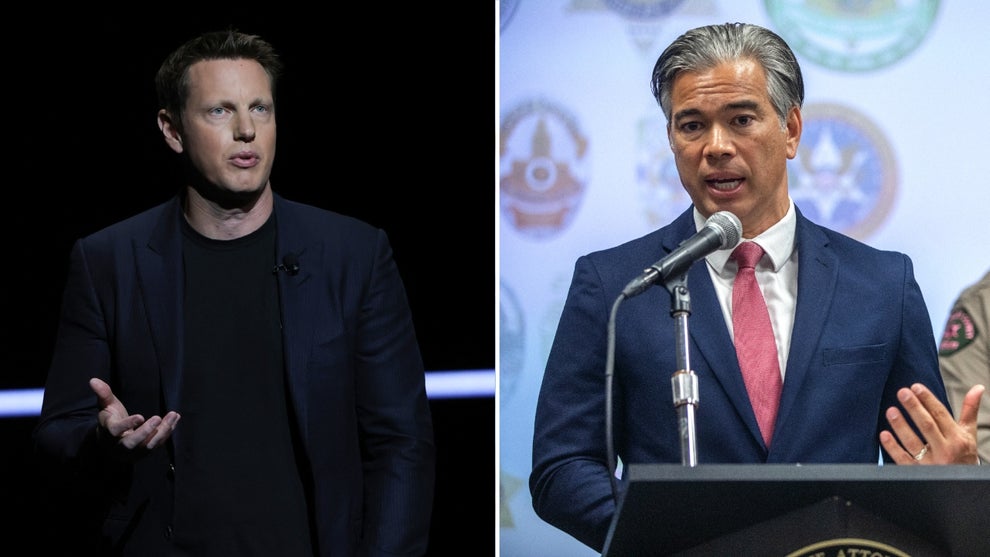
Paramount and 12 state attorneys general have agreed to a settlement, clearing the final hurdle for the $110 billion merger with Warner Bros. Discovery.
The agreement, which was announced on Monday, includes a minimum investment of at least $300 million annually in domestic TV and film production, or $1.5 billion over five years. Paramount has agreed to produce 30 films per year in the first two years of the deal, which will be upped to 32 per year in each of the following three years. At least four films per year must be independent films and at least 20% must be blockbusters. If Congress passes a federal film tax credit, Paramount agreed that 20% of all film production must be in the U.S. for the first two years of the merger and 30% of the next three.
The combined company must also establish an editorial board to monitor CNN and CBS News’ independence, which will include five established active or retired journalists who have practice journalism for a minimum of 10 years. No more than two members may be affiliated with the same political party and members are expected to serve for three years from the date of their appointment.
Additionally, Paramount and WBD are required to continue negotiating their cable packages separately for five years to preserve competition. It also includes restrictions on changes to affiliate fee negotiations and agreements with distributors and a restriction on the use of confidential information. They must also continue to operate the free, ad-supported streaming service Pluto TV during the commitment period.
The settlement also includes maintaining the studio lots of both companies, honoring collective bargaining agreements and committing $9.5 million each year for five years in workforce training and career development programs in
film and television production communities at qualified educational
institutions and film programs and community arts organizations. Within 30 days of closing, the combined company will also establish a fund for purchasing independent films and make an annual contribution of $5 million.
An independent monitor and a committee of five states will be appointed to ensure the merged company complies with the settlement terms. Failure to comply could result in remedies, including a $30 million penalty for failing to reach the 30 film-per year goal, divestitures of BET, Comedy Central, VH1, Smithsonian, Destination America and Science channel within 120 days and its stake in Miramax within 12 months.
The deal is an attempt to address concerns that the combination of the two historic studios would create a dominant force in the theatrical film and cable channel markets and have a devastating impact on the entertainment industry. Paramount has insisted the deal would lead to more opportunities and give it a better fighting chance against the tech giants.
“We are grateful to Attorney General Bonta and his fellow AGs, as well as the WGA, for engaging in good faith to find a path forward to a resolution that serves all parties, and to Governor Newsom for his support throughout this process,” Paramount CEO David Ellison said in a statement. “Our shared aim was an outcome that best serves consumers, workers and — most importantly — the creative community so vital to the art of visual storytelling. We’re confident this agreement does exactly that, memorializing a series of commitments that include 30+ films annually and expanded U.S. film production to help revitalize our industry here at home.”
“Our goal has always been to build a stronger Hollywood — one with more stories told, greater choice for consumers and stronger competition. That vision was validated by unanimous approval from competition authorities in nearly 70 jurisdictions worldwide, who agreed this deal is pro-competitive, pro-consumer and pro-worker,” Ellison continued. “Having now addressed the State AGs’ and WGA’s concerns, we have complete clearance for this merger and look forward to putting these commitments into action. Bringing Paramount and Warner Bros. Discovery together will build that stronger Hollywood, creating expanded opportunity for our people and even more great entertainment for audiences around the world.”
The move comes as the media giant was gearing up for a March trial against the state AGs and the Writers’ Guild of America. Paramount had agreed to delay the closing until five days after the outcome of the trial, or June 1, 2027, whichever came earliest.
But starting Oct. 1, Paramount was also on the hook to start accruing a 25 cent per share ticking fee, which would’ve translated to a payout of $650 million per quarter or $7 million per day until closing, giving it extra motivation to settle quickly.
While both sides had expressed their willingness to reach an out of court settlement, Ellison also threatened to move the Hollywood studio’s operations out of California if a settlement wasn’t reached by the Oct. 1 deadline.
The Los Angeles Economic Development Corporation estimated that Paramount moving out of the state could’ve resulted in the loss of up to $21.2 billion in annual economic output, 57,980 full-time jobs and $1.17 billion in state and local tax revenues.
Meanwhile, an analysis ordered by the LA County Board of Supervisors estimates that the merger closing could put 4,500 local TV and film jobs and over 5,800 indirect or induced jobs from related small businesses at risk over the next three years. The economic impact of losing these jobs would be $1.26 billion in wages, $2.78 billion in economic value, $4.06 billion in total business output and $547 million in tax revenue, including $78.6 million in local taxes — most of which (63%) comes from property taxes.

Among those who publicly called for a settlement were California Gov. Gavin Newsom, Los Angeles Mayor Karen Bass and the Democratic nominee in California’s gubernatorial race Xavier Becerra, the Directors’ Guild of America and IATSE.
Cinemark and the CEOs of AMC Theaters and Regal came out in support of the merger, as did Lionsgate CEO Jon Feltheimer. Meanwhile, over 5,000 actors, including prominent names like Jane Fonda, Mark Ruffalo and hundreds of other A-listers, penned a letter opposing the merger. Also speaking out against the merger was SAG-AFTRA and Hollywood’s Teamsters union.
The resolution with the state AGs comes after Paramount already received clearance from Warner Bros. shareholders and regulators and governments representing 68 jurisdictions, including the U.S. Department of Justice and Federal Communications Commission, the European Commission and the United Kingdom’s Competition and Markets Authority.
In addition to the concessions in the U.S., Paramount agreed to concessions in the U.K. and Europe, including terminating its stake in United International Pictures a commitment not to combine linear channels with its streaming services and maintain the editorial independence of its news services and children’s networks and to provide more funding to Channel 5 to support high-quality news, original children’s programming and drama.
It also reached a separate resolution with the WGA, including a five-year layoff pause at CBS and a $17.5 million health fund contribution.
Editor’s Note: California Attorney General Rob Bonta and Paramount Chief Legal Counsel Makan Delrahim will be interviewed live at TheGrill on September 30. Get your tickets here. 30% off for PRO members,
