
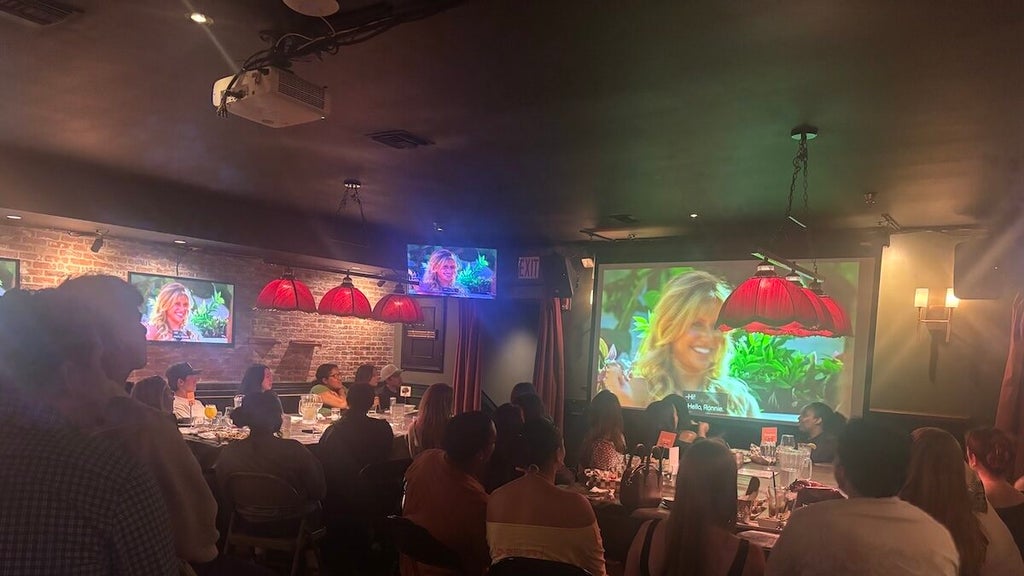
On a Monday evening in late June, the second floor of sports bar Q’s Billiard Club was packed with dozens of fans screaming and gasping at the television screens hung on the walls all around them.
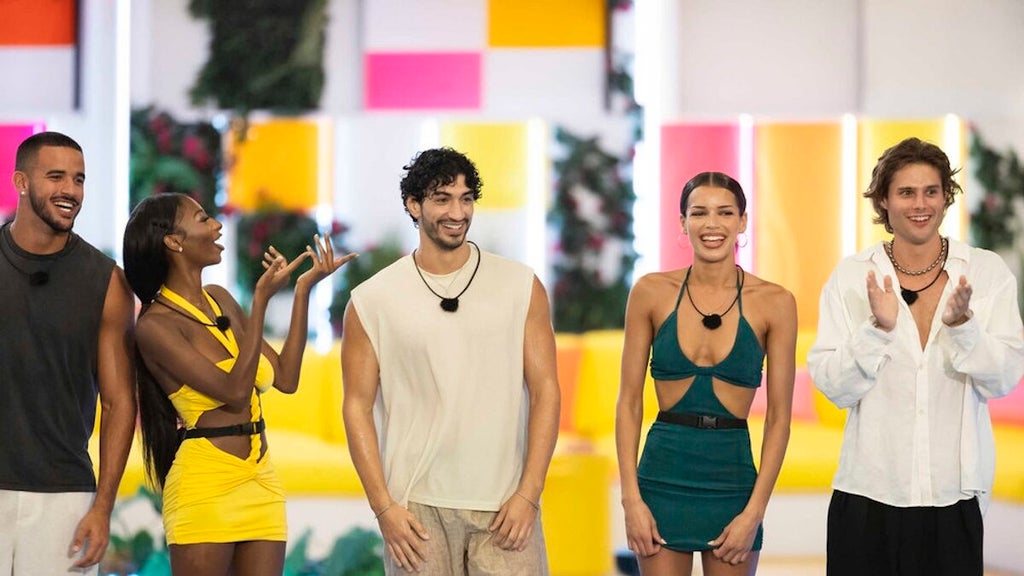
Only, they weren’t watching a World Cup match (those fans were downstairs and, shockingly, tame by comparison). They were “Love Island USA” faithfuls gathered to watch the first night of Casa Amor, a pivotal turning point in the reality dating series’ latest season.
For the uninitiated, this is when the show’s producers split the original group by gender and bring the men to a secondary villa called Casa Amor, where they’re introduced to a new batch of attractive islanders in a test of the connections they’ve made over the last few weeks. Viewers booed as the O.G. men kickstarted their Casa connections and left their old relationships in the dust.
“B—h, you knew her for two minutes,” exclaimed one fan at Q’s as KC, one of the male cast members who had built an early relationship with another woman, leapt on top of and made out with new contestant Tierra.
This is the equivalent of March Madness for reality show fans. Only, the NCAA basketball tournament lasts three weeks, with games occurring just a few nights a week. “Love Island USA,” which plays like a cross between “Big Brother” and “The Bachelor” with real-time fan voting, runs for six weeks and fans have to tune in nearly every weeknight at 6 pm PT/9 pm ET — or miss out on the conversation.
The enthusiasm on display at these watch parties — which takes fan chatter IRL over themed drinks and shared frustration — is emblematic of the hungry fan base, which is activated every summer when “Love Island USA” begins its approximately six-week run, during which episodes drop every day except Wednesdays. In the age of streaming and on-demand content, it’s an anomaly that so many fans will tune in every single day at the same time to watch the show, which this season garnered 2 billion viewing minutes in its first two weeks on Peacock.
“The routine that it builds … is such an appeal for people, and really generates a desire to stay invested and connected … the feeling of FOMO, I think, really does power a show like this,” Penn State media studies professor Cory Barker told TheWrap. “It feels like people, especially younger people, are seeking out those connective, collective experiences … being able to participate in this quasi-live collective experience that’s happening for a relatively short period of time … is so powerful.”
As a result, “Love Island USA” has become a crown jewel for Peacock, the smallest of the major streamers that’s in need of all the hits it can get. The show has helped hone the streamer’s identity as a hub for reality show content alongside its Bravo library and other fan-favorite “The Traitors,” and is a key reason why executives believe Peacock will finally post a profit when its parent company, Comcast, reports its second-quarter earnings results in the coming weeks. But it also raises the question of how Peacock plans to sustain the momentum of “Love Island” and, more crucially, replicate it down the line.

As further evidence of its growing popularity, the Casa Amor episode was also live-streamed by Peacock in 28 theaters across the country, giving fans a way to experience the drama together on the big screen. Tickets sold out within eight hours and the announcement of the theatrical move led to 5 million video views of the announcement post featuring clips from the season and 403,000 engagements across owned social media as fans plotted their chance to see “Love Island USA” on the big screen.
What’s more impressive is how the reality series has grown its audience season-after-season and pushed further into the cultural zeitgeist since its breakout Season 6 two years ago. New viewers make up 27% of Season 8’s audience, and it is already up 50% from its record-breaking Season 7 last year.
“It requires a huge time commitment from viewers, and in return, their level of investment and fervor is that much deeper,” EP Jordana Hochman told TheWrap. “Our creative team has done such an excellent job of building this rollercoaster that keeps fans engaged and guessing what’s next, which makes it all the more exciting and satisfying for those who take the ride.”
Building and sustaining a mega hit
For the first five seasons of “Love Island USA,” the reality dating show flew largely under the radar as most “Love Island” fans stayed loyal to the U.K. version, which originated the format.
But things changed in Season 6. Two years after the show moved from CBS to Peacock for Season 4, it added a buzzy host in “Vanderpump Rules” star Ariana Madix, who was in the cultural conversation due to Bravo’s Scandoval, a cheating scandal in which Madix’s longtime boyfriend Tom Sandoval cheated on her with cast member Raquel Leviss. It also lucked into a stellar casting with a tight female trio that fans adored as well as Rob Rausch, who went on to charm audiences during “The Traitors” Season 4, that lifted Season 6 into the broader cultural conversation.

With Madix back at the helm as a host and new viewers hoping to see what they were missing out on last time, Season 7 kept growing, becoming Peacock’s most-watched original season of all time with 18.4 billion minutes viewed during its six-week run. And the show has managed to keep the phenomenon going with Season 8 already ranking as Peacock’s most-streamed original season through the first three days.
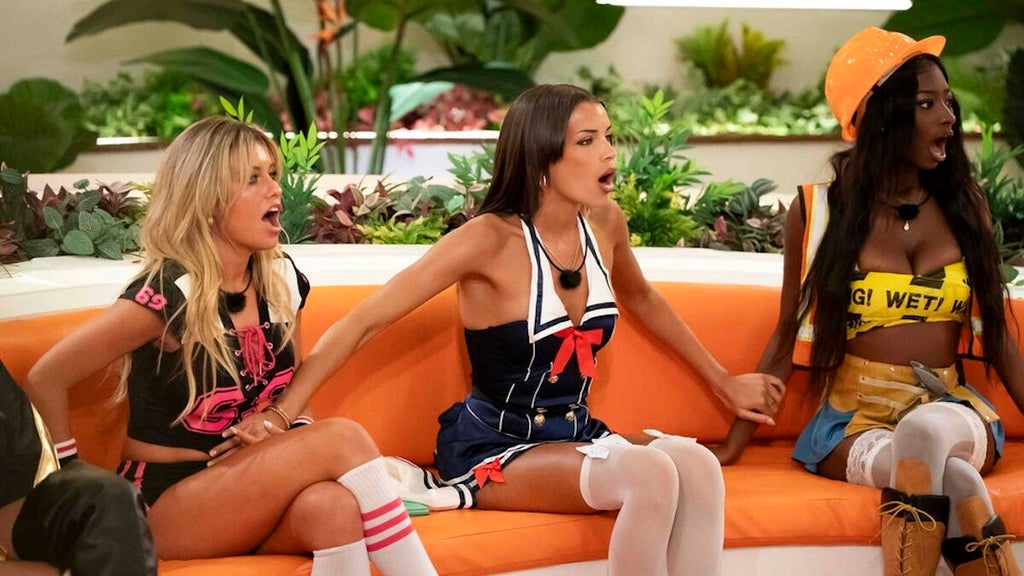
Each season, the production team has taken on the challenge of “elevating the show and finding new ways to surprise and excite viewers, while staying true to the recurring format elements that fans have grown to love,” according to Hochman, pointing to the Casa Amor twist that came with combining the men’s arrival with the heart rate challenge, which saw the new group of women take turns giving the O.G. islanders lap dances (look it up if you want the full picture).
“It’s a balance, and it all starts with our cast of islanders – we follow their lead and their evolving relationships. As a result, each season is actually pretty distinct,” Hochman said. “You see this in the challenges and games, in the recouplings and dumpings, or how the fan vote is utilized in different ways. The show’s quick-turn nature gives us the ability to adjust and develop creative in real time and in direct reaction to the story happening in the Villa.”
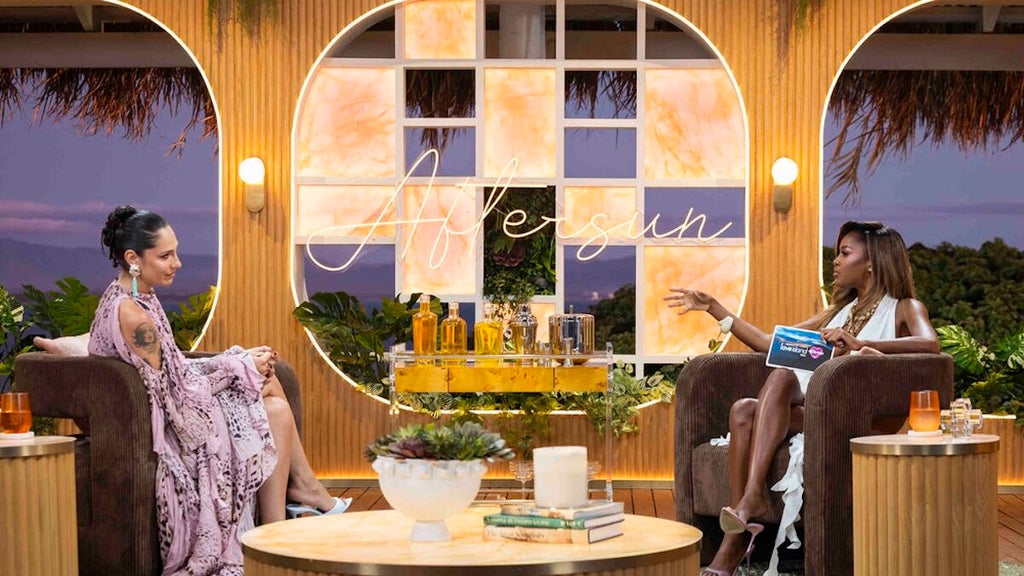
The EPs also refreshed its weekly recap show “Aftersun” with similar starpower through hosts “Summer House” star Ciara Miller and media personality Tefi Pessoa. They also leaned on feedback from fans on what they want to hear from contestants after they’ve been dumped from the island. “Because the audience has such a strong parasocial relationship with this show and with the islanders, we want them to feel like they do have input, as they do with the challenges,” Miller told TheWrap.
The refresh worked, with the first couple episodes more than doubling last year’s audience, rising 144% from Season 7 “Aftersun” episodes.
Beyond traditional word of mouth, Peacock’s marketing arm has been hard at work to cement the show’s place as a “summer ritual.”
“What they care about is being in the conversation, watching together, and participating in real time … so focused on creating an environment where those things can happen,” NBC and Peacock EVP of entertainment marketing Margaret Walker told TheWrap. “There’s this whole viewing behavior happening with this show, and our experiences … are succeeding because it is delivering what audiences are asking us for, and something that they value, and that’s a sense of belonging and shared experience.”
How big is “Love Island USA?”
Beyond viewership, “Love Island USA” has taken over the cultural conversation, with its app sitting at No. 16 on the top free entertainment apps — Peacock sits at No. 2 — on the App Store, though that might’ve been higher ahead of the first fan vote, during which the app crashed and voting was extended through one more day.
The “Love Island USA” app saw a 175% rise in unique users for the Season 8 premiere when compared to Season 7, with the the number of votes cast during Season 8’s second vote up more than 77% over the second vote of Season 7.
On social media alone, “Love Island USA” has tallied over 1.5 billion video views, 376 million engagements and 2.6 million social mentions, ranking as the No. 1 most social series program since premiere and the No. 2 most social program overall, only behind the NBA Finals.
The popularity even extended through Kalshi, which saw a total of $27.6 million traded across the Love Island USA and Love Island UK markets by late June, though that’s still a fraction of the $7.7 billion traded for the World Cup.
Walker noted the team intentionally waited to put the show in movie theaters until the week of Casa Amor, which marks a particularly exciting time for fans. “If it’s about participation, it’s not just a one-way street … we want to enable this conversation with them, we want to put them in proximity to each other, so they can share it together,” Walker said. “Ultimately we’re hoping that this makes them feel seen as audience members … it’s really about us continuing to create more opportunities like this.”
Putting “Love Island” back in theaters isn’t out of the question, according to Walker, who noted “it’s always something that we would be open to” given that fans are already organically organizing watch parties on their own.
Can its success be replicated?
A reality show hasn’t been this much in the cultural conversation since something like “Jersey Shore,” according to Barker, but even then, the 18 months the MTV hit dominated the cultural conversation doesn’t hold a candle to “Love Island USA,” which has maintained its dominance for three summers in a row.
But can the phenomenon be replicated? The outlook seems unlikely to Barker.
“I do think that this is a special circumstance of a lot of these different things happening between … the host … and audience habits and a desire to have this more authentic experience and the social media promotion generation creating this FOMO to make to feel like you need to keep up in a way that is not there with a lot of other reality programming,” Barker said.
The better question to ask, Barker said, was how long “Love Island” can keep it up.
To Walker, the key element is giving hardcore fans the “sense of belonging” evoked by the show. “It’s filling a different need than just an entertaining show, and so I think as long as we are intentional about winning [over] the fans …I think we’ll be as successful as we can be, and that includes growth.”
For Walker’s team, the “Love Island” fandom feels akin to the Bravo community NBCUniversal has known for years, albeit with a younger demo. Walker compared the “Love Island” fan participation to that of “The Traitors.”

“They’re totally different audiences, but it is something that we’re looking at as we see this sense of belonging, community, and participation kind of peaking,” she said, noting the success has prompted the team to consider “where else can this can we serve audiences and fans in a way that … gives them what they desire?”
Barker also noted he wouldn’t be surprised if another company tried to get in on the release style of “Love Island,” and sure enough, Hulu greenlit a new season of “The Circle” — moving it from Netflix — that will embody the show’s fast turnaround and audience participation as it introduces audience voting for the first time in the U.S. Notably, Hulu also ordered competition series “The Mob” as their take on Peacock’s “The Traitors.”
But one thing is certain: the fans aren’t letting the “Love Island USA” fire die anytime soon, with Reality Bar founder Maddy Biebel, who organized the Q’s gathering alongside several other events across Los Angeles, still amazed at the turnout for the events after years of putting together these “Love Island” parties. “You really can’t prepare for the amount of people showing up to these events — no matter how many venues you have, you’re going to have a line on the block,” she told TheWrap.
