
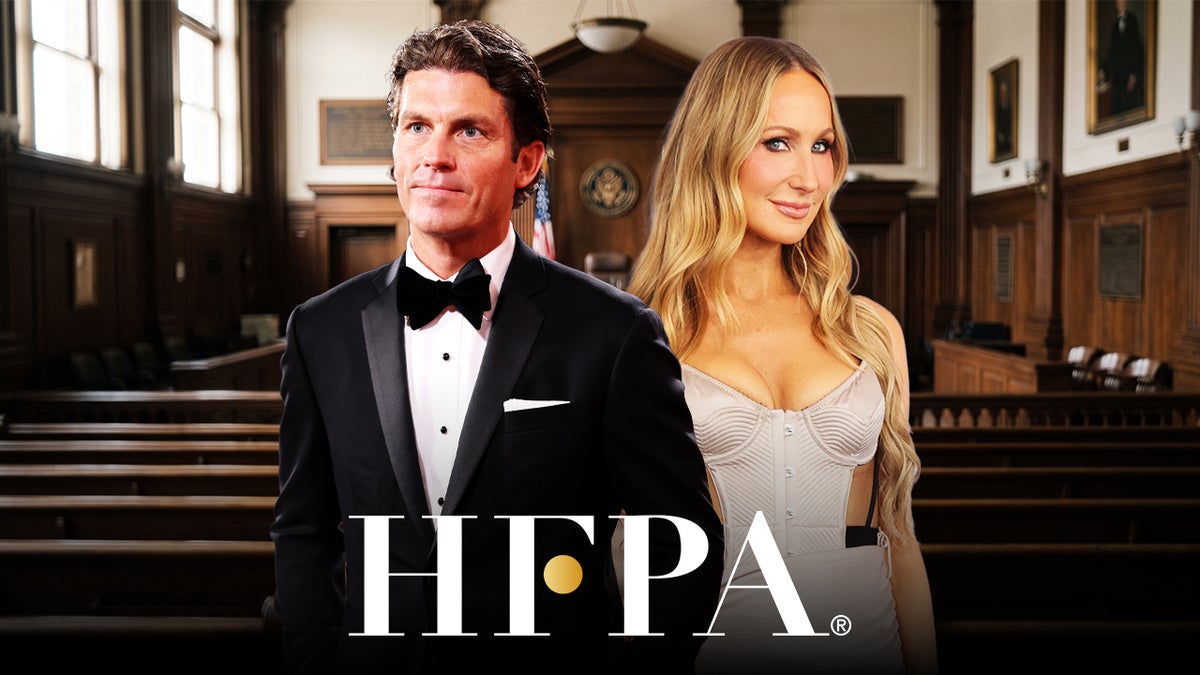
The HFPA is back. With a vengeance.
The Hollywood Foreign Press Association, dissolved in 2023, has come back to file a scathing $150 million lawsuit against media mogul Jay Penske, Penske Media Corporation, the Golden Globe Foundation and Golden Globe Foundation CEO Gregory Goeckner. The once-powerful organization alleged a years-long scheme to devalue the Globes, “fraudulently acquire” them and then roll them into an overarching awards-industrial complex that would see Penske’s sweeping media empire – which includes Variety, The Hollywood Reporter and Deadline – reap the financial rewards.

The lawsuit brings a major show of the Hollywood awards season, the Golden Globes, into open conflict with some of its own voters. It raises serious questions about the credibility of the company that now owns the awards, whose takeover was meant to clean up the Globes’ long-tarnished reputation.
It’s the latest twist in a long-running drama starring the foreign press group, which finally collapsed amid accusations of corruption and racism at the end of COVID and was taken over – and then dissolved – by Penske and Todd Boehly in 2023. But last year, HFPA members voted to formally reactivate and audit Penske and Boehly’s acquisition. And now comes the lawsuit, with plenty of serious allegations.
“This case arises from a clandestine scheme to fraudulently acquire the prestigious and valuable 80-year-old Golden Globe Awards, destroy their founder and former owner, the HFPA, and exert monopolistic control over the Hollywood trades, awards and advertising markets,” the complaint states.
At the center of the lawsuit is the HFPA’s contention that Penske’s media empire gives it massive influence over the Hollywood awards universe. The complaint argues that by owning major entertainment trade publications, in addition to controlling the Golden Globes and seven other televised awards shows, Penske can effectively shape media industry coverage, awards narratives and the ever-lucrative “For Your Consideration” advertising business in ways that give it an unfair advantage over the competition, all while concentrating power in a single company.
TheWrap is the only independently-owned trade covering the industry and the awards races.
The charges stem from a period in early 2021 when the Globes essentially self-destructed. Though publications including TheWrap had written repeatedly about corruption, lack of diversity and ethical lapses among HFPA members, many of them part-time journalists who were profiting from their position as Globes voters, the breaking point came with a two-part Los Angeles Times report that added more details and pointed out that the HFPA didn’t have a single Black member among its nearly 100 voters.
In the aftermath of that report, Hollywood press agents and studios turned against the Globes, which immediately pledged to change its bylaws and revamp its membership. That led to the entry of Boehly and Penske and the wheels turning on the HFPA dissolving, which the board paused in May 2025. The entire history is detailed in the suit (which barely mentions why the Globes needed a makeover, beyond a mention of “diversity” among the voters).

HFPA allegations
Here are the key allegations in the 113-page complaint:
- Boycott orchestration: Penske and Boehly are accused of orchestrating the 2021 boycott of the Golden Globes by using Penske-owned trades – including Variety and The Hollywood Reporter – to promote and support the campaign. The HFPA alleged the campaign weakened the organization, ultimately paving the way for Boehly’s acquisition of the Golden Globes.
- Asset purchase agreement: Boehly and Penske allegedly manipulated the sale of the Golden Globes through what the complaint describes as a “corrupt” Asset Purchase Agreement, allegedly sidelining competing bidders, steering the transaction while Boehly served as interim HFPA CEO and making promises to members that were later broken.
- Gregory Goeckner’s role: The complaint claimed former Golden Globe CEO improperly facilitated the transfer of $4 million in HFPA funds to the Golden Globe Foundation by surreptitiously inserting language into governing documents, and then resisted efforts to return the money after board members pushed back on the move.
“The defendants’ alleged anticompetitive conduct and brazen attempts to destroy the Hollywood Foreign Press Association … has caused great harm to the 83-year-old organization and to the integrity of the awards market and related markets in the entertainment industry,” Daniel A. Saunders, counsel for the HFPA, said in a statement.
A Globes spokesperson fired back on Tuesday by saying the lawsuit “continues the absurdity and irrationality that the industry has come to expect” from the HFPA, asserting that any notion that the dissolution of the organization might be reversed is “unequivocally false.”
“This latest act of duplicity is a new low, even for the HFPA,” the spokesperson said in a statement. “We remain troubled that the HFPA, an organization so widely criticized for ethical failures, non-inclusivity, racism and misconduct involving talent, continues to find attorneys willing to push such illegitimate claims.”

Timeline of events
- February 2021: NBC, studios and prominent talent and PR agencies boycotted the Golden Globes after criticism of the HFPA’s lack of Black members and ethics practices. Though the boycott appeared to begin within the publicity community, the complaint alleged Penske and Boehly promoted the campaign through Penske-owned trade publications, effectively lowering the value (and the eventual purchase price) of the Globes.
- July–September 2021: Boehly emerged as a bidder for the Golden Globes and became interim HFPA CEO, which the complaint alleged created conflicts of interest.
- July 2022: Complaint alleged competing bidders were disadvantaged, members were rushed through the approval process and false promises were made to secure support for the sale, including lifetime voting privileges and Globes tickets.
- July 28, 2022: HFPA members approved the Asset Purchase Agreement transferring the Golden Globes to Boehly’s group.
- January 2023: Penske Media and Eldridge completed their acquisition of the Golden Globes and related assets through a joint venture with Dick Clark Productions.
- 2024: Stung by reduced severance payments and the loss of promised privileges, former HFPA members voted to reactivate the organization and began reviewing the Golden Globes transaction.
- 2025-26: During that review, the complaint alleged, Goeckner improperly facilitated the transfer of roughly $4 million in HFPA reserve funds to the Golden Globe Foundation by inserting language into governing documents and later resisted efforts to return the money after board members objected.
- July 28, 2026: The reactivated HFPA filed suit against Jay Penske, Penske Media Corporation, the Golden Globe Foundation and Goeckner, seeking more than $150 million in damages, treble damages under antitrust law and injunctive relief. They also asked the court to unwind key aspects of the Golden Globes transaction.
What the HFPA is seeking
- More than $150 million in damages
- Potentially triple damages under antitrust law
- To undo key parts of the Golden Globes deal
- A court order stopping the alleged anti-competitive practices
- Repayment of profits the HFPA said were improperly obtained
Does the case have merit?
While the HFPA may have a valid argument on antitrust grounds, its case may be hurt by its own reputation, according to one legal expert.
“HFPA alleges the 2023 sale was tainted by fraud, conflicts of interest and exclusionary conduct designed to eliminate independent press oversight, which does fit into antitrust law if the allegations are proven true.” Bryan M. Sullivan, a partner at Early Sullivan Wright Gizer & McRae LLP, told TheWrap. “However, the HFPA appears to have a very difficult case because courts may view the organization’s past scandals and its own vote to restructure as undermining its claims, and they waited a few years after government approval of the deal.”
What does Kasowitz have to say?
Saunders, lead counsel on the HFPA’s legal team, said Penske Media turned the Globes into a “for-profit, pay-to-play scam that works in tandem with his trades and the FYC advertising in those trades to further consolidate his monopoly on the awards market and related advertising.”
“As alleged in the complaint, the Penske trust is effectively an industry ouroboros that feeds on itself to provide more profits to Penske and other defendants,” he said. “This includes things like selling access to Golden Globes voters at $70,000 dinners, charging studios a $5,000-per-project administration fee to place a project on the Globes screening platform, offering Golden Globes tickets for $70,000 apiece through a Penske publication, granting exclusive Golden Globes access to Penske journalists, creating a new Golden Globes category for ‘Best Podcast’ that effectively conditioned eligibility on buying FYC packages from one of Penske’s trades.”
Saunders argued that the current situation with the Golden Globes represents an escalation of the problems it ran into in 2021.
“Whatever issues the HFPA might have had in the past, nothing like this ever happened when it was managing the Globes as a nonprofit,” he said.
The HFPA certainly had its own issues, like the aforementioned diversity scandal that marked the beginning of the end. The Penske trades were not the only outlets to report on the HFPA’s lack of Black members, nor were they the first. But Saunders asserted that the Penske trades took a particular interest in this scandal, providing coverage that was aimed at “making them ripe for a takeover at a low price and instilling a sense of panic in the HFPA that it had no choice but to sell.”
For the record, TheWrap, which is mentioned in the lawsuit as a non-Penske trade, wrote dozens of stories about the organization’s shortcomings prior to the scandal breaking, and more than 70 pieces in the months after.
Roger Cheng and Casey Loving contributed to this report.
