

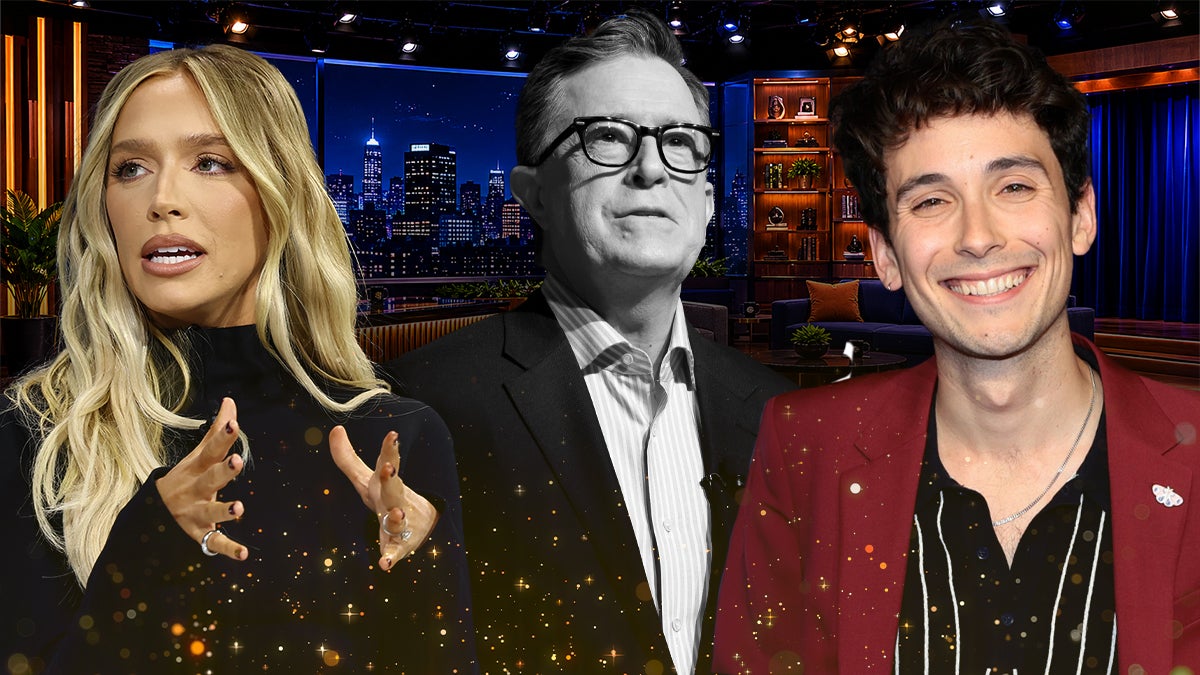
The nation bid farewell to Stephen Colbert and “The Late Show” last week. This week, the first late night show on YouTube makes its debut.
The timing couldn’t be a more effective metaphor for entertainment’s slide from traditional Hollywood to the creator economy.
Despite a resurgence in network late night ratings over the last several months — sparked by Colbert’s cancellation and farewell tour and Jimmy Kimmel’s suspension — it remains a brutal business. Ad spend for the medium sunk to $209 million in 2025, an 85% decline from eight years ago.
Much of that money is heading directly to late night’s new-era competitors outside the confines of linear. Roughly 20% of lost late night dollars ends up going to YouTube, data insights company Guideline found last year, with 6% going to Amazon and another 6% going to Instagram and Facebook. This is happening as the likes of YouTube and social media creators like “Hot Ones” host Sean Evans and “Call Her Daddy” creator Alex Cooper, who have both exploded in popularity over the last few years, have transformed the talk show model by making it shorter, more clip-friendly and, crucially, cheaper.

“Usually, in years past, it would just be like ‘Colbert’s ahead in ratings. Colbert gets more money,’” Sean Wright, chief insights and analytics officer at Guideline, told TheWrap. “But what we found was that post pandemic, in terms of the fragmentation of people starting to stream more and watch more YouTube, the dollars flowed out of late night into those formats.”
Now creators want to take a stab at the late night show medium itself starting with Ben Gleib’s “Good Night” — a series launching on Thursday that’s being advertised as YouTube’s first late night show. The launch comes as the economic comparisons between a traditional network late night show and one on YouTube look less and less favorable over time.
Creator-led shows like “Hot Ones” and “Call Her Daddy” are made at a fraction of the budget of traditional late night and without as many concerns about brand safety (not that that ever bothered Letterman). Most importantly, they’re more effective at capturing the attention of younger generations.
“Good Night” showrunner Stewart Bailey, who produced “The Daily Show” and “Last Call With Carson Daly,” recalled trying to make a joke to one of his younger writers about what CBS will put in Colbert’s old time slot, pitching “60 Minutes After Dark” and “Matlock Only Fans.”
He was met with a blank stare.
“I realized there’s not a single network title that resonates with her,” Bailey told TheWrap. “If it’s not something you have traditionally seen on your phone, a younger generation isn’t even all that familiar with it, frankly. It’s not that they’re rejecting [traditional TV]. It’s just they don’t even know what it is.”
Late night’s YouTube expansion
On Thursday, 47-year-old Gleib, a critically praised comedian who was a frequent “Chelsea Lately” guest, will launch “Good Night” on YouTube — the realization of a dream Gleib has had since he was seven years old.
“Our tagline is, ‘The evolution of late night is here.’ That’s not just a slogan,” Gleib told TheWrap.
“Good Night” will have several staples of traditional late night shows from an opening monologue and a house band to guest interviews and pre-taped comedy bits. But instead of largely focusing on celebrities, the series will spotlight people like wellness experts, psychologists and entrepreneurs on a set that exists in Gleib’s house, an intentionally intimate setup that Gleib and his team hopes will lead to more authentic and free-wheeling conversations. “Good Night” also plans to bring viewers directly into the show using Nowhere Studios and Zoom’s chat functionality, which will let audience members who digitally purchase a ticket be directly involved in a pretaped episode of the show before it’s posted on YouTube the following day. Audiences will even be able to ask guests questions.
“The world has evolved, and late night has not kept up with it. That’s probably part of why it is not doing as well in the ratings, aside from being unsustainably expensive,” Gleib said. “I’m trying to create kind of a new type of YouTube production that can evolve it past just two static microphones and cameras in a podcast studio and expand that to be TV-level productions but done at a fraction of TV budgets.”
That will be followed a few weeks later by Julian Shapiro-Barnum’s “Outside Tonight,” which launches on YouTube June 17. As the host of “Recess Therapy” and “Celebrity Substitute,” the 26-year-old Shapiro-Barnum is an experienced pro when it comes to hosting successful digital shows. And just like Gleib, he sees “Outside Tonight” as both an homage and an evolution of the late night format.
“I don’t know anyone who actually watches a full episode of late night TV anymore,” Shapiro-Barnum said, knocking the cable or streaming subscriptions required to tune in. “If you want to get to young people, don’t put a paywall up.”
Shapiro-Barnum plans to bring together the variety show parts different creators have perfected into one curated show. “Outside Tonight” will operate more like “Last Week Tonight” rather than “The Tonight Show” with each weekly episode centering on one central question or theme rather than rounding up the buzzy culture of the day. The series will be a reflection of the creators and trends the “Outside Tonight” team find fascinating all told throughout the streets of New York City.
“When late night started, it was a way to bring the entertainment industry into one’s living room, because there was no other way at the time. We just have no need for that anymore,” Shapiro-Barnum said.
Neither show is being produced by YouTube, which simply serves as a platform for creators. But both Gleib and Shapiro-Barnum hope their shows will encourage more creators to do the same.
“It’s crazy, people keep saying, ‘Congratulations on getting the show.’ They’re framing it in ways where somebody gave us this,” Shapiro-Barnum said. “This was our blood, sweat and tears. Not that I need the credit in that way, but there are misconceptions. No one’s opening any doors. All these creators open the doors for themselves.”
The creator era
Creators have already started to occupy the role of late night host on Netflix. Jake Shane’s “Therapuss,” which is available on Netflix for its third season, has interviewed several of the streamer’s stars including Dan Levy and Charlize Theron. After multiple attempts at creating its own talk show, from the six-season “Patriot Act With Hasan Minhaj” to brief experiments like “The Break With Michelle Wolf” and “Everybody’s Live With John Mulaney,” Netflix is now letting creators take the reins for this genre, licensing their shows instead of producing them — while still throwing in some cross-promotion for good measure.
And some celebrities, too, are opting for the more talent-friendly creator shows when doing press rounds. Shane has gone on record saying he’ll delete something from a recorded interview if his guest asks, and when Leonardo DiCaprio did limited press for “One Battle After Another,” he opted for podcasts like Travis and Jason Kelce’s “New Heights” rather than a traditional late night TV sitdown.
“It’s this weird paradox where it’s like it’s dying, and it’s never been healthier,” New York Times culture critic and author of “Letterman: The Last Giant of Late Night” Jason Zinoman told TheWrap. “If you include video podcasting, there’s more talk show hosts than ever.”
These creator-led shows operate completely differently. They intimately know their audiences, cost less and can pivot faster than anything on broadcast or cable. They also only have to concern themselves with appealing to their own advertisers, not the political pressures of a larger corporate entity or broadcast standards.

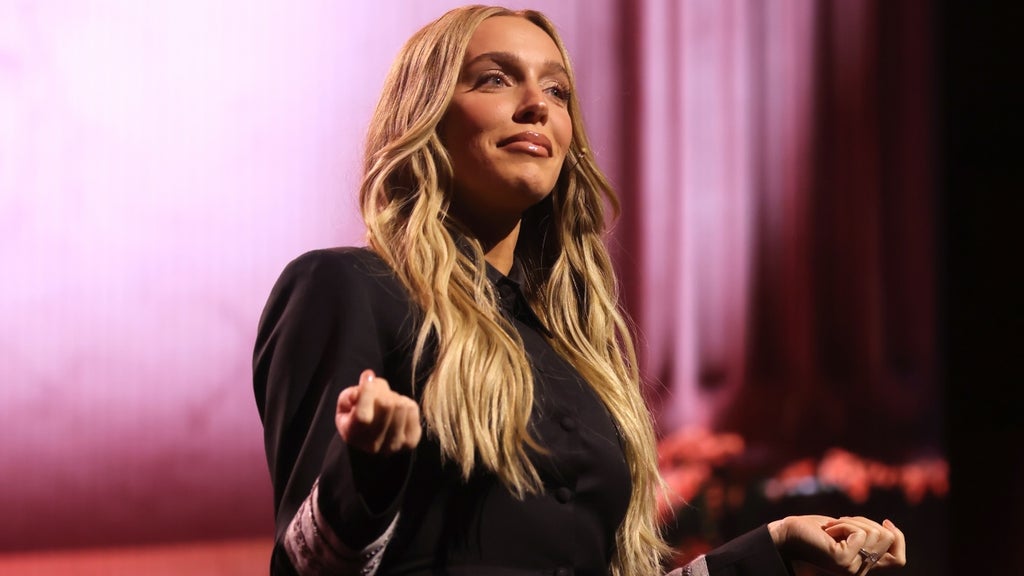
“Late night was built for an audience that had nowhere else to go,” Cooper, CEO and founder of Unwell, said. “The TV was just on. And for a long time, that was enough. Until it wasn’t. Culture today moves faster than any one platform.”
Because listeners have to actively find and download podcast episodes, Cooper emphasized that she has a different relationship with her audience “before I’ve even said one word.”
Creator-led shows may not yet be the behemoths of their traditional TV predecessors, but they have perfected the sorts of niche segments that define late night. Do you want to see a celebrity let their hair down? Cooper, with an average audience of 10 million listeners per episode, has you covered, as does Sean Evans’ “Hot Ones,” Amelia Dimoldenberg’s “Chicken Shop Date” (3.4 million YouTube subscribers), Ziwe (1.2 million TikTok followers) and Brittany Broski’s “Royal Court” (1.2 million subscribers). Prefer man-on-the-street segments? Kareem Rahma’s “Subway Takes” and his new “Keep the Meter Running” (1.3 million TikTok followers) and Shapiro-Barnum’s “Recess Therapy” (2.7 million TikTok followers) are now internet staples. Even the joy of showcasing a new musical artist has taken on a social life of its own. NPR’s Tiny Desk concert series has been viewed more than 41 million times.
“Has ‘Call Her Daddy’ been filling the void from late night and daytime talk? One hundred percent,” Cooper told TheWrap. “Those shows owned culture. They were where you went when something big happened or a celebrity had something to say. And I think a lot of that energy has absolutely shifted to podcasting, but it’s a totally different animal.”
Seeking cultural relevance
Despite the buzz in the creator economy, the sheer number of creators and fragmented platforms means few command the numbers and reach of a traditional network show host.
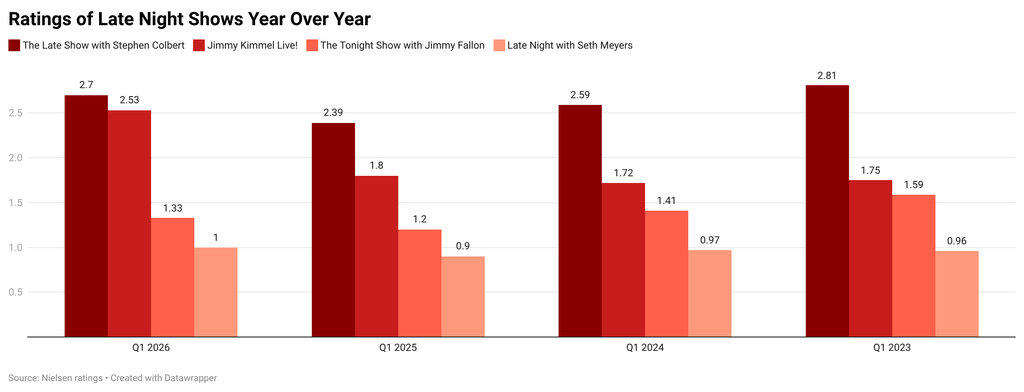
Average total viewership for traditional broadcast late night during the first quarter of 2026 increased by 20% overall, according to Nielsen ratings, with Kimmel seeing the biggest year-over-year boost at 34% and Colbert seeing a 13% increase. While Colbert averaged 2.7 million viewers an episode, Kimmel averaged 2.53 million viewers.
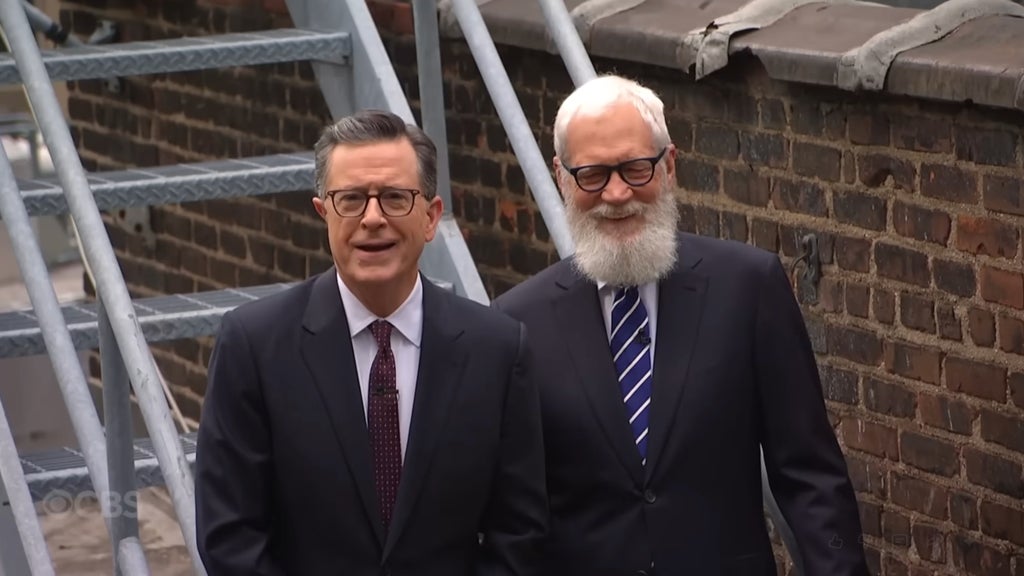
Those numbers haven’t come out of nowhere. Last summer, Colbert became a national story when CBS axed “The Late Show,” an announcement that came shortly before the FCC approved Skydance’s acquisition of CBS’ parent company, Paramount. Kimmel was taken off the air for three days after a joke he made about the late Charlie Kirk infuriated members of the Trump administration. The backlash to that suspension led to a rally of support around Kimmel and ABC quickly put him back on the air.
And if you think that support was short-lived, consider that efforts by President Trump to call for Kimmel’s firing yet again in recent weeks went largely unsupported, and Disney not only took no punitive action but pushed back against the FCC’s pressure campaign.
These hosts have something their YouTube counterparts are still vying for: wide cultural relevance.
When it comes to which late night show was the most widely watched on YouTube based on total watch time, “The Daily Show” was the clear winner, accounting for over 486 million minutes a month on average from April 2025 to April 2026, according to data from Tubular Labs. However, Cooper’s “Call Her Daddy” — which finds the charismatic host tackling a longform interview with a celebrity guest, often leaning into gossip-friendly topics — held its own against other traditional late night peers with an average of 148 million minutes a month, beating Fallon and coming close to Meyers’ 166 million minutes a month.
YouTube is simply one metric. Late night relies on broadcast viewing for its audience just as Cooper’s show relies on podcasting platforms — although the host struck a three-year deal with SiriusXM for $125 million in 2024, to give you an idea of how much the A-tier creators are making. The social strategy of each show also varies wildly. Whereas something like “Last Week Tonight” prides itself on uploading well-researched deep dives on YouTube, “The Tonight Show” focuses more on its short-form strategy. It’s a glimpse into how this climate is further fracturing.

“Thanks to their resources and daily collection of new inventory, traditional late night shows still surpass most competitive digital creators in terms of both attention and audience size,” Jill Nicholson, CMO of Tubular Labs’ parent company Chartbeat Inc., told TheWrap. ”Even a popular show like ‘Call Her Daddy,’ while extremely successful, nears the social reach of those traditional TV programs, but inconsistently.”
The fanfare Colbert’s departure saw is illustrative of that divide.
“Just the amount of attention Colbert leaving has gotten, I think, is a lesson,” said Zinoman. He noted that, amidst the spotlight being put on late night over the last several months, the networks “are looking for attention like everybody else,” drawing a contrast to the somewhat subdued end of Marc Maron’s much-ballyhooed “WTF” podcast in 2024.
“For 20 years, we’ve been hearing that podcasts are the much cooler thing than the boring broadcast TV, but I don’t know, with Marc Maron’s exit there was a little bit of nostalgia but not this full court wave of goodbyes like with Colbert,” he said. (Maron’s twice-a-week podcast, while influential on the medium as it’s known today, notably was never a video product.)
Time is a flat circle
Though late night’s future is finally starting to reach the hands of a younger generation, no one TheWrap spoke to believes that the creator take on a late show will completely usurp the traditional medium.
“There’s gonna be something, but will that be the center of gravity culturally? Will the young performers prefer to be on YouTube or Netflix?” Zinoman asked. “‘The Tonight Show’ is a pretty powerful brand, and it’s been around for a long time. I just find it hard to believe that it would disappear anytime soon.”
The cultural critic noted, too, that for a network like NBC, having a flagship brand ambassador like Fallon and Meyers becomes an essential asset. “What’s the point of existing if you’re not going to have a flagship talk show, which is the face of your network?”
“I wouldn’t necessarily bet against TV just yet,” Wright said, noting that streaming costs are now similar to what cable costs used to be. “My inclination is that we’re entering a new post-post-COVID era where maybe some of what’s old is new.”

John Oliver, who publicly lambasted Warner Bros. Discovery when it made the decision to delay the YouTube release of segments from “Last Week Tonight,” told TheWrap that late night will evolve because, historically, it always has.
“Late night as a form has always had to evolve, and it will continue to do so through company mergers, through people watching it in different ways,” he said. “It has to emerge to meet people where they are, and where they are right now is not necessarily on their couches watching network television as it airs.”
If Gleib’s “Good Night” sounds pretty similar to a late night show, that’s probably where things are headed, according to many cultural observers.
“I just think there eventually will be some genius who is gonna be like, ‘I got an idea. Why don’t we get a comedian to do a monologue and have a band?’ and we’ll just have to act like we haven’t seen all this stuff before,” Zinoman said.
