
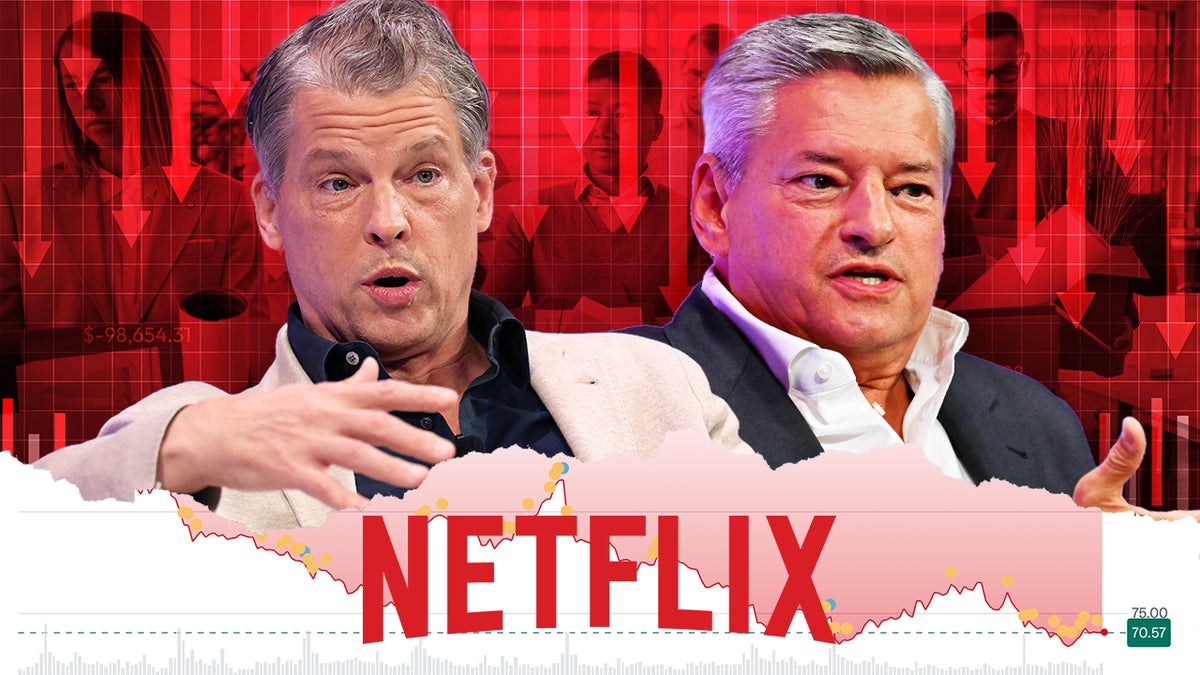
With Netflix shares down 26% on the year, the Skydance merger rearranging the industry hierarchy and questions about stalling growth swirling, something had to give.
That ended up being roughly 1,000 jobs, or 6% of the streaming giant’s workforce, in its biggest round of layoffs in four years.
The cuts on Wednesday, which traversed the whole company and included executives in film and TV, highlight how the ground is shifting — radically — beneath the feet of the entire entertainment industry and how that can rattle even market leader Netflix. They follow similar moves by Sony, Disney, which had multiple rounds of cuts, and Paramount ahead of its merger with Warner Bros. Discovery, underscoring the broader difficulties facing Hollywood.
“Netflix’s layoffs show that even the top streaming companies are not immune to stagnation and financial difficulties,” said Ross Benes, a senior analyst for eMarketer.
A catalyst for this disruption is Skydance, which is also widely expected to announce its own round of painful cuts. But more broadly, its formation as a new media giant is forcing every other player to look inwards and make difficult decisions.
For Netflix, it’s figuring out how to solve the engagement problem and create shows and films that resonate with the zeitgeist again, as megahits like “Stranger Things” and “Squid Game” are over and users complain about quality as the streamer churns out a steady stream of middle-of-the-road content about cannibalistic killers, military robots and murderous MAGA housewives. In its efforts to expand, Netflix experimented with creator programming, podcasts, live sports and international fare, giving it a wide spectrum of content. Next year, it plans to go big with its theatrical play, starting with Greta Gerwig’s “Narnia: The Magician’s Nephew.”
But so far, little has truly stuck.
That’s led to questions about the platform’s ability to hang on to or add subscribers, especially as the competitive landscape changes and rising subscription fees force consumers to reassess where they put their dollars. “We’re not growing as fast as I want us to, and we’re working on making that move faster,” co-CEO Ted Sarandos said at Bloomberg’s Screentime conference last month.
The near term fix appears to be these cuts, which come a little less than a week before Netflix’s third-quarter earnings report, giving its leadership the opportunity to demonstrate its ability to exercise financial discipline in the face of a volatile operating environment.
“These are very experienced leaders,” said Raymond Wang, a consultant for Constellation Research. “They know what stories need to be placed ahead of the earnings cycle.”
Sarandos and co-CEO Greg Peters insist the moves are necessary and a growth trajectory remains.
“Our mission – to entertain the world – is ambitious, and delivering on it requires us to be disciplined about where we prioritize our people and resources,” they said in a staff email obtained by TheWrap. “Our business is strong and growing, and we remain on track to deliver our full-year forecast. We’ll continue to invest aggressively in high-impact areas to improve our service and further drive growth and innovation. Doing that means making focused choices across the business so we can keep delivering for our members, partners, employees and investors.”
But whether these cuts actually solve Netflix’s larger underlying problems remains a question. Its shares rose just 0.2% to $70.57 on Wednesday in the wake of the news, after being down 26% since January and 42% over the last 12 months.
Netflix had no comment beyond the staff email.

What’s Netflix’s Next Growth Engine?
Down to the numbers
A seldom-discussed metric that many on Wall Street quietly follow for media companies is revenue per employee, according to Wang. Netflix sits at about $3 million per employee, he added.
So it makes sense that Netflix would reduce its headcount in a bid to boost this metric. It also gets the company’s cost structure in line with the reduced growth the company is seeing.
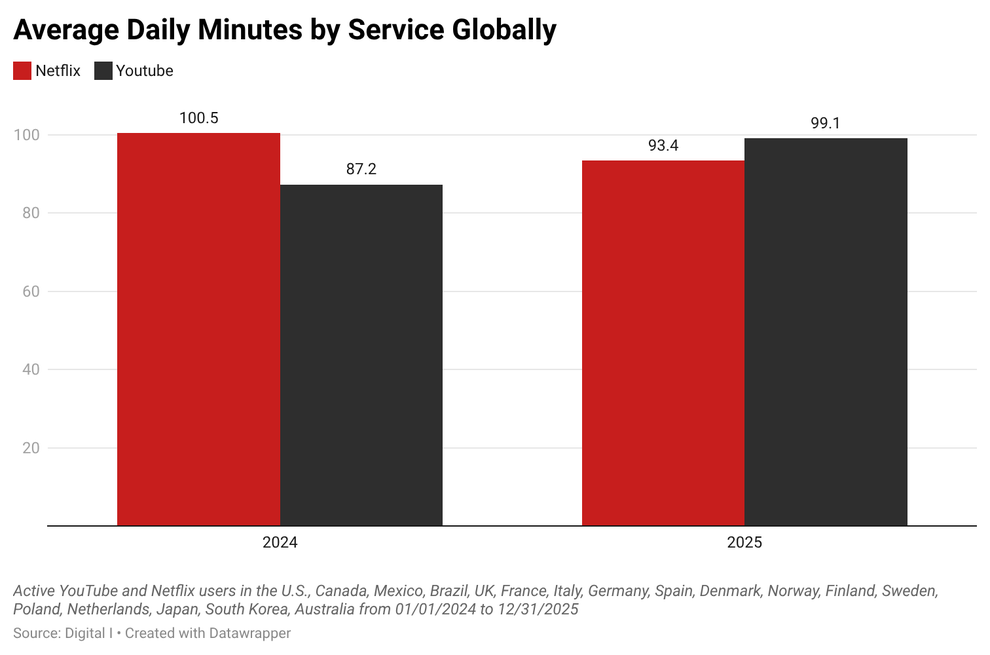
But Netflix has been less forthcoming on other metrics, including no longer regularly disclosing its subscriber growth, and now reducing its biannual data dump on how individual shows and films are performing to just once a year.
It’s also no coincidence that there have been a string of layoffs at various studios over the last several months, from big players like Sony to smaller ones like J.J. Abrams’ Bad Robot, as Wang noted that consultants around town have been telling every media company to reassess what is and isn’t working.
Notably, a majority of the Netflix cuts are in the product, tech, legal and human-resources teams. They follow a smaller round of layoffs to its product division in February. Some on the creative side were swept up in the layoffs, including Netflix Film VP Doug Belgrad, who served as a right-hand man to Netflix Film head Dan Lin, as well as several execs from its television division.
Last week, Greg Lombardo, a leading executive in Netflix’s live experiences division, left the company, throwing the fate of its Netflix House initiative in the air.
“They’re doubling down on what works,” Wang said.
But there lies the rub: is the content actually working?

One experiment after another
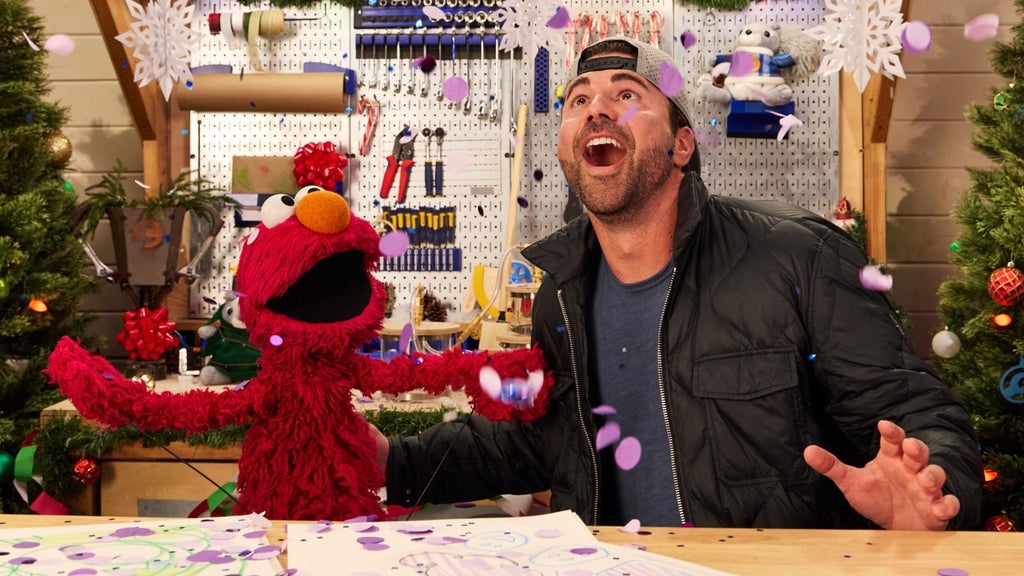
Over the last year, Netflix has aggressively invested in new types of content to attract more eyeballs. They include more creator content, including partnering with Spotify to acquire Jay Shetty’s “On Purpose” podcast in a multiyear deal valued at up to $100 million and tapping kids and preschool creators Mark Rober and Ms. Rachel.
But aside from superstars like Rober and Ms. Rachel, who work better with younger audiences, Netflix has given little indication on whether those podcasts are working, and if consumers would just rather watch them on YouTube.
It’s also tapped live content, from its weekly WWE Raw program to select NFL games and unorthodox events like the livestream of Alex Honnold scaling the Taipei 101 building in “Skyscraper Live.”
Pivotal Research Group analyst Jeff Wlodarczak told TheWrap that Netflix’s one-off sporting events have been “pretty smart and helpful” for engagement and believes the streamer will inevitably get more aggressive in bidding on rights.
But those rights don’t come cheap.
“Profitability is important to investors, so as content costs continue to rise to drive incremental engagement, Netflix needs a leaner and more effective organization,” said Alicia Reese, an analyst at Wedbush Securities.
The other concern is whether putting out this buffet of content allows any of it to resonate the way that a “Stranger Things” or “KPop Demon Hunters” used to, or buzzy shows like Apple TV’s “Widow’s Bay” or HBO’s “The Pitt” effectively do now at competitors. Even Netflix’s biggest shows routinely see declines in subsequent seasons as momentum slows and they get lost in the flood of content churned out each day.
There have been bright spots. The highly acclaimed “East of Eden” adaptation just released this month and the streamer has more serious awards-contending films on the docket for the rest of the year.
Still, the fact that some fans aren’t as quick to tune back in when new seasons of hit shows like “Wednesday” premiere means they’re not as invested as they once were.
One way to cut through the noise is Netflix’s plan to go big in an area that it had largely tiptoed around before.

Box office bet
There’s nothing quite like a film hitting big in the theaters to dominate the cultural conversation. But previously, Netflix films only had limited theatrical windows — the time between when a movie is in theaters and is then released on the streamer — and, even then, the films only played in a few hundred theaters.
That’s changing starting this fall. “La Bola Negra,” a Spanish-language queer epic that is Netflix’s biggest awards play of the year, is getting the streamer’s first 45-day theatrical window. Then David Fincher, Quentin Tarantino and Brad Pitt’s “Once Upon a Time in Hollywood” follow-up “The Further Mis-Adventures of Cliff Booth” will be the first Netflix film released in IMAX over Thanksgiving, a few weeks before it’s available to stream.

Netflix makes an even bigger push in 2027 with Gerwig’s “Narnia: The Magician’s Nephew,” which will get a global theatrical release 45 days before it’s on the streamer, and later next year the animated film “Charlie vs. the Chocolate Factory” will also get a wide theatrical release and robust window ahead of the Thanksgiving holiday.
The shift comes after Netflix got a look under the hood of how Warner Bros.’ theatrical unit worked during that scuttled acquisition play. If the streamer can create a strategy of releasing a select few big movies in theaters a year, and those movies are hits, that’s money in Netflix’s pocket. Hopes for “Narnia” are high as the streamer is already calling it the beginning of “a universe,” and if it can gross upwards of $500 million-$700 million worldwide, that’s going to move the needle in the way the company thinks about how theatrical can provide a financial lift.
And Sarandos is already thinking about the potential of the “KPop Demon Hunters” sequel that’s in development, revealing it will get a “big, broad, global theatrical release” when the time comes.

Some growth levers left to pull
Ultimately, most analysts that TheWrap talked to believe Wednesday’s layoffs are a speed bump for a company of this size. They neither move the needle on financials or solve the bigger problems Netflix is facing.
“Cost cutting alone will not settle concerns about growth,” said Paolo Pescatore, an analyst at PP Foresight. “People will always wonder whether Netflix can keep attracting members, retain their attention and generate more revenue from those relationships.”
There are still avenues of growth. Select international markets aren’t fully saturated yet, and there’s the burgeoning ad business that Netflix is extremely high on. The company believes it’s still on track to meet its full-year forecast, concerns aside.
But Wall Street still has plenty of questions about where Netflix is headed.
They’ll have plenty of time to ask them on Tuesday after the quarterly results come out.
Lucas Manfredi and Adam Chitwood contributed to this story.
