
Streaming service rate hikes have become frequent enough that there’s a term for the phenomenon: “streamflation.” But consumers are increasingly hitting a wall when it comes to spending, which should be a red flag for companies that think they can squeeze more money out of their subscriber base.
Netflix is the latest streamer to raise prices — the second time in more than a year — having announced hikes just three weeks ago. Wall Street will likely ask management about the state of its pricing strategy when it reports first-quarter earnings results on Thursday afternoon.
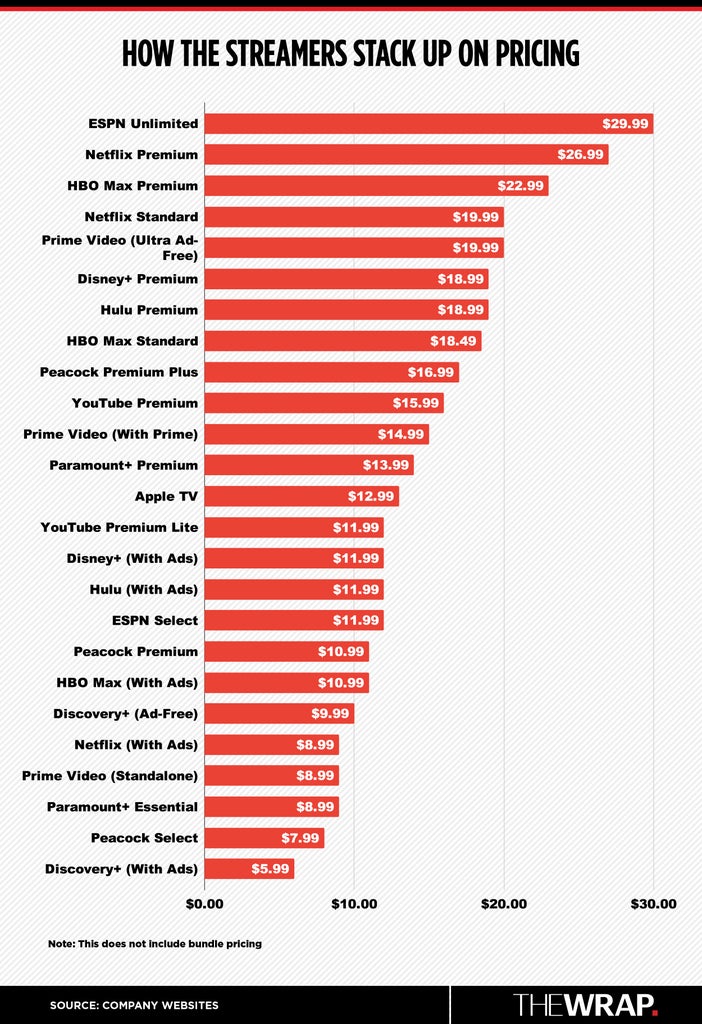
But Netflix is not alone. Disney+, HBO Max, Apple TV and Peacock all raised prices last year. Paramount+ also hiked prices in January, while Amazon’s Prime Video and YouTube Premium increased prices within the past month.
There are several factors fueling these price increases, from a shift in focus to profitability over subscriber growth to driving customers to cheaper ad-supported tiers and bundles, which allow the streamers to tap into additional revenue streams. But experts told TheWrap that streamflation is making subscribers think twice about which services are “must-haves” vs. “nice-to-haves,” especially as surveys have found that they have hit a ceiling on how much they’re willing to spend on these services.
The average household is paying $69 per month for four streaming services, a Deloitte survey of more than 3,500 consumers found, with nearly three quarters (73%) of respondents expressing frustration with rising prices and 61% saying they would cancel their favorite service if monthly prices increased by $5.
“Streaming platforms are just in a tough place. They’re trying to grow revenue as the market expects them to and we’re finding that consumer spending has really plateaued,” Deloitte media and entertainment analyst Stephanie Dolan told TheWrap. “[Consumers are] playing this game of give and take where they move around, chasing the content that they want to watch at the time they want to watch it, and they’re managing their costs holistically.”
More tellingly, about 44% of 2,000 Americans surveyed by Bank of America plan to keep their streaming subscription slate as-is, while another 44% plan to either cancel or downgrade one or more subscriptions, illustrating how people are at their limit with price increases, looking to cut back on spending and are not using services enough to justify the cost.

“We are in a period of trade-offs from a consumer’s perspective,” Parks Associates senior analyst Michael Goodman added. “The cost of everything is going up. There’s a lot of uncertainty both in the world and in the U.S. as to where things are going to go. People are holding onto their dollars a little bit tighter because of that uncertainty and it’s going to lead them to make really hard decisions on what is necessary and what’s a must-have and what’s a nice-to-have. And those nice-to-haves, frankly, are where cuts are going to be.”
While pricing power among the various streamers varies, experts said the benefit of pushing consumers to cheaper ad-supported tiers and bundles can only go so far. Media companies need to find other ways to differentiate, deliver value and reduce churn, such as better content discovery and recommendations, more flexible pricing and content release strategies and doubling down on fandoms.
“Consumers are paying for subscriptions they barely use, they spend too long trying to find something to watch and many are open to AI helping them choose content,” Giles Tongue, vice president of marketing at the research firm Bango, told TheWrap. “So the services that reduce friction and make spending feel justified will have more room to grow revenue per user without pushing people out.”

Streamflation drives consumers to ad-supported tiers, bundles
One of the major reasons consumers left cable was to avoid ads. But with streamers raising prices and pushing eyeballs toward ad-supported tiers, it’s like we’ve come full circle. Around two-thirds (68%) of streaming subscribers surveyed by Deloitte now pay for an ad-supported tier, an increase of over 20% from 2024.
But even ad tiers aren’t immune to streamflation. For example, Netflix’s Standard With Ads tier increased by $1 to $8.99 per month in the latest round of hikes.
“Netflix’s price increases have been more frequent than those by peers. But the recent increase in Netflix’s ad tier pricing still keeps it below that of most streaming peers,” Seaport Research analyst David Joyce said. “As such, we think there is incremental catch-up opportunity for advertisers to address the growing subscriber base, which has been roughly half of gross additions over the past year.”
The company has incentive to drive more subscribers to that tier; it’s targeting $3 billion in ad revenue this year and roughly $9 billion by 2030.

Streamers are also continuing to expand their bundled offerings. Bango found that 31% of respondents are “done with standalone subscriptions,” with nearly half of Americans (48%) and 55% of Gen Z surveyed now expecting subscriptions to be included with their internet, TV or mobile plan.
Cable providers leading the charge in this area include Charter Communications, which now offers multiple streamers with its Spectrum video packages, and Comcast’s Xfinity, which added Disney+, Hulu and HBO Max to its StreamSaver bundle alongside Peacock, Apple TV and Netflix for a discount of up to 45% last week.

Experts said the next natural step will be more bundles that incorporate non-streaming companies – commonly referred to as a “super bundle” – but eMarketer senior analyst Ross Benes told TheWrap he’s “unconvinced those will gain much momentum,” arguing that adoption rates for already existing offerings “aren’t very high.”
Some companies are also moving to consolidate their total number of streaming platforms. Disney+ is on track to launch a single app experience with Hulu later this year, while Paramount+ will absorb BET+ starting in June and will combine with HBO Max into a single platform following the closing of its $110 billion Paramount-Warner Bros. Discovery merger.
“Paramount+ would struggle with significantly higher prices, but a combined Paramount+ and HBO Max would have room to raise prices,” Benes said.

How Streaming Expands Sports Fandom
What other levers can streamers pull?
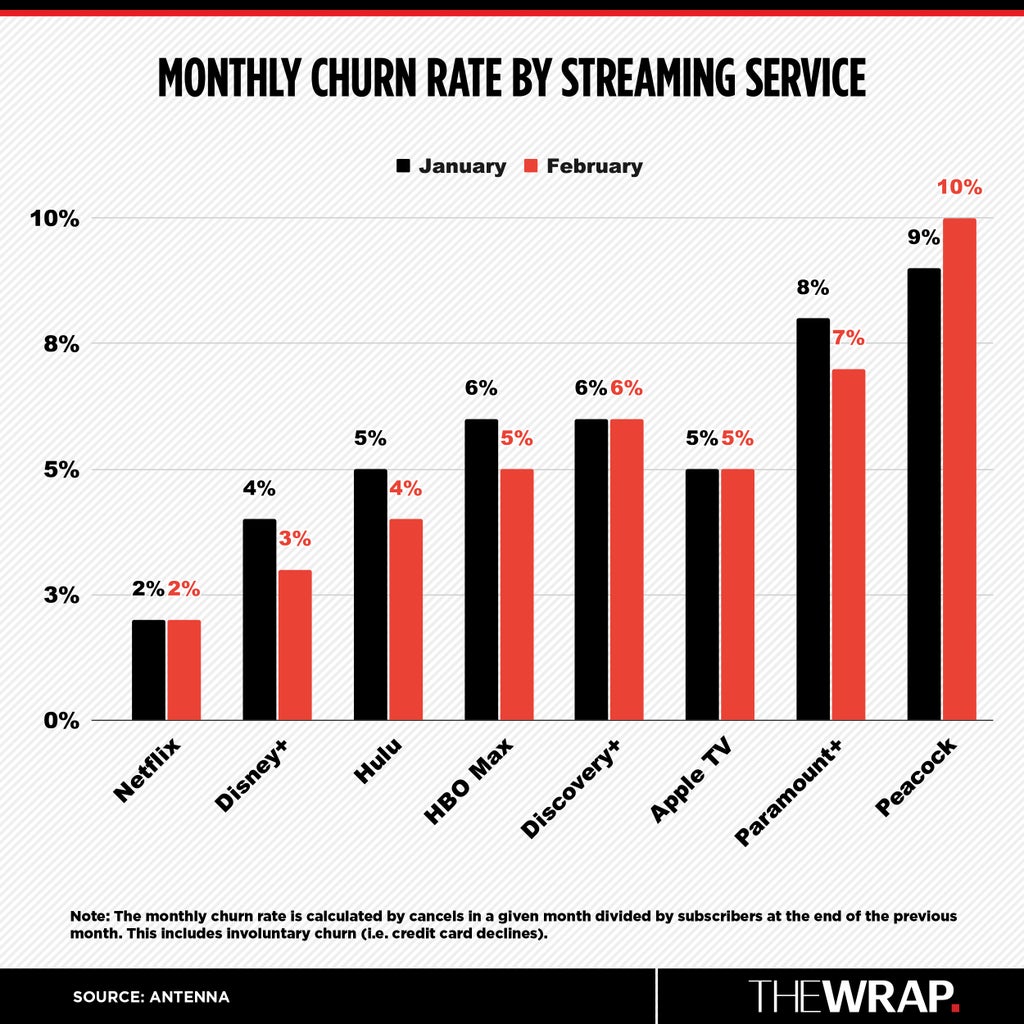
In February, Antenna found that Netflix had the lowest churn rate among the major streamers at 2%, while Peacock had the highest at 10%.
Goodman said that Netflix and Prime Video, which wasn’t counted by Antenna because it’s bundled into Amazon’s Prime membership service, rank as “anchor services” among consumers surveyed by Parks Associates, while the rest tend to get cycled through.
But experts pointed to a number of strategies beyond just bundles and ad tiers that all the streamers can take advantage of to combat churn, such as more staggered releases of high-profile programming.
“Maybe you do two or three episodes on the first drop, then one a week, and then maybe you do one or maybe two for the finale. You can move those levers around, but you’re trying to keep those people locked in for a longer period of time,” Goodman said. “We’ve seen more staggering of content coming out and it certainly behooves the Tier 2 services to do more because they don’t have the same deep pockets that Amazon and Netflix have for content development.”
Dolan also touted the consumer spending benefits for platforms who lean more into content aimed at specific fandoms, such as sports, true crime, horror or anime. Deloitte’s survey notes that 80% of respondents identified as “fans” spent $71 per month, or 27% more on streaming services, compared with $56 for non-fans. Among sports fans specifically, 32% said they would like personalized highlight reels and commentary tailored to their favorite teams and athletes, according to the survey.

“The more fandom you can create around the content, the higher your engagement and the stickier the consumer is going to be for your particular platform,” Dolan said. “So an important strategic focus for a lot of these streaming companies is going to be how do we create engagement on our platform across multiple types of content or how do we create longevity across a fandom so that there isn’t churn.”
Experts also stressed the importance of continuing to invest in exclusive original content and improving content discovery and recommendations. Bango’s survey found that 59% of Americans are loyal to the shows they watch, not the provider, while 22% are open to AI picking what to watch to reduce time scrolling.
“The bigger the library, the more resistant they’re going to be to churn. If they can get much better at surfacing content and making search easier within their platforms, that will go a long way because if you’re paying a premium price but every time you go into their platform you find new things to watch, you’re far less likely to cancel,” Hub Entertainment Research senior consultant Mark Loughney told TheWrap. “[Content discovery challenges] combined with a price increase could be the kiss of death for some of these less distributed platforms.”
